

The main causes of penis pain include infections, inflammatory conditions, and physical trauma such as penile fracture and paraphimosis. Learn about possible causes and when to seek medical evaluation.
Experiencing pain in this area should not be ignored and can cause concern, as well as affect well-being and quality of life. In general, penis pain can be associated with different causes, so it is important to recognize warning signs and seek appropriate evaluation when necessary.
In many cases, the pain is accompanied by other symptoms such as burning, itching, and discomfort when urinating. These signs can help the healthcare professional guide the clinical evaluation and investigation of the possible cause.
In the presence of persistent pain, associated symptoms, or any changes that cause concern, consult a healthcare professional for clinical evaluation and guidance on the most appropriate treatment for the case.
Below, discover 12 possible causes of penis pain and the approaches that may be considered according to medical assessment.
What are the main causes of penis pain?
Penis pain can be related to various health conditions.
1. Urethritis
Urethritis is an infection caused by bacteria, fungi, or protozoa. The transmission route is canalicular, meaning through the urethra.
The infection may present symptoms such as:
- burning sensation when urinating;
- blood and/or discharge from the urethra;
- more frequent trips to the bathroom to urinate;
- pain in the area.
The choice of treatment depends on clinical evaluation and identification of the type of infection. Based on this information, the doctor can prescribe the most appropriate medication for each case.
If not properly treated, as the infectious agent advances through the urethral canal, the infection can reach the prostate (prostatitis), bladder (cystitis), or kidneys (pyelonephritis).
2. Sexually transmitted infections (STIs)
STIs (sexually transmitted infections) are associated with sexual contact. Having sex without a condom or other adequate protective measures can increase the risk of transmission.
The time until symptoms appear can vary depending on the infection and the individual, sometimes occurring just a few days after sexual contact.
Generally, STIs such as gonorrhea manifest as urethral burning, discharge that stains underwear, and increased frequency of urination. Some types of sores may also appear.
To diagnose a sexually transmitted infection, the healthcare professional may perform a clinical evaluation and, when indicated, request sample collection for laboratory analysis to guide therapeutic management.
3. Peyronie’s Disease
Peyronie’s Disease is inflammation of the penile structures.
Pain in the penis, with or without erection, can be a symptom of this condition, which may be associated with trauma or microtraumas to the organ, sometimes occurring during sexual activity without immediate awareness.
Unlike some infections mentioned earlier, Peyronie’s Disease is usually not associated with urethral discharge.
The disease can cause, when the penis is erect, some degree of penile curvature, reduction in size, and one or more points of thinning.
Early medical evaluation can help guide follow-up and reduce the risk of worsening penile changes, when present.
In the initial phase of the disease, medications or injections may be considered in some cases, depending on medical assessment. After the healing phase, surgery may be an option depending on the curvature characteristics, symptoms, and functional impact.
4. Paraphimosis
Paraphimosis usually occurs in people with phimosis or difficulty retracting the skin covering the glans.
Phimosis is the difficulty retracting the skin covering the glans.
Paraphimosis is a complication of this condition, occurring when the phimosis ring constricts the penis when pulled back, acting like a tourniquet.
When this happens, local circulation may be impaired, requiring urgent medical evaluation to reposition the skin and relieve the compression.
Those who have difficulty exposing the glans should seek urological evaluation to discuss treatment options for phimosis and reduce the risk of paraphimosis, a condition considered urgent in urology.
5. Prostatitis
Another possible cause of pain or discomfort reported in the genital area is prostatitis, inflammation of the prostate that can be infectious or non-infectious in origin.
Its symptoms include:
- local pain;
- increased frequency of urination;
- burning sensation;
- discomfort.
When there is suspicion of urinary or urethral infection, it is advisable to seek medical evaluation for proper diagnosis and therapeutic guidance, reducing the risk of complications.
6. Priapism
Priapism is a prolonged and persistent erection, usually without sexual stimulation, which constitutes an emergency and requires immediate medical evaluation.
In priapism, blood may be retained in the penis and tissue oxygenation reduced, which, if not treated promptly, can cause damage to the corpora cavernosa and promote fibrosis formation.
In the case of a prolonged and painful erection or one that does not subside, do not try to resolve the situation at home. Seek emergency care immediately, as the approach must be performed by healthcare professionals.
7. Penile fracture
Although it has no bones, the penis has the tunica albuginea, a membrane that keeps blood under pressure during erection.
During erection, impacts or sudden movements can cause rupture of this structure. Penile fracture can cause intense pain and, in some cases, an audible snap. Immediate loss of erection may suggest greater severity and requires urgent evaluation.
After trauma, bruising, scars, deformities, and even erectile dysfunction may develop, depending on the case.
8. Balanitis
Balanitis is inflammation of the penile glans, often caused by bacterial, fungal, or viral infections.
Factors such as poor hygiene, diabetes, and use of irritating products increase the risk. Symptoms include redness, swelling, pain, burning, and in some cases, discharge.
Treatment depends on the identified cause and may include hygiene measures and topical medications such as antibiotic or antifungal creams when indicated. In some cases, the doctor may recommend oral medications.
9. Allergy on the penis
Allergies on the penis can be caused by various agents, including latex condoms, lubricants, hygiene products, and even certain fabrics.
The main symptoms include:
- intense itching;
- redness;
- swelling;
- small blisters or skin irritations.
The evaluation aims to identify the possible causative agent and guide measures to avoid it. To relieve symptoms, the doctor may prescribe specific creams or ointments depending on the case.
Read more: What is penile dermatitis? Understand causes, symptoms, and treatments for penile skin lesions
10. Candidiasis
Candidiasis is a fungal infection caused by the overgrowth of the fungus Candida, which normally lives on the skin and mucous membranes without causing problems.
When imbalance occurs, the fungus multiplies and causes infection. In men, it can affect the penis and cause pain, redness, itching, and thick white discharge.
Treatment may include topical or oral antifungals, depending on medical evaluation. In many cases, creams or ointments applied to the area may be sufficient when correctly prescribed.
As a preventive measure, it is recommended to maintain proper genital hygiene and avoid staying in damp clothing for prolonged periods.
11. Urinary tract infection
A urinary tract infection occurs when bacteria enter the urinary tract and multiply, causing inflammation and pain.
In men, it can affect the urethra, bladder, and in more severe cases, the kidneys. Symptoms include pain when urinating, burning, and increased urinary frequency.
Treatment may involve antibiotics when prescribed by a doctor, along with guidance on adequate fluid intake and other care depending on the case.
In recurrent cases, it is important to investigate possible associated causes.
12. Physical trauma
Sports activities, accidents, or sexual intercourse can cause physical trauma and penis pain.
These injuries can cause bruising, swelling, and, in more severe cases, rupture of erectile tissues.
To reduce the risk of trauma, it is advisable to take precautions during physical activities, use appropriate protection when applicable, and avoid sudden movements during sexual activity. Communication with the partner can also help reduce the risk of injuries.
What symptoms can accompany penis pain?
| Symptom | Description |
|---|---|
| Burning when urinating | A burning or uncomfortable sensation during urination. |
| Itching | Irritation and constant urge to scratch the affected area. |
| Swelling | Increase in size of the glans or shaft of the penis. |
| Redness | Reddish color on the skin of the penis, indicating inflammation. |
| Discharge | Abnormal fluid release from the urethra. |
| Painful erections | Pain occurring during or after erection. |
| Lesions or blisters | Appearance of small wounds or blisters on the skin of the penis. |
| Penile curvature | Change in the curvature of the penis during erection, which may be associated with Peyronie’s Disease, among other causes. |
| Difficulty urinating | Sensation of obstruction or weak urine flow. |

Diagnosis of penis pain
Diagnosis occurs in stages.
At the first consultation, the urologist investigates how long the pain has been present, its intensity, whether it started after physical activity or sexual intercourse, and if there are other associated symptoms.
Next, a physical examination is performed to identify blisters, wounds, nodules, or anatomical changes such as curvature or thinning.
Based on this initial evaluation, complementary tests may be requested to detect infections, assess the urinary system, or analyze blood flow.
With all the information, the doctor establishes the diagnosis and indicates the most appropriate treatment.
Can sex cause penis pain?
Yes, sex can cause penis pain in some situations.
One possible cause is excessive friction, especially during prolonged intercourse or with insufficient lubrication. This can cause irritation and small skin injuries.
Sudden movements or improper positions can also cause injuries such as bruises or, in more severe cases, penile fracture.
Additionally, sexually transmitted infections can cause pain during or after sex. Using condoms and undergoing health evaluations when indicated help reduce risks and guide appropriate care.
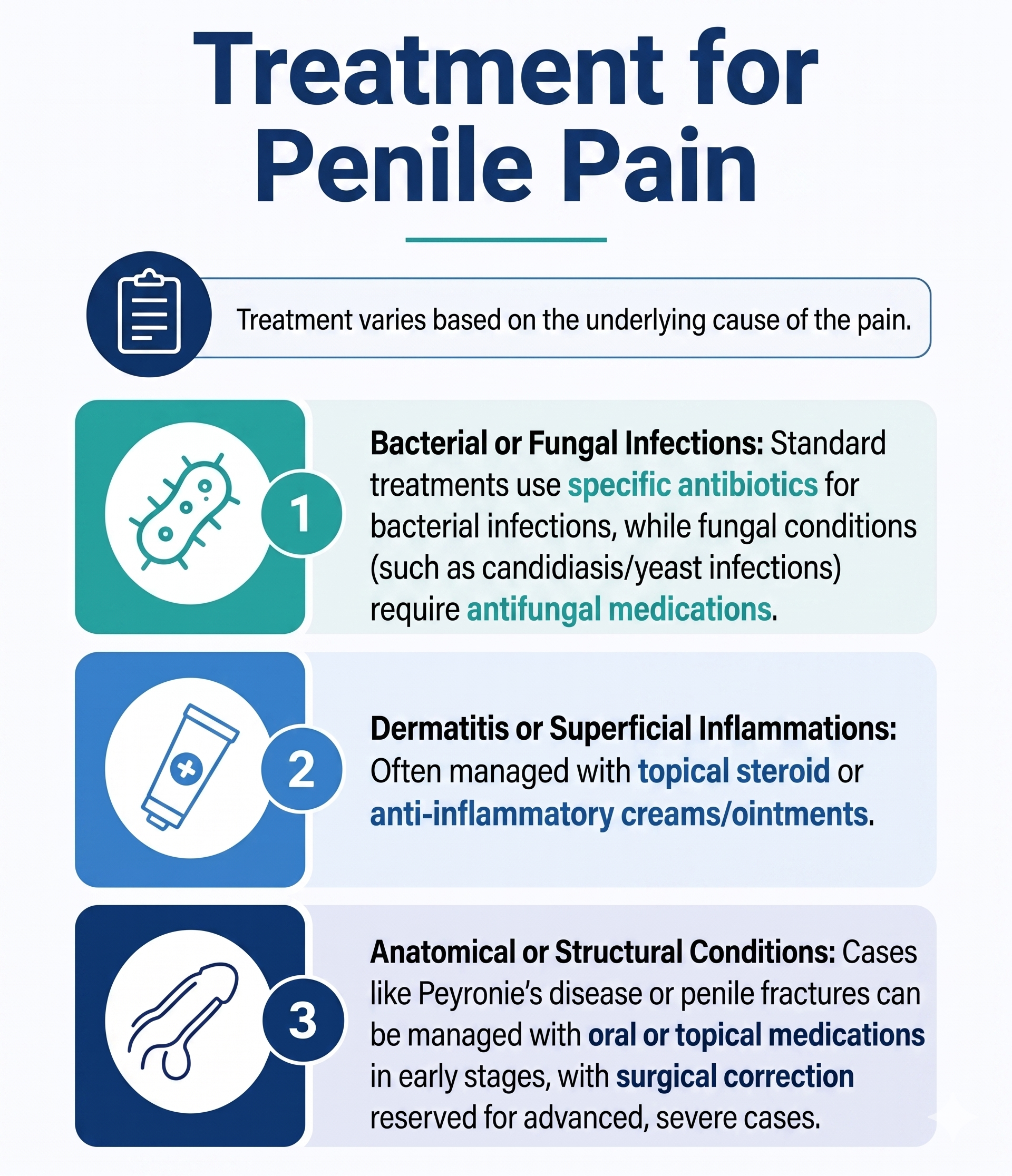
Main approaches for penis pain
When to seek urological evaluation?
It is advisable to seek urological evaluation when the pain is persistent, even if mild, or when accompanied by symptoms such as swelling, redness, fever, difficulty urinating, or discharge.
Timely medical evaluation can help investigate the cause and guide the most appropriate therapeutic approach.
Fill out the pre-analysis form to schedule your consultation with Dr. Paulo Egydio, a urologist specializing in male sexual health.

Learn more:
- Male sexual health: 7 habits that affect your performance and how to improve
- Male Pelvic Pain: 06 Symptoms to Watch For
- 6 Causes of Penis Fissures: See Treatments and Care
- 07 Causes of Pain in the Urinary Channel: Know What to Do
- Itching in the urethra: what to do?
- Testicle Pain: 9 Causes, Relief, and Treatment
- Does sexual abstinence cause problems for men? What it can cause and its consequences?