
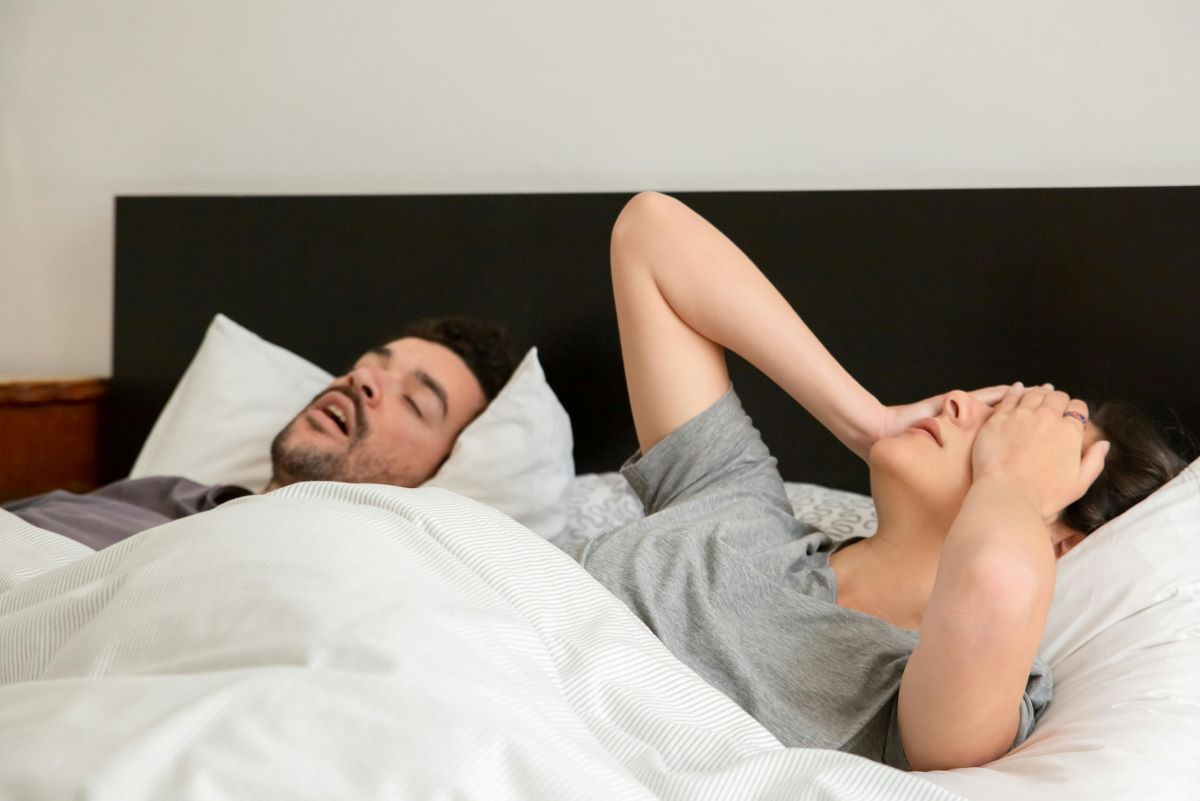
Sleep apnea causes erectile dysfunction in some men because it compromises sleep quality, especially the deep sleep phases that are important for testosterone production.
During apnea episodes, temporary interruptions in breathing lead to micro-awakenings throughout the night. As a result, sleep becomes fragmented and less restorative.
In addition to causing daytime sleepiness, irritability, and hormonal changes, sleep apnea can also affect male sexual health.
Below, understand how this condition interferes with erectile function and why proper treatment can help restore quality of life and sexuality.
What is sleep apnea?
Characterized by partial or complete obstruction of the upper airway during sleep, sleep apnea is usually caused by relaxation of the throat muscles and the base of the tongue.
Although this relaxation is normal, in some people it causes the tongue and jaw to shift backward, narrowing the airway passage and making breathing difficult.
There are three main types of sleep apnea:
-
- Obstructive sleep apnea: occurs due to partial or complete blockage of the airways, usually caused by relaxation of the throat muscles or anatomical changes in the nose, neck, or jaw.
- Central sleep apnea: happens when the brain does not adequately send the signals responsible for controlling breathing.
- Mixed apnea or complex sleep apnea syndrome: a combination of obstructive and central sleep apnea.
How does sleep apnea affect the body?
The most well-known effects of sleep apnea are related to worsening sleep quality. Respiratory interruptions fragment rest and can cause:
- excessive daytime sleepiness;
- irritability;
- mood changes;
- difficulty concentrating;
- reduced memory and reasoning.
However, the impacts of sleep apnea go beyond sleep and can affect different body systems.
Cardiovascular problems
Sleep apnea can cause episodes of hypoxemia, a condition characterized by reduced oxygen levels in the blood. To compensate for this drop, the body increases heart rate and promotes blood vessel contraction.
Over time, this mechanism can favor the development of high blood pressure and increase the risk of other cardiovascular diseases, such as heart failure, heart attack, and stroke (CVA).
Obesity and diabetes
Repeated episodes of apnea are interpreted by the body as stressful situations, stimulating cortisol production.
When the levels of this hormone remain elevated for long periods, a reduction in insulin sensitivity can occur, favoring increased blood glucose and increasing the risk of type 2 diabetes.
Additionally, sleep deprivation interferes with the balance between two hormones important for appetite control:
- Leptin: responsible for the sensation of satiety;
- Ghrelin: responsible for the sensation of hunger.
With worsening sleep quality, ghrelin levels tend to increase and leptin levels to decrease, favoring weight gain. This process can contribute to obesity, a condition frequently associated with both sleep apnea and diabetes.

Does sleep apnea cause erectile dysfunction?
Sleep apnea can contribute to erectile dysfunction in some men.
This relationship is reinforced by a review that analyzed 13 studies and found a prevalence of difficulty achieving erection between 40.9% and 80% of men with sleep apnea.
The link between sleep and erectile function is related, in part, to testosterone production, which occurs mainly during the deepest sleep phases.
An article published in the Asian Journal of Andrology indicates that at least 3 hours of continuous sleep are needed to maintain adequate hormone production.
Because sleep apnea fragments sleep and causes frequent awakenings, it can reduce testosterone levels in some patients, contributing to changes in libido and erectile function.
Why can sleep apnea cause erectile dysfunction?
Erection depends on integration between the cardiovascular, hormonal, and nervous systems. Because sleep apnea can affect all these mechanisms, it increases the risk of erectile dysfunction.
- Lack of oxygenation during sleep: respiratory pauses reduce oxygen levels in the blood and increase cardiovascular overload. Over time, this process can compromise blood vessels and make it difficult to achieve the flow needed for erection.
- Vascular changes: sleep apnea is associated with increased blood pressure and damage to blood vessel walls, which can impair penile circulation.
- Reduced nitric oxide availability: nitric oxide is responsible for relaxing blood vessels that allow increased blood flow to the penis. Studies suggest that sleep apnea can reduce its availability, compromising the erection mechanism.
- Neurological impact: repeated drops in oxygen levels activate the sympathetic nervous system, responsible for the alert state. When this activation becomes chronic, it can impair nerve signals and vascular relaxation necessary for achieving and maintaining an erection.
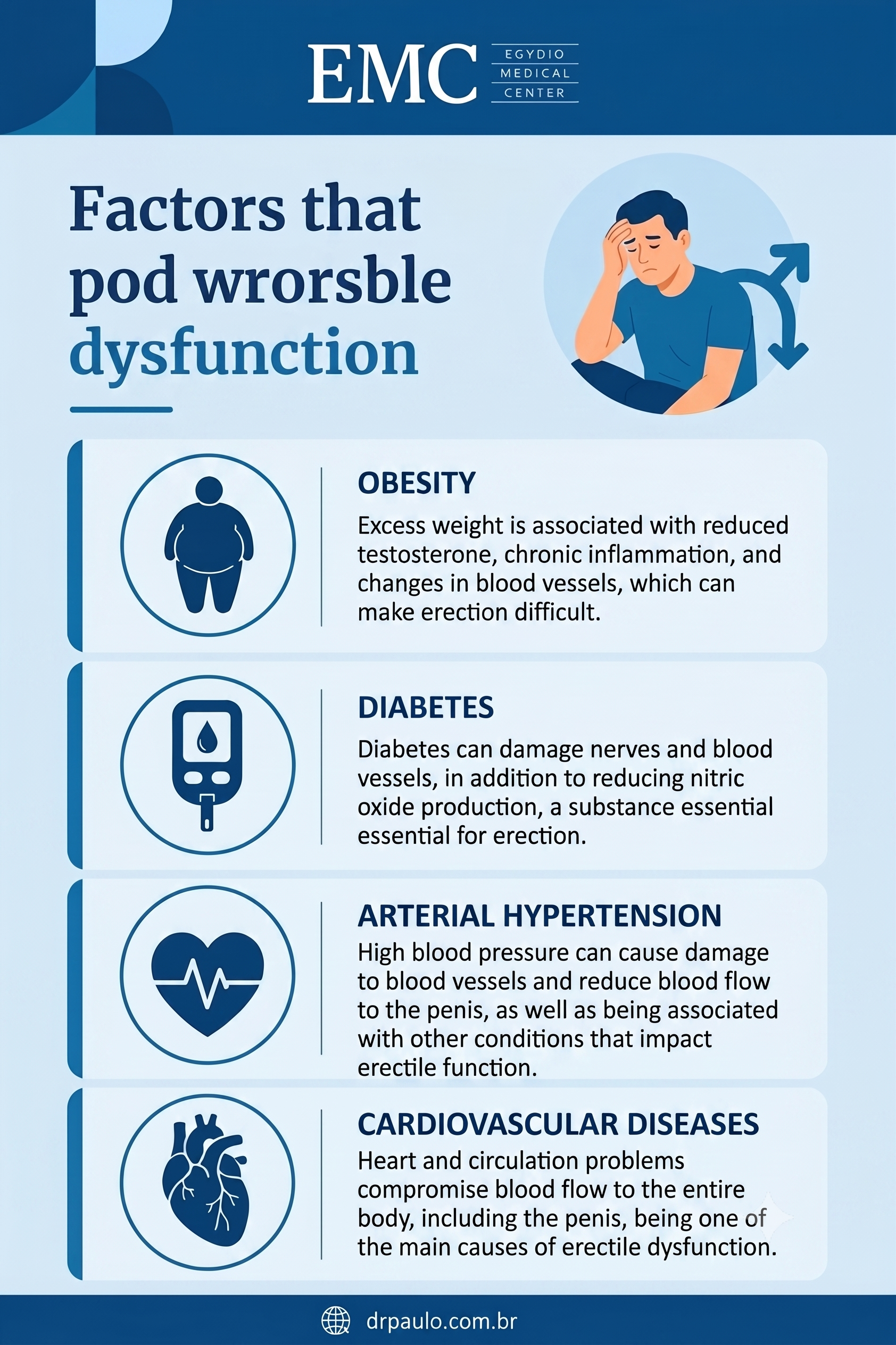
What factors increase the risk of erectile dysfunction?
Does sleep apnea treatment improve erectile dysfunction?
Sleep apnea treatment can contribute to improved erectile function in some patients.
The gold standard for treatment is CPAP (Continuous Positive Airway Pressure), a device that keeps the airways open during sleep, reducing respiratory pauses and snoring.
A review published in 2019, which evaluated 26 studies, concluded that CPAP can improve erectile dysfunction, especially when combined with medications for erection, such as sildenafil and tadalafil.
Does CPAP improve erectile function?
Yes. By keeping the airways open during sleep, CPAP reduces oxygen loss and frequent awakenings.
This decreases cardiovascular overload, helps preserve blood vessel function, and promotes the availability of nitric oxide, a substance fundamental for the relaxation of penile arteries and for erection.
Additionally, by restoring deeper and more restorative sleep, CPAP can contribute to adequate testosterone production.
When to see a urologist?
It is recommended to see a urologist when difficulty achieving or maintaining an erection persists for weeks or months, even after starting sleep apnea treatment and adopting healthy habits, such as balanced diet, physical activity, and smoking cessation.
Medical evaluation is important to investigate other factors associated with erectile dysfunction, such as high blood pressure, diabetes, testosterone deficiency, and medication side effects.
Fill out the pre-analysis form to schedule a consultation with a specialist in erectile dysfunction treatments.


