

The symptoms of low testosterone may be related to hormonal disorders, a sedentary lifestyle, medications, chronic diseases, and aging. Learn what may be behind the problem and which medical approaches may be considered in each case.
Reduced libido and erectile dysfunction are among the best-known symptoms of low testosterone.
Hormonal imbalance may also be associated with muscle and bone changes, increased body fat, fatigue, and mood swings.
This reduction is known as hypogonadism, a condition caused by poor testicular function or problems in the brain regions that stimulate testosterone production.
If you want to understand how to increase low testosterone, it is essential to know when testosterone is considered low and which measures may be evaluated to manage the condition safely.

Why Is Testosterone Important for Men?
Testosterone is the main male hormone and is related to the development of physical characteristics, sexual function, muscle and bone health, as well as energy and mood. When testosterone levels decrease, symptoms such as reduced libido, difficulty achieving erections, increased abdominal fat, muscle weakness, and mood changes may appear.Main Symptoms of Low Testosterone
Testosterone deficiency may cause sexual, physical, and emotional symptoms. Below is a table with the clinical signs in each group:| Sexual Symptoms | Physical Symptoms | Emotional Symptoms |
|---|---|---|
| Erectile dysfunction | Constant fatigue | Irritability |
| Low libido | Significant loss of muscle mass and bone weakness | Difficulty with concentration and memory |
| Reduced frequency of spontaneous erections | Increased abdominal fat | Lack of motivation and lower self-esteem |
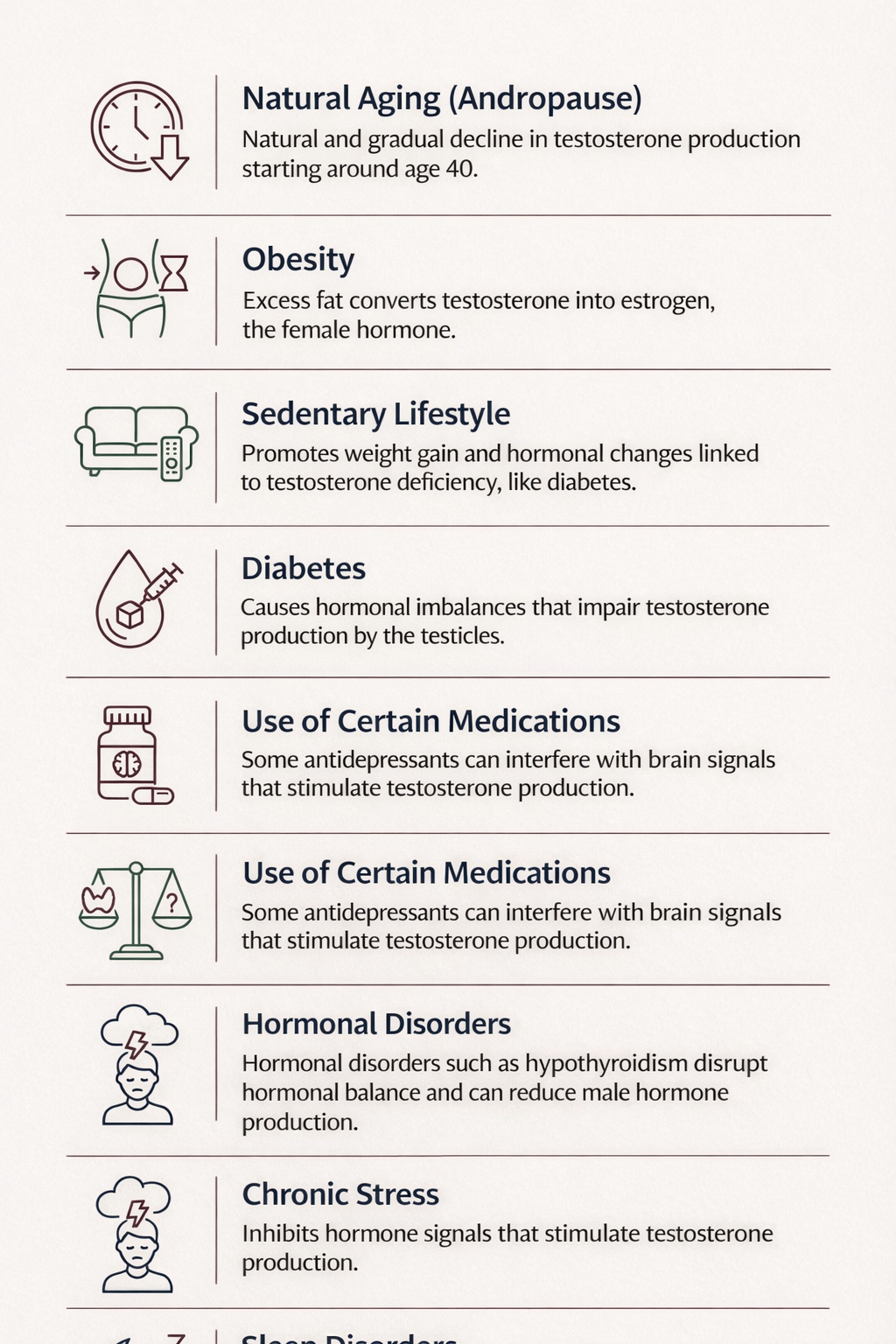
What Causes Low Testosterone?
How to Increase Low Testosterone Safely?
Many men wonder how to increase low testosterone, but treatment depends on the cause of the hormonal decline. When deficiency is confirmed, the doctor may recommend testosterone replacement therapy. In addition, healthy habits can support proper hormonal function.Lifestyle Changes
1 – Balanced Diet
Some foods may help support the body’s proper functioning and maintain hormonal health, especially those rich in vitamins and minerals that are important for the body. These include foods rich in vitamin A, such as carrots, sweet potatoes, and liver; vitamins C and E, found in fruits such as strawberries and oranges, as well as almonds and spinach; and omega-3, found in flaxseed and fatty fish such as salmon and sardines. Foods rich in zinc are also important because this mineral plays a role in testosterone production. Good sources include oysters and pumpkin seeds.2 – Physical Exercise (Especially Strength Training)
Regular strength training may be associated with hormonal responses that benefit metabolism and muscle recovery. In addition, aerobic exercise such as walking, running, and cycling helps reduce body fat and contributes to hormonal balance. This is important because excess fat may promote the conversion of testosterone into estrogen in the body.3 – Regular Sleep
Sleeping well is essential for hormonal balance. Reduced libido and erectile dysfunction are among the best-known symptoms of low testosterone. On the other hand, poor sleep may reduce hormone levels.4 – Stress Reduction
Stress may be associated with reduced male libido, among other factors, because it interferes with hormonal balance. When cortisol levels are high, the body may reduce the production of hormones related to testosterone. That is why adopting habits that help control stress — such as the ones mentioned above — is important to maintain hormonal balance.
Hormone Replacement Therapy With Medical Supervision
| Method | Frequency | Advantages | Recommended For |
|---|---|---|---|
| Gel | Daily | Convenience | Sensitivity to hormonal peaks |
| Injectable | Weekly/quarterly | Fewer applications | Rapid rise in hormone levels |
| Implant | Quarterly/semiannually | Continuous release | People with low treatment adherence |
Is Using Anabolic Steroids Safe?
No. It is not safe because it may cause heart and kidney problems and may also harm fertility. Treatment for low testosterone should be individualized, with proper medical evaluation to define the best approach in each case.Tests Needed for a Correct Diagnosis
How do you know if your testosterone is low? Men with symptoms of hormone deficiency, such as low libido, fatigue, mood changes, and loss of muscle mass, should see a urologist. The doctor may request blood tests to measure testosterone levels and assess whether they fall within the range considered normal for the patient’s age. For men around age 50, reference levels may vary, and only a urologist can correctly interpret the results.- Total testosterone: measures the total amount available and the body’s ability to store and transport the hormone.
- Free testosterone: a test that assesses the amount of testosterone actually available in the body to perform its functions.
- SHBG: a test that measures how much testosterone is bound to SHBG protein and how much is free to act in the body.
- PSA: this test is not used to diagnose testosterone deficiency, but it helps assess prostate health. In men with hypogonadism (low testosterone production), prostate activity may decrease, which can result in lower PSA levels.
- Complete blood count: testosterone helps stimulate red blood cell production, so men with low hormone levels may show a reduction in these cells.
- Lipid profile: a test that evaluates cholesterol and other blood lipids. Changes in this test, such as higher LDL cholesterol, may be related to problems in testosterone production.