
To avoid erectile problems, it is important to take care of your physical and emotional health, manage stress, maintain healthy habits, sleep well, and treat conditions that may affect erection.
Concern about sexual performance is common among men, and knowing how to avoid erectile problems is among the most searched topics when it comes to male sexual health.
Occasional episodes of difficulty achieving erection are normal and can happen at different stages of life. A single failure does not always indicate the presence of erectile dysfunction or another health problem.
Various factors can influence male sexual function. Performance anxiety, stress, poor sleep, hormonal changes, and emotional issues are among the most common causes of reduced libido and difficulties in achieving or maintaining erection.
Below, understand what are the main causes of erectile problems, discover how to improve sexual performance, and learn about habits that can contribute to a healthier and more satisfying sex life.
What can cause erectile problems?
Erectile failures can originate from psychological, hormonal, neurological, vascular, or urological factors. Identifying the cause is the first step in seeking the most appropriate treatment. Below, learn about the main factors involved.
1) Psychological factors
Emotional issues are among the most common causes of occasional erectile difficulties.
Performance anxiety, for example, generates excessive worry about performance during intercourse, making it difficult to relax in a way necessary for sexual response.
Depression can also affect erectile function by altering the action of neurotransmitters important for libido and arousal, such as serotonin, dopamine, and noradrenaline.
Stress
Stress has a strong influence on male sexual performance, as it stimulates the release of cortisol.
Although this hormone is useful for the body to deal with challenging situations, elevated and persistent peaks can interfere with testosterone production, reduce libido, and compromise the mechanisms involved in erection.
As a result, some men may have difficulty achieving or maintaining an erection.
2) Hormonal changes
A decrease in testosterone levels is considered normal from age 40 onwards, but hormonal changes can occur earlier due to factors such as obesity, diabetes, and urological problems.
3) Overwork and poor sleep
Overwork reduces sleep time and quality, promoting physical and mental fatigue. Poor sleep affects testosterone levels because this hormone is produced during the deepest stages of sleep.
Therefore, few hours of sleep and sleep deprivation can reduce testosterone levels and increase fatigue, factors that decrease physical and mental disposition for sexual activity and can contribute to episodes of erectile failure.
4) Urological diseases
Surgery to remove this gland can cause erectile dysfunction, because the nerves involved in erectile function are located near the prostate and can be affected during the procedure.
5) Neurological diseases
Diseases that affect the central nervous system, such as Parkinson’s, can interfere with the transmission of signals from the brain to the penis.
6) Excessive alcohol consumption
Excessive alcohol can cause erectile problems because it impairs blood circulation and interferes with the transmission of nerve signals responsible for sexual response.
In addition to reducing the availability of nitric oxide, a substance essential for blood vessel dilation, alcohol can also decrease sensitivity and the nervous system’s ability to respond, as explained in a study from the School of Nursing at Ribeirão Preto, USP.
When consumed excessively and prolonged, it increases the risk of neurological damage that can contribute to erectile dysfunction.
7) Cardiovascular diseases
Cardiovascular health has a direct relationship with the quality of erection. Conditions such as high blood pressure, diabetes, high cholesterol, and atherosclerosis can damage blood vessels and reduce the blood flow necessary for the penis.
For this reason, erectile dysfunction can be an early sign of cardiovascular problems. Studies show that many men with heart disease also have erectile difficulties.
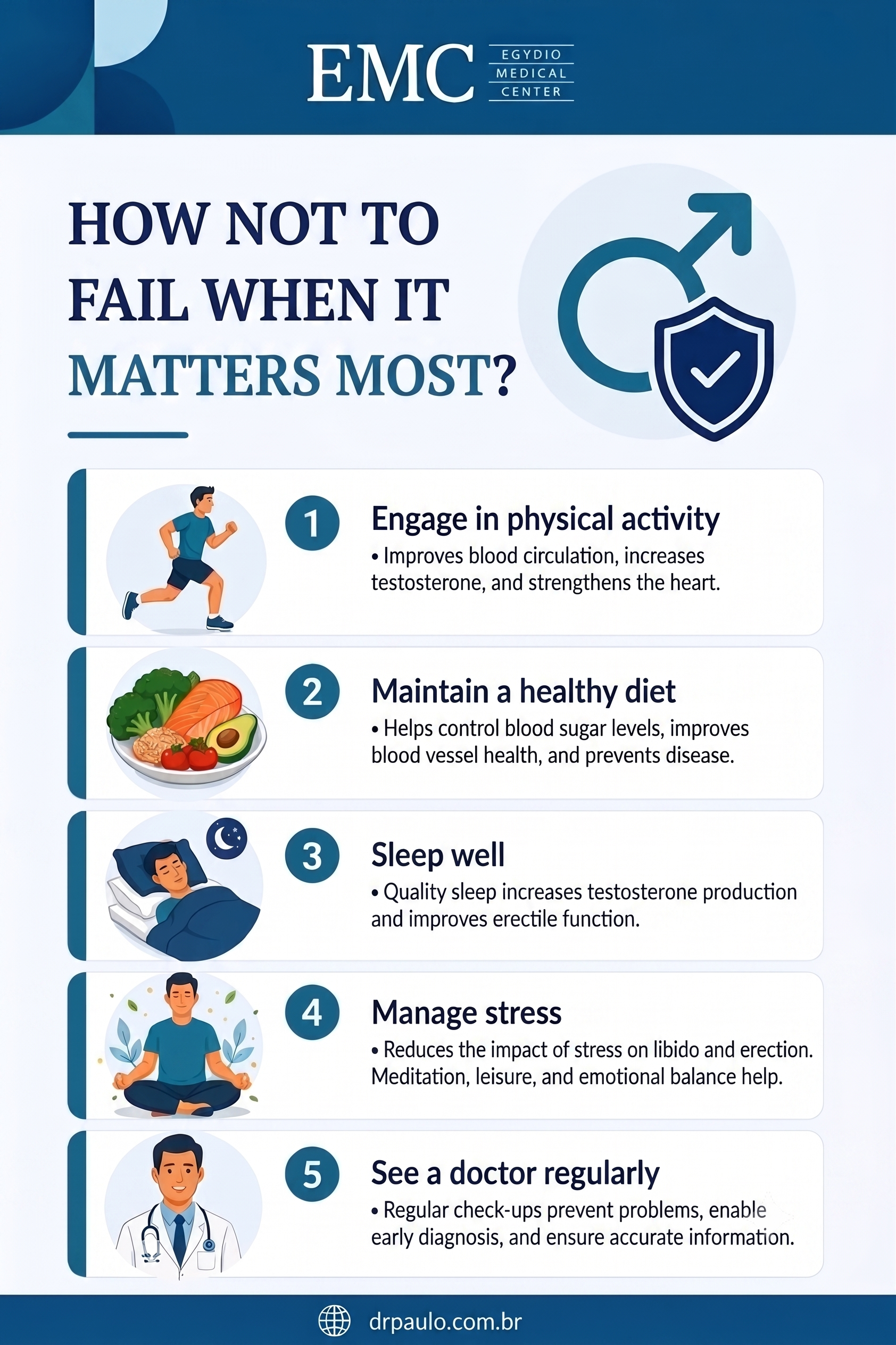
It is important to maintain a balanced diet, exercise regularly, avoid smoking and excessive alcohol consumption, and have regular check-ups to monitor blood pressure, cholesterol, and blood glucose levels.
When can erectile failure indicate erectile dysfunction?
A momentary difficulty in achieving or obtaining an erection is common and does not always indicate a health problem. Stress, anxiety, fatigue, worries, and excessive alcohol consumption contribute to these isolated failures.
When difficulties become frequent and persistent, they may indicate erectile dysfunction, as the condition is characterized by recurrent difficulty in achieving or maintaining erection in most attempts.
Another difference between an occasional failure and erectile dysfunction is that the first situation causes a specific discomfort, while the second generates a cycle of insecurity, performance anxiety, and reduced self-esteem.
Related: How to prevent erectile dysfunction: strategies and essential care
How to avoid erectile problems?
Erectile dysfunction treatment options
| Type of medication | When indicated | How it works in the body |
|---|---|---|
| Oral medications | First-line treatment for erectile dysfunction. Can be used occasionally or daily, as prescribed by a physician. | It is an erection facilitator, as it requires sexual stimulation to be effective. The time of action varies. Sildenafil, for example, can last up to 5 hours. |
| Intracavernous injections | Indicated when the patient did not respond to oral medications. They should be applied at the base of the penis. The injection tends to take effect between 5 and 20 minutes after application. | Although erection can occur without significant sexual stimulation, the response tends to be more natural and satisfactory when there is stimulation. |
| Penile prosthesis | Indicated when the patient does not respond to previous alternatives. The semi-rigid type keeps the penis firm, requiring only positioning upward when wanting to initiate sexual intercourse. The inflatable prosthesis requires activation of a pump located in the scrotum to make the penis erect. | Restores the ability to achieve sufficient rigidity for sexual intercourse. Does not alter sensitivity, does not increase sexual desire, and does not interfere with the ability to achieve orgasm or ejaculate. |
When to consult a urologist?
You should see a urologist if you experience one or more of the following signs:
- Persistent difficulty achieving erection in most sexual activity attempts;
- Reduction or absence of spontaneous erections;
- Changes in ejaculation;
- Decreased libido;
- Lack of response or insufficient response to treatments already tried;
- Presence of risk factors for erectile dysfunction, such as diabetes, high blood pressure, cardiovascular disease, hormonal changes, or obesity.
For more information about evaluation and treatment options suitable for your case, it is recommended to consult a specialist in urology.
Learn more: