
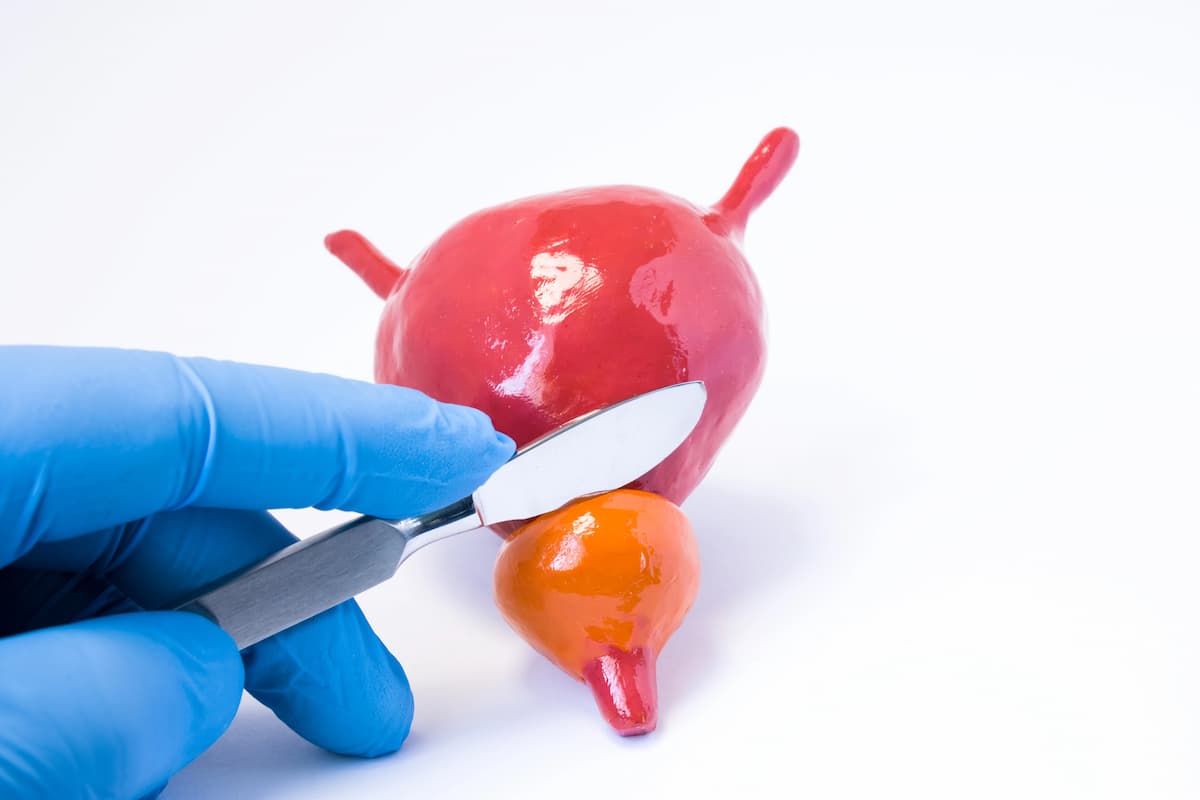
Radical prostatectomy is a surgery that represents one of the main treatments for prostate cancer.
Radical prostatectomy is a surgical procedure that involves removing the prostate and, in some cases, nearby structures, with the goal of eliminating the prostate tumor. Although it is a widely used treatment, it may raise concerns due to the possibility of erectile dysfunction and urinary incontinence.
In many cases, it is possible to discuss strategies to reduce postoperative impacts and support functional recovery, depending on each clinical situation.
Keep reading to learn everything about this surgery!
What is radical prostatectomy?
Radical prostatectomy is the surgery to remove the prostate and, depending on the case, the seminal vesicles and nearby lymph nodes.
The procedure is indicated for patients diagnosed with localized prostate cancer — that is, when the tumor has not spread to other organs.
The surgery aims to remove the tumor and may help control the disease, depending on the stage and characteristics of the case, with the need for follow-up.
Radical prostatectomy is prescribed after the disease is diagnosed, and this diagnosis is based on digital rectal examination, PSA (prostate-specific antigen), and prostate biopsy.
Related: Is an altered PSA cancer? See what the change means and what to do

Types of prostatectomy and when they are indicated
There are different types of prostatectomy, each with specific characteristics. The choice of the most appropriate technique depends on factors such as cancer stage, the patient’s age and health status, and the surgeon’s experience.
- Open radical prostatectomy: performed through an incision in the abdomen, it allows the surgeon direct access to the prostate. Although it is a more invasive technique, it can be appropriate in complex cases that require a broad view of the affected region.
- Robotic radical prostatectomy: uses advanced technology to perform precise movements with instruments controlled by a surgeon. This technique may be associated with greater precision and, in some cases, less surgical trauma. Even so, outcomes vary depending on the patient’s profile and the team’s experience.
- Laparoscopic: performed through small incisions with the help of a camera, this approach is less invasive and generally results in less pain and a faster recovery.
Preoperative period
The preoperative evaluation for prostate cancer surgery includes the tests that diagnose the disease, CT scan, and MRI. Depending on the case, the physician may also request adjustments in medications and diet.
Another important aspect is emotional preparation, because radical prostatectomy may affect self-esteem and the perception of masculinity.
That is why it is essential for the medical team to be available to address questions about risks, complications, and expectations before and after surgery.
How the surgery is performed
Radical prostatectomy is performed under general anesthesia. In the open technique, the surgeon makes an incision in the abdomen to access the prostate. In laparoscopic and robotic radical prostatectomy, small incisions are made to insert surgical instruments that allow access to the gland.
The goal is to preserve, whenever possible, structures related to urinary continence and erectile function, reducing risks when clinically feasible.
Recovery after radical prostatectomy
Recovery after radical prostatectomy varies depending on the technique used.
Regarding postoperative hospitalization, patients generally remain in the hospital for 2 to 5 days.
However, men who undergo open prostatectomy may stay longer in the hospital because it is a more invasive technique.
Care continues at home, avoiding intense physical effort, using the urinary catheter properly, and attending scheduled follow-up appointments.
The overall recovery time may take weeks or months. During this period, it is essential to monitor possible complications and contact the physician as soon as any issue arises.
Risks and complications of radical prostatectomy
Many complications can be identified and managed with medical follow-up, depending on severity and individual response.
- Urinary incontinence
- Erectile dysfunction
- Infections
- Bleeding
- Internal scar tissue formation
Why can a man develop erectile dysfunction?
Erectile dysfunction after surgery may occur due to damage to the nerves responsible for the erection mechanism.
Nowadays, there are techniques aimed at preserving these nerves whenever possible. Even so, in many cases, some men experience difficulty achieving or maintaining an erection after surgery.
If the patient develops this type of condition, it is important to consider that a penile prosthesis may be a therapeutic alternative, after an individualized medical evaluation. The procedure aims to restore the rigidity needed for sexual intercourse, while respecting each patient’s clinical conditions.
In situations with significant neurological impairment, conservative treatments such as oral medications or intracavernosal injections may have limited response, which is why a penile prosthesis may be discussed as a treatment option.
How long after radical prostatectomy can a penile prosthesis be considered?
In many cases, an interval of months (for example, 6 to 12) is considered before deciding on a prosthesis, but timing depends on the clinical picture, rehabilitation, and the patient’s goals.
For example, if the man already had erectile problems and used medications, there may be no need to wait for spontaneous erectile rehabilitation.
In this specific situation, a penile prosthesis may be placed after urinary continence has recovered or during the radical prostatectomy procedure.
However, if the patient had erectile dysfunction but could achieve an erection with medications, penile rehabilitation after prostate removal is often considered.
This rehabilitation may involve oral medications, intracavernosal injections, gels applied to the glans, or vacuum device therapy.
Post-prostatectomy rehabilitation
Rehabilitation after radical prostatectomy requires rest during the first days after the procedure. The patient should avoid carrying weight, driving, and intense physical activities.
Normal routine, including work, may be resumed gradually, and clearance depends on the type of surgery and the patient’s clinical status.
Rehabilitation may also include physical therapy to strengthen the pelvic floor muscles, reducing the risk of urinary incontinence.
If the man develops erectile difficulties, he should consult the urologist responsible for the surgery for the most appropriate guidance.
Psychological support may also help restore self-confidence and cope with possible changes after the procedure.
Prognosis
Survival for patients with prostate cancer can be high, especially when diagnosed and treated early. However, when prostate cancer is detected in early stages and can be managed with radical prostatectomy, prognosis may be favorable in many cases, but it varies depending on multiple clinical factors.
Ongoing medical follow-up throughout life after prostate cancer treatment is essential to maintain health.
Take care of your health with Dr. Paulo Egydio
Radical prostatectomy is one of the treatments for prostate cancer, and it is indicated when the tumor has not reached other organs.
Fill out the pre-analysis form to schedule an appointment with Dr. Paulo Egydio and receive guidance tailored to your case.