
The PHI Test (Prostate Health Index) is a detailed mapping for cancer risk in this gland that reduces the need for biopsies for detection. Learn more.
The PHI test is a relatively new examination and has been used to improve the accuracy of prostate cancer detection in men.
It represents an important tool for urologists and other health professionals to close the diagnosis and contributes to the personalization of prostate health treatment.
What is the PHI test?
The test is a combination of three different blood markers: total PSA (prostate-specific antigen), free PSA, and [-2]proPSA to evaluate the risk of prostate cancer.
The calculation of the PHI uses a formula that integrates the levels of these three markers, resulting in a prostate health index that indicates the cancer risk.
It serves as a “tie-breaker” for the PSA test, as the PSA protein can be elevated for various reasons, not just prostate cancer. When this happens, the doctor may request a biopsy or the PHI test, which is an alternative to this invasive analysis.
The PHI provides a more detailed and accurate assessment of the prostate compared to PSA, helping to differentiate between cancer and other benign conditions of the gland, such as benign prostatic hyperplasia (BPH).
How is the PHI test done?
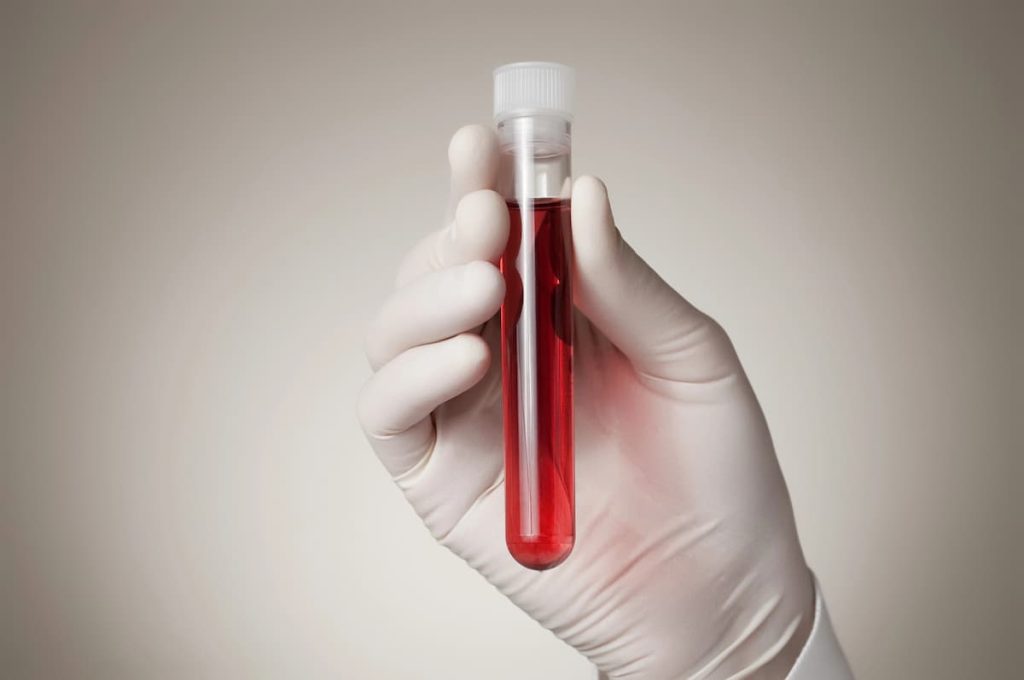
The PHI test is performed through blood collection, just like other common laboratory tests.
From the sample, it is possible to measure the three markers and generate the index, which provides an estimate of the risk of developing prostate cancer. This value is then interpreted as follows, with some variations depending on the laboratory and clinical guidelines used:
- PHI below 27: low risk of prostate cancer
- PHI between 27 and 55: intermediate risk
- PHI above 55: high risk of prostate cancer
Generally, the result is available within a week.

Which men can take the PHI test
Since it is a simple test, any man can take it. However, it is only necessary for specific cases, such as:
Elevated PSA
When a patient presents elevated PSA levels, the result may not be conclusive to determine if there is prostate cancer.
Patient monitoring
For patients with moderate risk of prostate cancer or with a family history of the disease, the PHI test can be used as a monitoring tool, either to decide if a biopsy is necessary or to detect any changes early.
Patients with previous negative biopsies
Men who have had prostate biopsies with negative results but still have elevated PSA levels can take the PHI test and obtain additional information instead of undergoing a new biopsy immediately.
When to worry
Prostate cancer is usually an asymptomatic disease at the beginning. However, as it progresses, it usually presents the following symptoms:
- Difficulty urinating or increased urinary frequency
- Weak or interrupted urinary flow
- Pain or burning during urination
- Presence of blood in urine or semen
- Persistent pain in the pelvic region
- Erectile dysfunction
By visiting the doctor at least once a year, it is essential to undergo some tests to analyze prostate health. They can also indicate some reasons for concern:
- Elevated PSA
- Abnormal rectal exam
- Elevated PHI index
Additionally, it is important to remember that risk factors for prostate cancer include:
- Men over 40 years old
- Men with a family history of the disease
Importance of the PHI test for men’s health
Considering that prostate cancer cases are expected to double between 2020 and 2040, especially in low- and middle-income countries, according to a study conducted by The Lancet Commission presented at the 2024 European Association of Urology Congress, the PHI test will become increasingly relevant for men’s health care.
Besides offering more accuracy and reducing the need for unnecessary biopsies, the test reduces the discomfort and anxiety experienced by patients. Therefore, it represents a humanizing tool in men’s health care.

Treatments for erectile dysfunction after prostate cancer treatment
Surgery for prostate cancer, known as radical prostatectomy, involves the removal of the prostate gland and, in some cases, the seminal vesicles and nearby lymph nodes.
As with many surgeries in this area, prostatectomy can result in erectile dysfunction due to nerve damage during the procedure. Some men are unable to recover erectile function even with clinical treatment and need a penile implant.
The prosthesis, whether malleable or inflatable, aims to restore the penis’s penetrative capability. Thus, the man will have the rigidity to engage in sexual intercourse, performing the desired movements for as long as he wants.
Men’s care regarding prostate cancer is crucial, as the disease can even affect their sexual health. The PHI test, along with other tests for disease detection, should be seen as allies and performed annually to preserve health.
If you are dealing with the disease or have residual effects affecting your sexual quality of life, pre-analysis with Dr. Paulo Egydio and get help.