
Causes include prostatitis and chronic pelvic pain, urinary tract infections or STIs, prostate changes, pelvic floor problems, obstruction of the ejaculatory ducts, effects of medications, surgeries and emotional factors that can lead to painful ejaculation.
Painful ejaculation can occur in the penis, testicles, perineum, pelvis or abdominal area, during or after orgasm.
When painful ejaculation is recurrent, it may indicate a condition that requires urological evaluation to identify the cause, establish a diagnosis and guide treatment.
Is painful ejaculation normal?
Painful ejaculation should not be considered normal.
An isolated episode does not necessarily mean the presence of a disease, but the Cleveland Clinic recommends evaluation when the pain is severe or recurrent, especially when it interferes with quality of life or the relationship.
What can cause painful ejaculation?
The prostatitis and pelvic pain are among the possible causes. Understand how these and other conditions can cause pain or discomfort during painful ejaculation.
Prostatitis, pelvic pain syndrome and painful ejaculation
Prostatitis is a prostate condition that can cause urinary, sexual and pelvic pain symptoms. Depending on the type, it may be related to a bacterial infection or inflammatory processes. Changes in the pelvic floor muscles may also be associated.
Because the prostate is part of the male reproductive system and lies close to the urethra, prostatitis can cause painful ejaculation during or after orgasm, as well as urinary symptoms such as discomfort when urinating and increased urinary frequency.
Prostatitis may also be related to chronic pelvic pain syndrome, characterized by persistent or recurrent pain or discomfort in the pelvic region.
In male pelvic pain, changes in the prostate, pelvic floor and nearby structures can contribute to ejaculatory symptoms, including painful ejaculation.
Urinary tract infections, STIs and painful ejaculation
Urinary tract infections can cause burning or pain when urinating and pelvic discomfort. In men, evaluation may include assessment of the prostate and nearby structures, especially when there is also painful ejaculation.
Urethritis is the inflammation of the urethra, the channel that carries urine out of the body. It can have infectious or non-infectious causes, with infectious forms often related to sexually transmitted infections.
Chlamydia and gonorrhea are examples of STIs that can cause urethritis. Possible symptoms include burning when urinating, discharge, pain or irritation in the urethra and itching. In some cases, pelvic pain and painful ejaculation may also occur.
Prostate changes and painful ejaculation
The benign prostatic hyperplasia, characterized by benign enlargement of the prostate, can cause urinary symptoms and pelvic discomfort or painful ejaculation.
Inflammatory changes, such as prostatitis, are more closely associated with painful ejaculation. Symptoms may include pelvic pain, discomfort when urinating and pressure in the area between the scrotum and the anus.
The investigation considers factors such as age, intensity and location of the pain, as well as associated sexual symptoms such as painful ejaculation. From that evaluation, the doctor can determine whether the pain is related to the prostate or to other structures of the urinary and reproductive system.
Pelvic floor dysfunctions and painful ejaculation
The pelvic floor is made up of muscles, tissues and ligaments that help keep the organs of the region in the correct position. Its function is related to urinary and fecal control, erectile function and ejaculation, and dysfunction can contribute to painful ejaculation.
Changes in this musculature, associated with factors such as aging, obesity and a sedentary lifestyle, can contribute to symptoms such as pelvic pain, urinary incontinence, pain during sex and discomfort after ejaculation, which can include painful ejaculation.
Obstructions or alterations of the ejaculatory ducts and painful ejaculation
The ejaculatory ducts are small channels that carry semen to the urethra to be expelled during ejaculation.
Cysts, stones and other obstructions can impede the passage of semen. The Cleveland Clinic explains that these changes can cause pressure and inflammation in the area, contributing to pain during or after ejaculation.
Surgeries and urological procedures related to painful ejaculation
The EAU guidelines highlight interventions on the prostate and pelvic region, such as prostate surgery and pelvic radiotherapy, among the factors associated with painful ejaculation.
These procedures can alter structures or pathways involved in the ejaculation mechanism and, in some cases, cause pain during or after the act.
Medications and painful ejaculation
Someantidepressantsand antipsychotics can cause ejaculatory changes.Antihypertensive medications and alpha-adrenergic blockers, primarily used to treat urinary symptoms associated with prostate enlargement, can also affect ejaculation.
If changes in sexual function occur while using a medication, the prescribing physician should assess the possible relationship with the treatment and the need for adjustments.
Emotional and psychological factors in painful ejaculation
Anxiety and stresscan contribute to pain during ejaculation, especially in men with prostatitis or chronic pelvic pain syndrome.
However, psychological factors should not be considered the sole cause. It is important to investigate other possibilities before attributing the pain to emotional aspects.
Painful ejaculation: possible causes and associated symptoms
The table below presents some possible causes of pain during ejaculation and the associated symptoms. It does not replace evaluation by a specialist.
| Possible causes | Symptoms that may appear |
|---|---|
| Prostatitis/pelvic pain | Pelvic pain, urinary discomfort, pain after ejaculation |
| Urethritis/STI | Burning, discharge, urethral pain |
| Urinary tract infection | Burning and increased urinary frequency |
| Prostate changes | Urinary symptoms and pelvic discomfort |
| Pelvic floor | Pelvic or perineal pain |
| Obstruction of the ejaculatory ducts | Pain, ejaculatory changes |
| Prostate surgery/radiotherapy | Sexual changes and pain |
| Medications | Changes in sexual function |
| Emotional factors | Pain, including painful ejaculation, may be associated with anxiety or stress in some cases |
Painful ejaculation and other symptoms: what could it mean?
Painful ejaculation and burning when urinating
Painful ejaculation accompanied by burning when urinating may be associated with urethritis, STIs, urinary tract infection, or prostatitis.
These conditions can cause inflammation or irritation in the urinary tract and affect structures involved in ejaculation, causing painful ejaculation or discomfort.
Painful ejaculation and testicular pain
A testicular pain may have various causes, including STIs, inflammation, infections and anatomical changes, such as testicular torsion.
Some of these conditions can also cause painful ejaculation, especially when there is inflammation or infection in the male reproductive system.
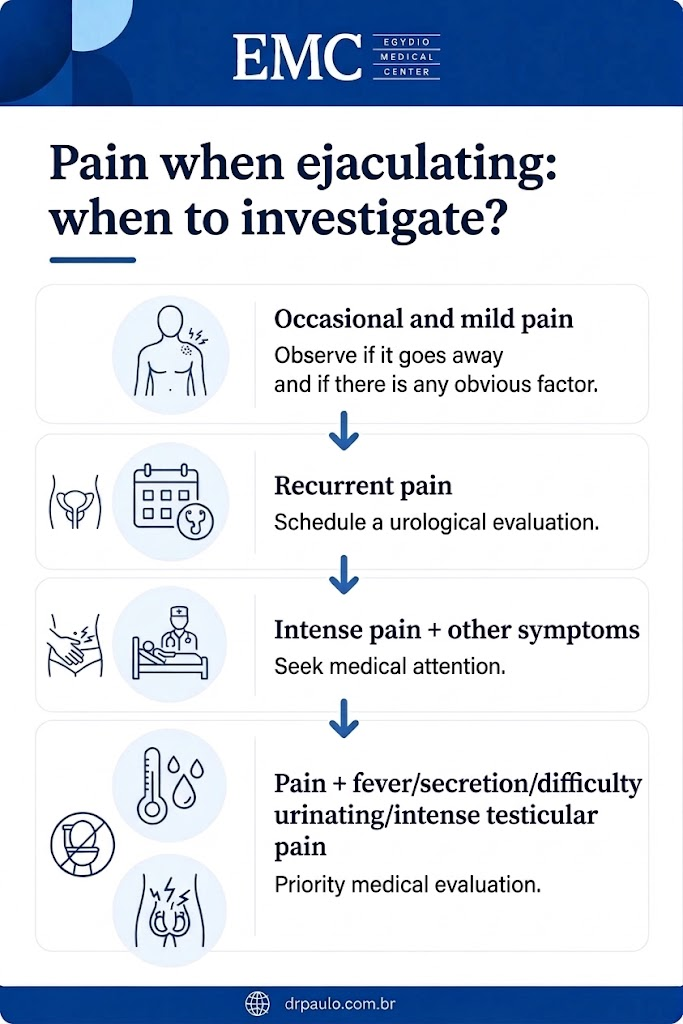
When testicular pain is persistent or severe, especially if accompanied by swelling, fever, nausea or urinary changes, it is important to seek medical evaluation.
If the pain starts suddenly and intensely, care should be sought immediately, as it may indicate a condition requiring urgent treatment.
Painful ejaculation and perineal pain
Painful ejaculation can be associated with perineal pain, the area located between the scrotum and the anus. This relationship can occur in cases of prostatitis and chronic pelvic pain syndrome.
Changes in the pelvic floor can also contribute to these symptoms. Tension, weakness or excessive contraction of the muscles can cause perineal pain and painful ejaculation.
Painful ejaculation after intercourse: what could it be?
Painful ejaculation can be related to different factors.
Friction and the intensity of sexual activity, for example, can cause temporary irritation of the genital tissues. That said, a more intense sexual encounter is not necessarily the cause of the pain.
Inflammatory or infectious processes, such as prostatitis and urethritis, can also cause penile pain, as well as painful ejaculation. Changes in the pelvic floor can also contribute to the discomfort.
Painful ejaculation after masturbation
The Cleveland Clinic recognizes that painful ejaculation can occur during sexual intercourse, masturbation or nocturnal emissions, which are involuntary ejaculations during sleep. The pain can persist for a few hours after ejaculation.
It is important to seek medical advice when the symptom occurs repeatedly, regardless of the form of stimulation, or when it is associated with pelvic pain or urethral pain.
How is painful ejaculation investigated?
The urologist investigates the cause of painful ejaculation based on the medical history, symptoms and physical examination. When necessary, they may request laboratory and imaging tests.
Clinical and sexual history for painful ejaculation
The first step is to review the clinical and sexual history related to painful ejaculation.
The doctor may ask when the pain began, where it is located, its intensity, how long it lasts and how often it occurs.
It is also important to check whether the pain is related to sexual intercourse, masturbation or other forms of ejaculation, as well as the presence of urinary symptoms, history of STIs, medication use and surgeries or procedures in the pelvic region.
Physical examination for painful ejaculation
The physical examination may include genital assessment to identify abnormalities.
Depending on the symptoms and clinical suspicion, the doctor may also examine the abdomen and perform a digital rectal examination.
Additional tests for painful ejaculation
Tests depend on the diagnostic suspicion. The investigation may include urine tests, STI testing, blood analyses, ultrasonography and other imaging tests when necessary.
How to treat painful ejaculation?
Treatment depends on the identified cause. The approach may include:
- Infection: targeted treatment directed at the causative agent.
- Prostatitis or pelvic pain: individualized approach.
- Pelvic floor disorders: may include specialized physiotherapy.
- Medication effects: the responsible physician can assess the need to adjust therapy.
- Ejaculatory obstruction: the treatment depends on the abnormality found.
- Psychological factors:Psychotherapy or sex therapy may be part of the treatment when indicated.
How to prevent painful ejaculation?
It is not possible to completely avoid the risk of painful ejaculation, but some measures can help reduce it.
The use of condoms during sexual intercourse, appropriate treatment of STIs, attention to urinary symptoms and urological follow-up can contribute to the health of the urinary and reproductive systems and help prevent painful ejaculation.
It is also recommended to avoid self-medication and maintain habits that contribute to overall well-being.
If painful ejaculation is persistent, recurrent or accompanied by other symptoms, seek urological evaluation.