
There is no robust scientific evidence that ozone therapy for Peyronie’s Disease works as an effective treatment to correct penile curvature or eliminate fibrotic plaques.
Peyronie’s Disease causes penile curvature due to the formation of scar tissue after repetitive microtrauma. In more severe cases, it can cause pain during erection and make sexual intercourse difficult.
Treatment depends on the stage of the disease. In the initial stage, the goal is to control inflammation and reduce the progression of curvature. In advanced cases, penile reconstruction surgery may be necessary to restore anatomy.
Among non-invasive options is ozone therapy, which uses a mixture of oxygen and ozone. Although some argue that the technique may reduce inflammation and relieve pain in the initial stage, there is still no scientific evidence that proves its effectiveness.
Below, understand what scientific studies show about ozone therapy for Peyronie’s Disease and learn about treatments that have medical support.
What is Peyronie’s Disease?
A Peyronie’s Disease is a urological condition caused by the formation of hardened scar tissue plaques that develop in the tunica albuginea, the membrane that surrounds the corpora cavernosa and helps maintain penile rigidity during erection.
These plaques usually develop after small repetitive trauma to the genital area, which can occur, for example, during sexual intercourse or other activities, such as sports.
The plaques of Peyronie’s Disease reduce the elasticity of penile tissue and can cause curvature, pain during erection, erectile dysfunction, penile thinning and loss of length, factors that compromise sexual function and cause emotional impacts.
What is ozone therapy?
Ozone therapy is a treatment that uses a mixture of oxygen and ozone, applied through different routes, such as cutaneous, oral, subcutaneous, rectal and through autohemotherapy, a procedure in which blood is withdrawn, mixed with ozone and reinfused into the body.
It is believed that medical ozone can stimulate tissue oxygenation, improve blood circulation, reduce pain, help fight microorganisms and promote healing.
Does ozone therapy for Peyronie’s Disease work?
There is no scientific evidence that proves the effectiveness of ozone therapy in the treatment of Peyronie’s Disease.
According to ANVISA technical note, ozone therapy has recognized indication only as a complementary therapy in dentistry and as an aid in the treatment of ulcerated wounds of the diabetic foot and acute infectious wounds.
The document also highlights that the use of ozone therapy for diseases outside these approved indications still lacks scientific proof and may expose the patient to risks.
A recent scientific review, which brought together guidelines from the American Urological Association (AUA), European Association of Urology (EAU), International Society for Sexual Medicine (ISSM) and Canadian Urological Association (CUA), does not include ozone therapy among treatment options for the disease.
What treatments really work for Peyronie’s Disease?
Treatment of Peyronie’s Disease depends on the stage of the disease, the severity of the curvature and the impact on sexual function.
Medications and non-surgical options
The non-surgical treatments for Peyronie’s Disease are options for the initial stage of the disease, when the plaques are still forming. This period usually lasts between 6 and 18 months and can be marked by pain during erection and progression of the curvature.
The main options include:
- Vitamin E + colchicine: this combination can help relieve pain and reduce the progression of plaque formation in some patients.
- Collagenase injection: applied directly to the scar tissue plaque to promote its remodeling and reduce curvature. In some cases, it can be combined with penile traction therapy to enhance results.
- Topical medications: ointments with substances such as verapamil, betamethasone or dexamethasone can be indicated in specific situations, always under medical guidance. However, evidence for their effectiveness is limited.
Surgery for Peyronie’s Disease
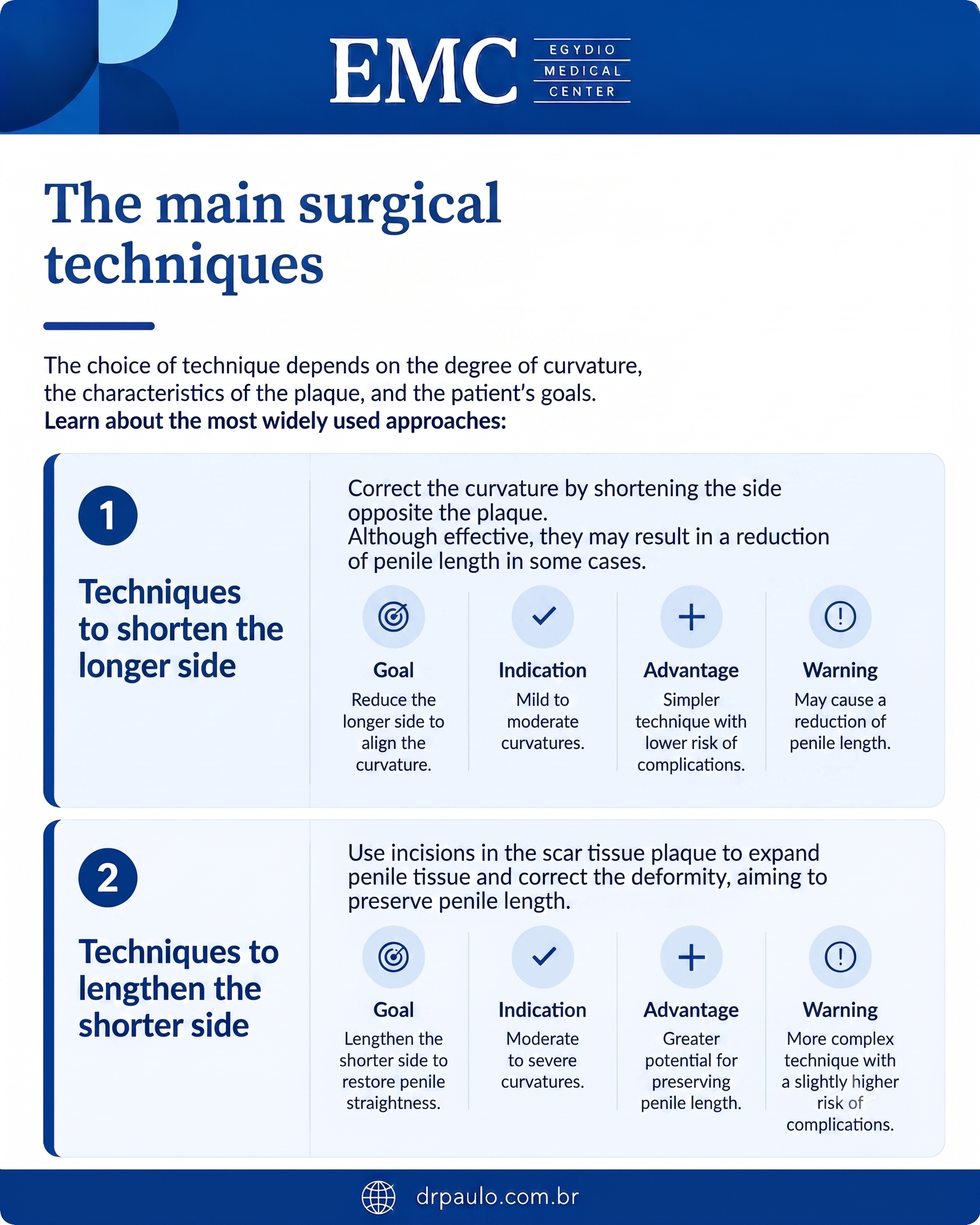
Surgery is indicated when penile curvature makes sexual intercourse difficult or impossible, especially after disease stabilization. It can also be considered when conservative treatments do not provide the expected results.
The goal is to correct the curvature and restore sexual function.
When to see a urologist?
See a urologist when there is progression of curvature, pain during erection and associated erectile dysfunction.
Medical evaluation is essential to determine the degree of penile curvature and identify changes, such as thinning or shortening, allowing for the most appropriate treatment for each case.
Fill out the pre-analysis form to schedule a consultation and receive guidance appropriate to your case.
Learn more:
- Main Causes of Male Impotence and How to Treat How to improve your erection?
- Check out 12 practices to make your penis harder
- Medication-Induced Erectile Dysfunction: Available Treatments
- 5 Best Male Libido Supplements According to Studies
- Sexologist or Urologist: Which Specialist to See First?
- Penile Pump and Penile Injections