
Yes. Overwork can contribute to erectile dysfunction. Chronic stress, sleep deprivation, physical and mental fatigue, and elevated cortisol levels can impair hormone production and the mechanisms involved in erection.
Professional overload can impact sexual life mainly because prolonged stress interferes with testosterone production, a hormone essential for libido and erectile function.
Furthermore, overwork is associated with the development of emotional problems, such as burnout syndrome, characterized by physical and mental exhaustion resulting from occupational stress.
Throughout this article, you will understand how overwork reduces physical and sexual disposition, what the relationship is between stress and hormones, and what strategies can help restore quality of life.
Does overwork cause erectile dysfunction?
Yes. Overwork can contribute to erectile dysfunction in some men. This occurs mainly because chronic stress increases cortisol levels, known as the “stress hormone”.
When cortisol remains elevated for long periods, the body tends to reduce testosterone availability. In situations of continuous stress, the body prioritizes essential survival functions, which can impact the production of male hormone.
Since testosterone is directly related to libido, energy, and well-being, its reduction can affect physical vigor and sexual disposition, contributing to difficulties in erectile function.
Can lack of sleep affect sexual function?
Yes. Lack of sleep can affect sexual function. Some research indicates that testosterone reduction occurs in cases of sleep deprivation equal to or greater than 24 hours.
Even less extreme levels of deprivation or poor quality sleep can already impact male sexual health, since a large part of testosterone production occurs during deep sleep.
Related: How to increase low testosterone: causes and solutions
Sleep and hormone production
Hormone production depends on the proper functioning of the hypothalamic-pituitary-gonadal axis, responsible for coordinating the release of various hormones in the body.
During deep and continuous sleep, this axis sends signals to the testes that stimulate testosterone production. Therefore, adequate and restorative sleep is recommended, with sufficient cycles of deep sleep.
When sleep is insufficient or fragmented, there may be a reduction in testosterone levels, which directly impacts libido, energy, and erectile function.
Nocturnal erections
Involuntary erections that occur during sleep can also be affected by sleep deprivation and stress.
Even without sexual stimulation, these erections depend on the integration between the nervous system, blood circulation, and hormonal balance. Chronic stress keeps the body in a state of alert, increasing cortisol levels and reducing testosterone availability.
As a result, nocturnal erections — which help maintain the health of penile tissues — may occur less frequently.
Sleep deprivation and sexual impotence
The relationship between lack of sleep and erectile dysfunction also involves inflammatory processes. Sleep deprivation can increase inflammatory markers, such as C-reactive protein (CRP) and interleukin-6 (IL-6).
C-reactive protein is associated with increased cardiovascular risk, while interleukin-6 can reduce the availability of nitric oxide, a substance essential for blood vessel relaxation.
These changes compromise blood flow to the penis, making erection difficult.
How does stress interfere with erection?
Stress caused by overwork can affect erection by increasing cortisol levels and impairing blood circulation.
The role of cortisol
Cortisol is a hormone produced by the adrenal glands, located above the kidneys, and released in response to stress. In acute situations, it helps the body enter a state of alert to deal with challenges.
When stress becomes constant, cortisol levels remain elevated for long periods. This impairs sleep quality and affects hormonal balance, reducing testosterone availability.
Adrenaline and sexual response
Adrenaline is another hormone released by the body in stressful situations. In cases of overwork, constant pressure, and prolonged worries, its levels can remain elevated longer than ideal.
When this happens, the body prioritizes functions related to survival, such as state of alert and increased heart rate.
As a consequence, mechanisms for sexual response, such as blood vessel relaxation, take a back seat, making it difficult to achieve and maintain an erection.
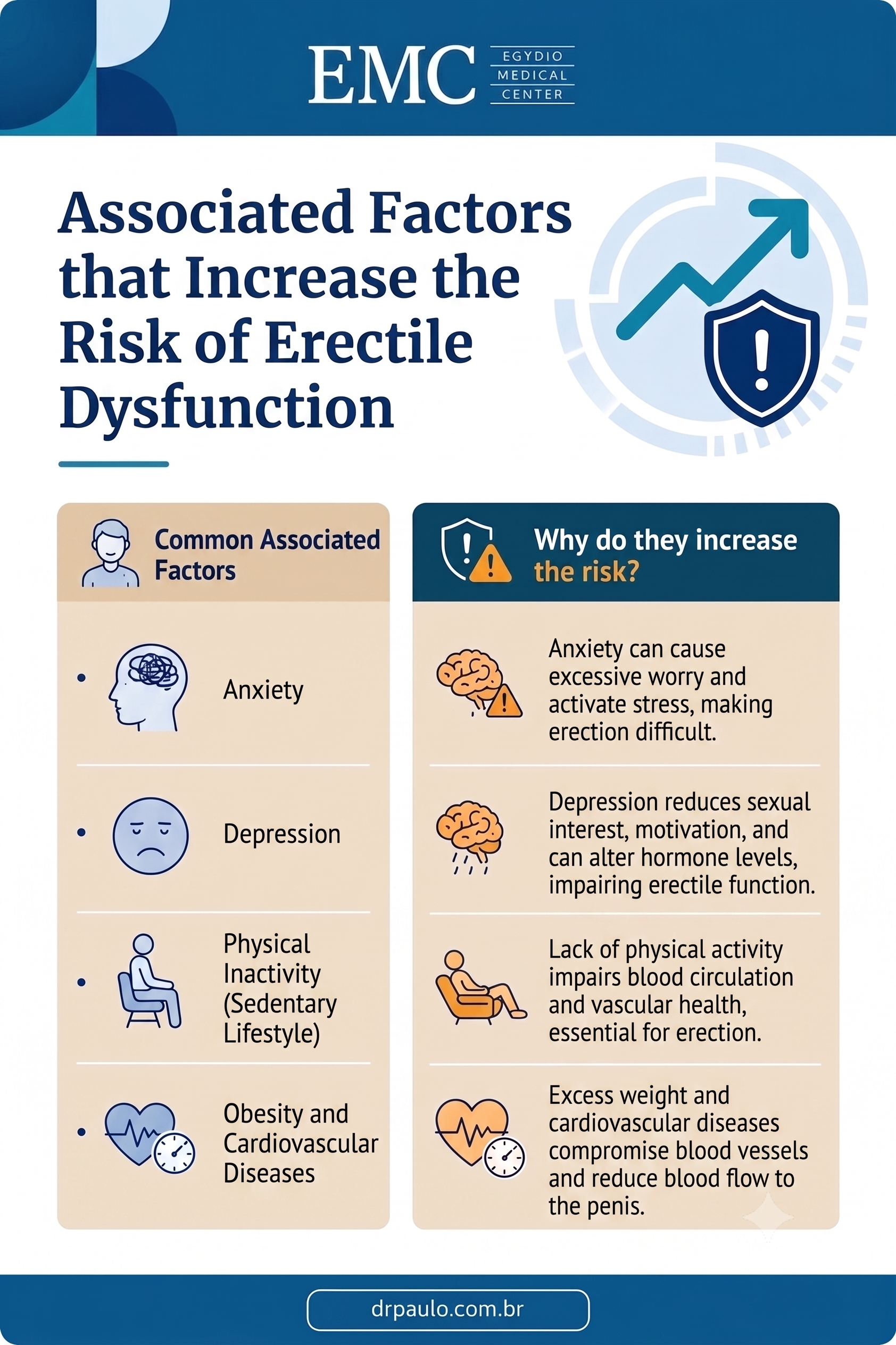
What associated factors increase the risk of erectile dysfunction?
How to recover sexual health affected by overwork?
| Measure | How it helps sexual health |
|---|---|
| Stress management | Relaxation techniques, meditation, psychotherapy, and leisure time help reduce cortisol and adrenaline levels, hormones that can impair erection. |
| Physical activity | Practicing regular exercise improves blood circulation, promotes cardiovascular health, reduces stress, and contributes to the production of hormones related to sexual function. |
| Quality sleep | Sleeping well allows the body to recover, helps hormonal balance, and reduces inflammatory processes that can affect vascular and sexual health. |
| Balance between work and personal life | Setting aside time for rest, leisure, relationships, and self-care helps reduce mental overload and promotes physical and emotional well-being, factors important for sexual response. |
When can therapy help?
When overwork contributes to erectile dysfunction and affects other aspects of life, psychotherapy can help men deal better with stress, reduce anxiety, and improve the balance between personal and professional life.
Psychological follow-up can also help identify conditions such as depression or burnout — a syndrome related to chronic stress in the work environment, characterized by physical and emotional exhaustion.
When to see a urologist?
See a urologist when erection difficulties become frequent, when there is a reduction in involuntary erections (nocturnal) or when there is a decrease in libido.
Evaluation is important to investigate possible conditions associated with erectile dysfunction, such as anatomical changes, hormonal problems, diabetes, and high blood pressure.
For more information about evaluation and treatment options suitable for your case, it is recommended to consult a specialist in urology.