

Nocturnal erections are normal and can occur several times during the night, with an average duration of about 10 minutes. However, some signs may indicate erectile dysfunction. This text provides information about nocturnal erections and their relationship with men’s health.
Many men wake up with an erect penis and wonder if this is normal. Erection during sleep indicates good health of the penile tissues, blood circulation, and hormonal system.
Below, understand the causes of nocturnal erection, how many times it can occur per night, and what happens when these involuntary erections do not appear.
Is nocturnal erection normal?
Yes, nocturnal erection is normal and can occur 3 to 5 times per night, with an average duration of up to 10 minutes per episode.
Why does nocturnal erection happen?
Nocturnal erections are involuntary, meaning they do not depend on sexual stimulation and are related to neurological and hormonal processes that occur during sleep. See how this happens:
- Relation to REM sleep: the erection occurs during the REM phase, when the body relaxes and brain activity increases. At this moment, the nerves in the genital area stimulate blood flow, making the penis rigid.
- Role of hormones and the nervous system: during REM sleep, the body reaches peaks of testosterone and increases parasympathetic system activity, responsible for body relaxation. These factors favor increased penile blood flow.
Factors that influence nocturnal erection
| Factor | How it influences nocturnal erection |
|---|---|
| REM Sleep | During this sleep phase, the brain sends signals to the nerves in the genital area, increasing blood flow and causing erections. This process helps maintain the health of erectile tissue. |
| Hormones | Testosterone reaches higher levels at night, favoring erections. Other hormones, such as dopamine and noradrenaline, also participate in regulation. |
| Bladder pressure | A full bladder can exert pressure on nearby structures, including the penis, triggering erections as a natural response. |
| Dreams | More intense dreams can increase brain activity during REM sleep and provoke erections. |
| Non-sexual stimuli | Nocturnal erections can occur without sexual stimulation, being part of the normal functioning of the body during sleep. |
And when is the erection painful?
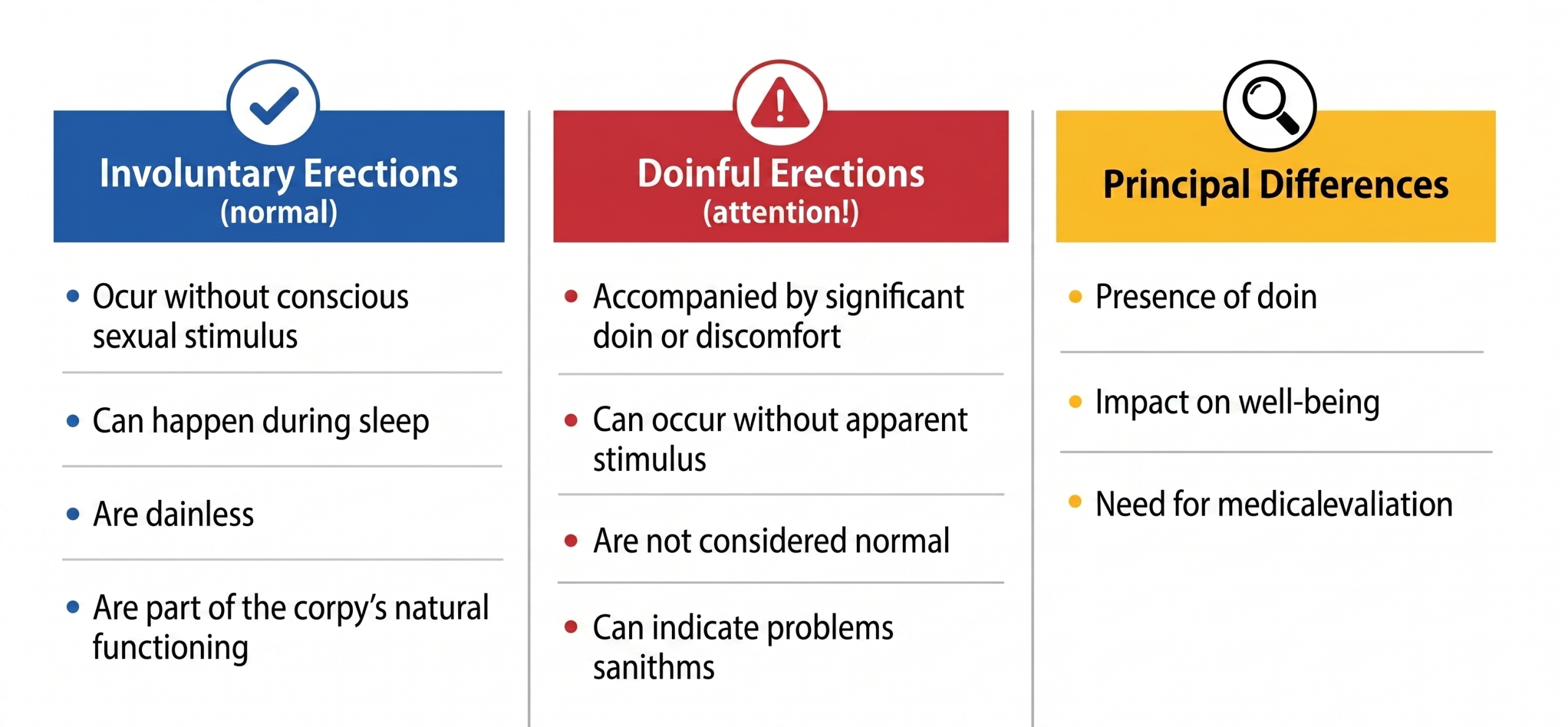
Painful erection causes discomfort and may indicate health problems. Although erections are normal, the presence of pain requires attention. See the possible causes:
- Injuries: trauma to the penis, during sexual activities or accidents, can cause pain during erection, including at night.
- Urinary tract infections: bacterial, fungal, or sexually transmitted infections, such as chlamydia and gonorrhea, can cause pain during erection.
- Associated diseases: conditions such as cardiovascular diseases, diabetes, neurological diseases, and blood disorders can also cause painful erections.
- Priapism: occurs when a painful erection lasts more than 3 hours without sexual stimulation. This condition requires immediate medical attention as it can cause permanent damage to erectile tissue.
How to differentiate painful erections from involuntary erections?
How to avoid involuntary erections?
Involuntary erections help oxygenate penile tissues and maintain healthy blood flow. Therefore, it is not necessary to avoid them during sleep.
What to do if involuntary erections do not happen?
The absence of involuntary erections requires medical evaluation. This condition may indicate erectile dysfunction or conditions that affect sexual function, such as:
- diabetes,
- hypertension,
- high cholesterol,
- hormonal changes
- or effects of medical treatments.
When to seek medical attention?
It is recommended to seek medical evaluation if the absence of morning erection is frequent and associated with difficulties in other situations.
Proper clinical evaluation can contribute to timely diagnosis and management of these conditions.
Fill out the pre-analysis form to schedule your consultation with Dr. Paulo Egydio, urologist specialist in erection and male sexual health. Learn more:
- What are the most common prostate diseases and their symptoms?
- Types of penis: what they are, differences, myths, and curiosities
- Male Masturbation: Benefits and Myths Unveiled
- Male Hormones That Influence Your Health
- 10 Tips on How to Improve Sexual Performance When It Counts
- What Is Ejaculation? Answers to Your Main Questions
- What is Andropause? Signs, Symptoms, and Treatments
- Know the 4 Penile Surgeries: Are They Effective?
- Penis Anatomy: Structure, Erection, and Ejaculation
- Top 10 Penile Diseases: What They Are, How to Identify and Treat
- Penis Pain: 12 Causes, Symptoms, and Treatments
- Male Sexual Health: 7 Habits That Affect Your Performance and How to Improve