
Anxiety and sexual life (anxiety and sex) can be related, since persistent anxiety may coincide with sexual difficulties, including changes in erection and desire. The relationship varies between individuals and should be assessed in an appropriate clinical context.
Although a natural response to stressful situations, persistent anxiety may be associated with changes in erectile function, desire, or sexual response — issues that relate to anxiety and sex. The intensity and manifestations vary, and other physical, psychological and relational factors may also be involved.
When anxiety is persistent, worry about sexual performance can contribute to a cycle of tension and sexual difficulty. When necessary, appropriate follow-up can help to understand the factors involved and set realistic goals for sexual life.
What can anxiety cause in men?
The relationship between anxiety and sex is complex. It involves psychological, emotional and physiological aspects that negatively impact everything from desire and relationships to performance at the moment.
Persistent anxiety can affect well-being and, in some cases, be associated with changes in sleep, mood, physical health or social life. The severity and impact vary according to the person and the clinical situation.
Persistent anxiety can be associated with physical symptoms, gastrointestinal changes, sleep disturbances, stress, depressed mood and difficulties in professional or social life. It can also coexist with problematic alcohol or other substance use, but these situations require individual evaluation and should not be automatically attributed to anxiety.
Understanding performance anxiety and its relation to anxiety and sex
Performance anxiety is a specific type of anxiety that is not limited to anxiety and sex.
It can arise in any context in which a person “feels pressured to do well in a task, such as at work, in a public speech, or at a sporting event.
Causes include:
- history of failure;
- unrealistic expectations about the situation;
- feeling of pressure and excessive worry;
- lack of self-confidence with physical, psychological and cognitive symptoms.
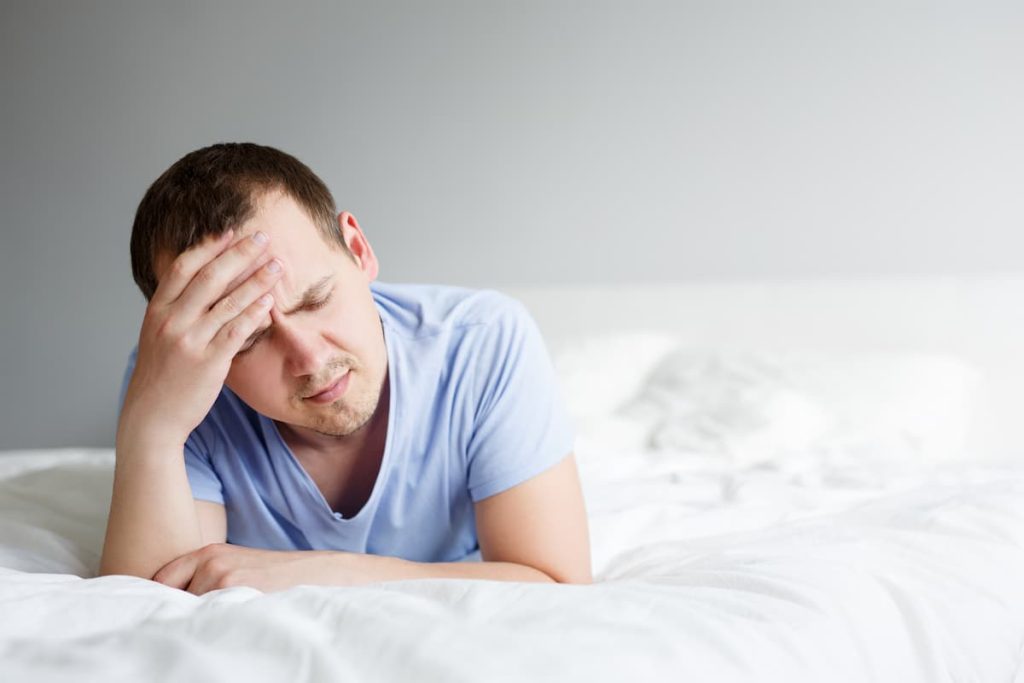
Why does anxiety cause a man to lose his erection?
Anxiety can contribute to erectile difficulties in some people. Stress activation can influence the sexual response, but erectile dysfunction can also have vascular, hormonal, medication-related, neurological or relational causes that should be considered in the evaluation.
Erection depends on blood circulation and other physical and psychological mechanisms. When anxiety interferes with the sexual response, some people may have more difficulty obtaining or maintaining an erection, but this does not mean that an erection is impossible nor does it allow concluding the cause without evaluation.
The more tense a man becomes about the situation, the more anxiety he feels, impairing the physical response to sexual stimulation.
Symptoms of sexual anxiety
Feeling some level of anxiety before having sex with someone for the first time, or after a long period of abstinence, or when about to enact a fantasy, is very common and healthy. The problem is when sexual performance anxiety manifests in the following ways:
- Erectile dysfunction;
- Premature ejaculation;
- Decreased libido;
- Difficulty concentrating on the sexual encounter;
- Fear of failing or of not satisfying the partner;
- Muscle tension;
- Tachycardia;
- Excessive sweating.
Some men may avoid sexual relations to avoid the risk of experiencing these symptoms at the crucial moment. However, avoidance is also a warning sign of sexual performance anxiety and is connected to anxiety and sex.
Problems resulting from untreated anxiety
If left untreated, anxiety can affect sexual performance, leading to a reduction in sexual quality of life and highlighting the link between anxiety and sex. In more severe cases, a man may experience:
Erectile dysfunction
Anxiety can make obtaining or maintaining an erection difficult for some people. Sexual difficulties may involve erection, desire, ejaculation or satisfaction and should not be defined solely by the ability to penetrate or to reach orgasm.
By worrying about the erection, the man creates a cycle of anxiety and failure, and the fear of not being able to get an erection feeds even more anxiety, reinforcing issues related to anxiety and sex.
Decreased libido
Anxious men may experience a decrease in libido. This happens because, when thinking about sex, they feel stressed and worried, generating more anxiety, which reduces the motivation for sexual activity.
Ejaculation problems
Anxiety can be associated with changes in ejaculation, which may include premature ejaculation or difficulty reaching orgasm. These manifestations have diverse causes and should be evaluated individually, without assuming they result from anxiety in every case.
Frustration and low self-esteem
Anxiety can affect self-esteem and confidence. Anxious men may feel insecure about their skills and performance, and have a distorted view of themselves as sexual partners. This can also generate tension between the couple and is another way anxiety and sex can interact.
How to deal with sexual performance anxiety?
There are strategies that can help some people cope with anxiety related to sexual life and with anxiety and sex. The choice of approach depends on the intensity of symptoms, the causes involved and the person’s preferences.
1. Seek medical help
Psychologists, psychiatrists, urologists and other qualified professionals can assess anxiety and sexual difficulties according to each person’s situation. The need for psychotherapy, medication or other types of follow-up depends on the diagnosis and should be defined by a responsible professional.
2. Talk with your partner about your concerns
Establishing a dialogue with your partner or with someone you trust can give you the encouragement you need to face the problem, as well as support for complicated situations.
3. Practice relaxation exercises
Incorporating some relaxation techniques throughout the day will make a man less anxious overall. It is also possible to practice them before an encounter, for example. Some examples are meditation, deep breathing and yoga, which can help with anxiety and sex.

4. Maintain a healthy lifestyle
A healthy lifestyle, with a balanced diet, physical activity, stress management and supportive relationships, can contribute to well-being and to the management of anxiety. These measures do not replace the evaluation or the treatment indicated when symptoms are persistent or severe.
5. Approach sex as an exploratory exercise
Sexual activity must respect the consent, boundaries and well-being of the people involved. It can be helpful to talk about expectations and to explore, without pressure, forms of intimacy that are comfortable for everyone.
When anxiety interferes with sexual life (anxiety and sex), it can be helpful to address difficulties gradually, with appropriate support and without pressure. If symptoms persist or cause distress, seek evaluation from a health professional.
Sexual difficulties associated with anxiety (anxiety and sex) can be assessed and, in some cases, treated with appropriate follow-up. Progress varies between people and a specific outcome cannot be guaranteed. Seek information from credible health sources and, if necessary, discuss your situation with a qualified professional.
Learn more:
- What are the most common prostate diseases and their symptoms?
- Penis types: what they are, differences, myths and curiosities
- Male Masturbation: Benefits and Myths Unveiled
- Male Hormones that Influence Your Health
- 10 Tips to Improve Sexual Performance When It Counts
- What Is Ejaculation? Answers to Your Main Questions
- What Is Andropause? Signs, Symptoms and Treatments
- Learn About the 04 Penile Surgeries: Are They Effective?
- Penis Anatomy: Structure, Erection and Ejaculation
- 10 main penile diseases: what they are, how to identify and treat
- Penis Pain: 12 Causes, Symptoms and Treatments
- Male sexual health: 7 habits that affect your performance and how to improve


