
Penile prosthesis replacement may be prompted by poor patient adaptation, device failure, and postoperative issues.
A penile prosthesis may be recommended for severe cases of Peyronie’s disease and erectile dysfunction that do not respond to medication. Outcomes can be satisfactory in many cases, but in some situations, a revision or replacement of the device may be necessary. Learn more!
When is penile prosthesis replacement indicated?
Penile prosthesis replacement may be necessary in the following situations:
- Perceived decrease in penile size or penile thinning;
- Glans “droop” or loss of glans rigidity;
- Insufficient vertical rigidity for penetration;
- Partial correction of Peyronie’s disease;
- Use of traditional surgical techniques;
- Penile pain;
- Penile scarring or deformities;
- Postoperative course without adequate follow-up;
- Loss of sensation;
- Difficulty adapting to the implant.
Some of the reasons listed may be associated with limited surgeon experience in penile prosthesis surgery.
It is essential to have a detailed evaluation of penile anatomy and individualized surgical planning.
If any anatomical alteration is identified, reconstruction may be needed first, and only then should the prosthesis be implanted.
Without this step, the prosthesis size may not be compatible, increasing the risk of penile prosthesis complications, such as glans droop or loss of rigidity, which can affect sexual function.
The choice of prosthesis type should consider anatomy, expectations, comorbidities, manual dexterity, and preferences, after medical evaluation.
A review on inflatable implant failures reports that replacement rates for this model may range from 1.9% to 7.3% of cases, with the main reason being mechanical wear of the prosthesis, which may cause cylinder rupture and fluid leakage.
Can any type of penile prosthesis be replaced?
Replacement of an inflatable or malleable penile prosthesis may be indicated due to mechanical failure, implant malposition, or treatment of postoperative pain.
Malleable vs. inflatable prosthesis
A penile prosthesis may help provide rigidity in selected cases of severe erectile dysfunction and/or Peyronie’s disease, after medical evaluation.
There are two types of prosthesis: inflatable and malleable, and each has distinct characteristics, advantages, and disadvantages.
The inflatable prosthesis has inflatable cylinders, a pump, and a reservoir filled with saline solution. To achieve an erection, the pump must be activated to fill the cylinders.
Key characteristics of this model include control over the erection and a more natural appearance.
Among the disadvantages are greater surgical complexity, risk of penile prosthesis failure, and higher cost.
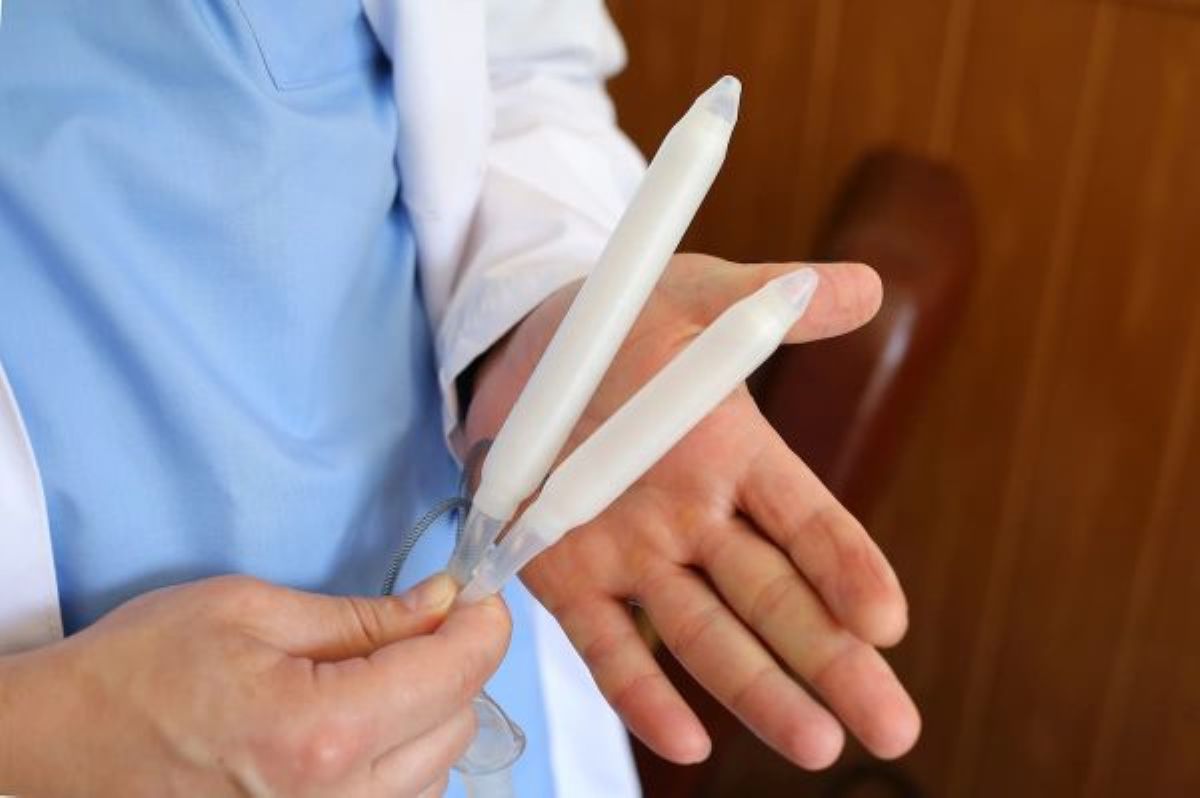
The malleable (or semirigid) prosthesis is made of flexible silicone rods that can be bent downward when the penis is not in use. To position it for intercourse, the rods are adjusted manually.
Malleable penile prosthesis durability, ease of use, and lower cost are among the main benefits.
Potential drawbacks include embarrassment and discomfort in daily activities, since the penis remains semirigid.
Is penile prosthesis replacement more complex than the initial surgery?
Penile prosthesis replacement (penile implant revision) may involve more challenges compared to the first implant.
An article on penile prosthesis surgical revision explains that a higher infection risk may be associated with prosthesis positioning after extrusion, that is, when the implant moves out of its proper position.
Surgeon experience may be associated with lower complication rates in penile prosthesis surgeries, but risks vary depending on the case.
An article published in The Journal of Sexual Medicine states that surgeon experience with penile prostheses may reduce the need for reoperation.
This experience allows a more rigorous assessment of patient anatomy, identification of risks, and selection of the most appropriate prosthesis.
In addition, practice with this type of procedure may help the physician choose more modern techniques and adopt strategies aimed at reducing bleeding and infection risk, according to clinical evaluation.
Dr. Paulo Egydio, for example, may use the Egydio Technique—developed by him—during penile prosthesis implantation, when deemed appropriate by the specialist.
This method aims to lengthen the shorter side as much as possible using geometric calculations to guide incisions only where necessary.
In selected cases, reconstruction and correction techniques can contribute to better implant fit and anatomical alignment, as medically indicated.
What are the risks and precautions in revision surgery?
Studies suggest that complications are not related only to the fact that it is a reoperation.
A study published in the Arab Journal of Urology points out that infection is one of the main risk factors for penile prosthesis replacement.
Dr. Paulo Egydio is a penile prosthesis specialist
Surgery should be indicated and performed by a urologist with experience in penile prostheses, aiming to reduce risks and align expectations.
Dr. Paulo Egydio is a urologist with over 26 years of experience in penile prosthesis surgery and has performed more than 6,000 procedures.
Fill out the pre-assessment form to schedule an appointment and discuss your questions with the specialist.
Learn more:
Penis enlargement with a penile prosthesis
Type of anesthesia and surgery time for penile prosthesis
Sex with a penile prosthesis
Penile prosthesis price: current costs