
Imbalance between exercise and rest can affect hormones.
Physical activity benefits health, but too much training can be as harmful as a sedentary lifestyle.
Overtraining occurs when someone trains excessively and does not rest enough to recover.
This imbalance—known as overtraining syndrome—can lead to chronic fatigue and even hormonal changes.
If you exercise and worry about sexual function, keep reading to learn whether there is a link between overtraining and impotence.
What is overtraining and how it affects the body
Overtraining syndrome refers to excessive physical activity with insufficient rest and muscle recovery.
A key sign is a decline in performance lasting longer than two months.
Chronic fatigue, insomnia, and changes in the neurological, immune, and endocrine systems are also signals.
Psychological effects include anxiety, agitation, and irritability.
To classify a case as overtraining, symptoms should not be attributable to other conditions, as highlighted in this overtraining guide.
Authors also note that pre-existing stress and psychological factors may intensify the problem.
Chronic sports fatigue can heighten inflammation due to limited recovery time.
Other consequences include weakened immunity (raising infection risk), higher cortisol levels, and reduced testosterone.
Relationship between overtraining and impotence
During exercise, the body naturally raises testosterone levels, supporting muscle gain and recovery.
Authors of a piece on overtraining and the endocrine system reviewed studies and concluded that the impact on testosterone can be noted 9–12 days after activity without adequate rest.
Researchers suggest the body enters a “defense mode” under extreme training and may reduce testosterone levels.
Another explanation for low testosterone in excessive training is elevated cortisol—the stress hormone.
Cortisol rises in physical or emotional stress, keeping the body on alert.
At very high levels, cortisol can affect sexuality because it counteracts testosterone—key for erection, libido, and fertility.
The article highlights that elite athletes are more prone to overtraining syndrome, with about 30–60% showing signs of chronic sports fatigue.
The authors also stress the need for more research on overtraining in non-athlete populations.
So what’s the difference between healthy and harmful training?
- Healthy practice: effort plus adequate rest and recovery. This supports strength, energy, and hormonal balance.
- Harmful practice: too much effort without rest, worse performance, mood changes, and sexual problems.
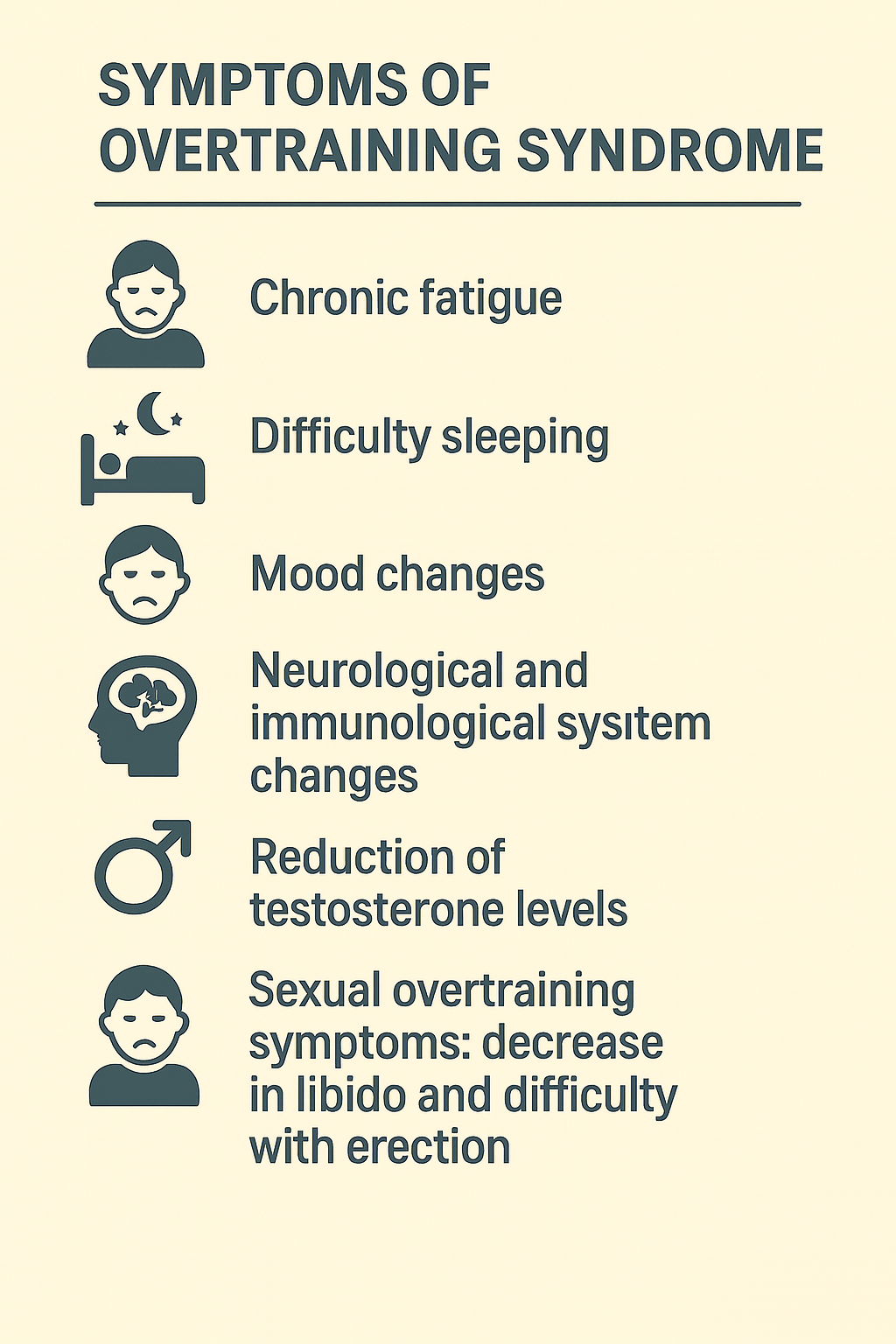
Symptoms of overtraining syndrome (overtraining and impotence)
Overtraining syndrome includes physical and psychological symptoms:
- Chronic fatigue;
- Difficulty sleeping;
- Low motivation;
- Mood changes: anxiety, agitation, irritability, and depression;
- Neurological and immune changes;
- Reduced testosterone levels;
- Sexual overtraining symptoms: low libido and erection difficulties.
Prevention and balance between training and sexual health
The balance between training and rest helps the body maintain harmonious function, including hormonal and sexual aspects.
Pauses and muscle recovery are important for adequate rest and healthy testosterone levels.
To reach this balance, consider the following:
- Periodize training;
- Adjust volume and intensity based on performance and mood;
- Adequate hydration and nutrition;
- Rest at least 6 hours between sessions;
- Plan rest days with light activity or complete rest;
- Sleep well.
When to seek medical care for overtraining and impotence
Men with persistent erection difficulties should consult a urologist.
During the consultation, share full details so management can be tailored to your case.
A physical exam may be performed to assess for anatomical changes, along with hormone testing as appropriate.
Frequently asked questions
Does lack of exercise cause impotence?
Yes. Sedentarism is associated with a higher risk of impotence, as it may reduce testosterone and raise cardiovascular risk.
What are the consequences of overtraining?
Consequences include fatigue, performance decline, hormonal changes, and sexual dysfunctions.
Does physical fatigue cause impotence?
Yes—chronic physical fatigue can be linked to impotence because it affects testosterone production.
Does training lower testosterone?
Intense training without proper recovery may be related to lower testosterone. Balancing training and rest supports healthy hormone levels.
Questions about impotence? Pre-assessment and guidance
Balanced training and recovery may help prevent hormonal and sexual changes associated with overtraining.
For persistent erection difficulties, seek an individualized medical evaluation with a urologist to discuss the most suitable options.
For more information about urologic assessment, you can complete the pre-assessment form and receive initial guidance.