

Multiple sclerosis and Parkinson’s disease are examples of neurological diseases that cause erectile dysfunction by affecting mechanisms involved in erectile function.
The relationship between neurological diseases and sexual impotence occurs because the nervous system is responsible for processing sexual stimuli and transmitting the signals necessary for erectile response.
In addition to neurological changes, these diseases can also affect other important factors for sexual health, such as blood circulation, hormonal balance, and emotional well-being.
Below, understand how damage to the nervous system can impact erectile function and learn about the main treatment options for erectile dysfunction of neurological origin.
How do neurological diseases cause erectile dysfunction?
Neurological diseases can cause erectile dysfunction because they cause injuries to the central nervous system, a structure responsible for receiving, processing, and transmitting information throughout the body.
When these diseases affect areas of the brain, spinal cord, or nerves involved in sexual response, communication between the brain and penis can be compromised. As a result, sexual stimuli are no longer processed or transmitted properly.
Additionally, neurological changes can impair control of the blood vessels and muscles of the penis, making it difficult to increase blood flow necessary for achieving and maintaining an erection.
How nerves influence erection
Erection depends on integration between the brain, spinal cord, and penis, highlighting the close relationship between erectile function and the nervous system.
According to studies on erectile physiology, parasympathetic nerves play a fundamental role in initiating sexual response. During sexual stimulation, they send signals that promote relaxation of the blood vessels of the penis, increasing blood flow to the region.
Another important component is the pudendal nerve, responsible for transmitting to the brain the sensations generated by touch in the genital region and for controlling the pelvic floor muscles, which help in maintaining penile rigidity.
For this reason, injuries to the brain, spinal cord, or other structures of the nervous system can compromise the mechanisms responsible for erection and impair male sexual function.

Which neurological diseases can cause sexual dysfunction?
| Neurological Disease | Main Symptoms | How It Can Affect Male Sexuality |
|---|---|---|
| Parkinson’s Disease | Tremors, muscle rigidity, slowness of movement, balance and coordination changes. | Can cause difficulty with erection, reduced libido, changes in ejaculation, and decreased sexual satisfaction. |
| Multiple Sclerosis | Fatigue, muscle weakness, visual changes, numbness, tingling, urinary incontinence or fecal incontinence, and coordination problems. | Can compromise the nerve signals involved in sexual response, causing erectile dysfunction, reduced genital sensitivity, and changes in ejaculation. |
| Stroke (Cerebrovascular Accident) | Weakness or paralysis on one side of the body, difficulty speaking, cognitive and mobility changes. | Can affect brain areas related to sexual desire and erection, in addition to reducing libido and impairing sexual response. |
| Spinal Cord Injury | Partial or total loss of movement and sensation below the level of injury. | Can make erection difficult, alter ejaculation, and significantly reduce genital sensitivity. |
| Diabetic Neuropathy | Tingling, numbness, pain, or loss of sensation, especially in the hands and feet. | Can damage the nerves responsible for erection and genital sensitivity, increasing the risk of erectile dysfunction. |
| Alzheimer’s Disease | Memory loss, mental confusion, difficulty reasoning, and behavioral changes. | Can reduce sexual interest, affect intimacy, and compromise sexual response due to cognitive decline. |
Emotional impacts of erectile dysfunction
Erectile dysfunction of neurological origin can affect not only sexual function, but also emotional well-being and quality of life. Among the main impacts are:
- Anxiety: worry about sexual performance and fear of failure can increase anxiety levels, creating a cycle that tends to worsen erectile dysfunction.
- Depression: neurological diseases are often associated with depressive symptoms, which can reduce sexual interest and compromise the quality of intimate life.
- Low self-esteem: in addition to physical limitations, changes caused by the disease can affect self-image and self-confidence.
- Relationship problems: sexual difficulties can create tension between partners, damage intimacy, and make communication about expectations and needs difficult.
Is there treatment for erectile dysfunction of neurological origin?
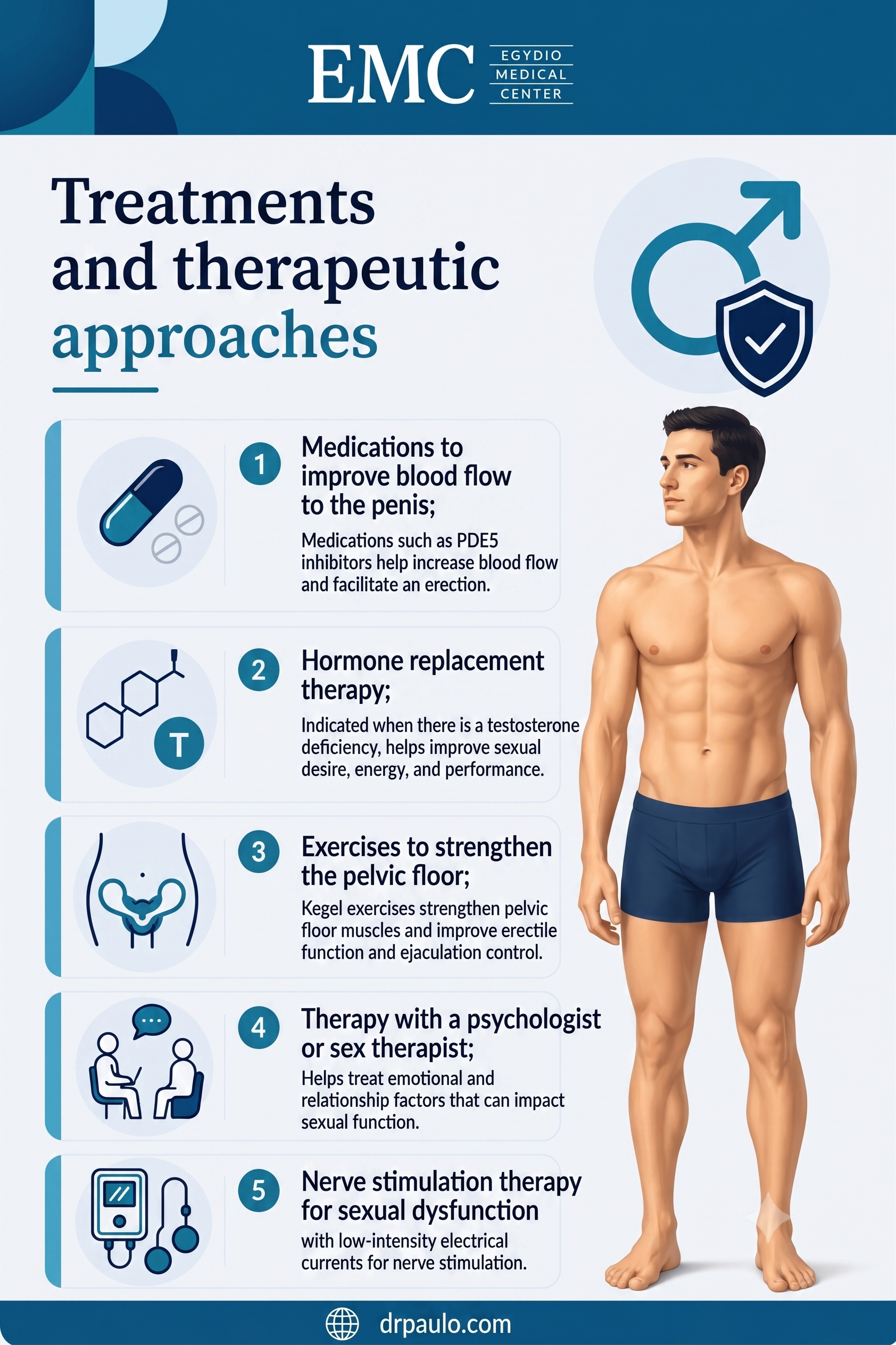
Yes. Erectile dysfunction of neurological origin can be treated through different approaches, depending on the cause, severity of symptoms, and the patient’s health conditions.
Among the main options are:
- medications for erection;
- hormone replacement when there is testosterone deficiency;
- exercises to strengthen pelvic muscles;
- nerve stimulation therapies;
- psychological support.
Below, understand how each of these therapeutic strategies works.
Tips to improve quality of life and intimacy
Some simple attitudes can contribute to overall well-being and to maintaining sexual life:
- Maintain open communication with your partner;
- Adopt a healthy diet;
- Exercise regularly;
- Control stress levels;
- Seek professional support to deal with emotional issues, when necessary.
When to see a urologist?
Patients with neurological diseases should see a urologist when experiencing persistent difficulty achieving or maintaining an erection, decreased genital sensitivity, changes in libido, or urinary symptoms, such as urinary incontinence.
Medical evaluation is important to identify the causes of sexual dysfunction and define the most appropriate treatment for each case.
Fill out the pre-analysis form to schedule your consultation with a specialist and receive personalized guidance.


