
The Modified Nesbit Technique by Kelâmi is the one where the location and size of the excision are defined with the help of an instrument and with the penis erect. Learn about this evolution.
In 1965, the Nesbit technique emerged, which involves making plications in the tunica albuginea to equalize the longer side of the penis to the shorter side.
Since then, the urological field has evolved, allowing new techniques derived from Nesbit’s learnings to reach patients and provide more satisfaction.
What is the Modified Nesbit Technique?
The Modified Nesbit Technique is, in fact, a set of variants described by different authors.
The Kelâmi-Nesbit technique is one of the most well-known among them.
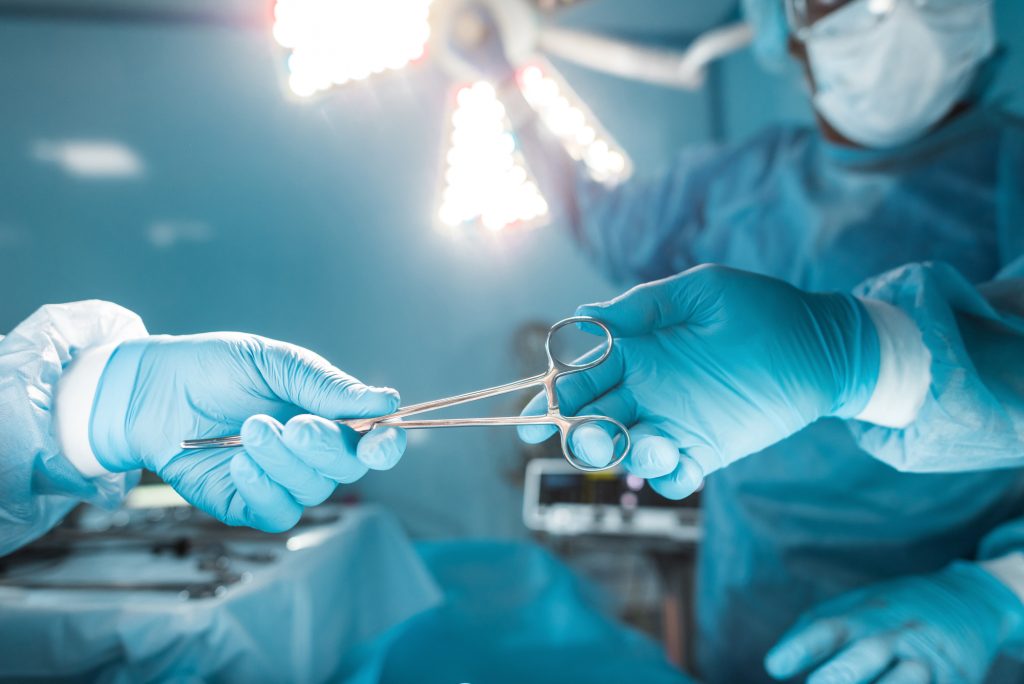
In this Modified Nesbit technique, the surgeon uses a type of forceps, called Allis clamp, to “bite” the structure of the tunica albuginea of the erect penis.
This allows checking if this is the point that aligns the penis the most, to make the ellipse, and to define its size, to then perform the excision.
The technique offers more precision for alignment when compared to the original Nesbit technique, which is why it is considered an evolution.
In which cases is the Modified Nesbit Technique indicated?
The Kelâmi-Nesbit technique is indicated for certain patient profiles. These include:
- Patients with penile curvature;
- Patients without penile thinning;
- Patients without erectile dysfunction;
- Patients who do not require a penile prosthesis;
- Patients who do not mind the reduction in penile size.
What are the pros and cons of the Modified Nesbit Technique?
The Modified version of Nesbit represents an advancement in medicine, as it offers more options for treating penile curvature.
The Kelâmi-Nesbit variation provides a more precise alignment of the penis, as with the Allis clamp, the doctor can find the exact location for surgery.
On the other hand, the Modified Nesbit Technique is nothing more than a series of interventions performed on the longer side of the penis. This means that to align the member, it will be necessary to reduce this side, which will result in a reduction in the overall size of the member – a common cause of frustration for men.
This Modified Nesbit Technique only treats penile curvature, with the reduction in member size. Men presenting one or more points of thinning will not have caliber recovery; the penis will remain thinned after the surgery.
Due to the excisions and sutures, the modifications are complex surgeries, which increase the risk of complications, such as infections and fistula formation.
Moreover, penile curvature can return, as the surgery does not prevent the formation of new fibroses, and “biting” the penis with the Allis clamp may trigger fibrosis at a point where it did not previously exist.
What are the expected results?
Professor Kelâmi, responsible for one of the Modified Nesbit Techniques, published a study in 1987, the time when he described the technique, showing the results and satisfaction of patients operated with his technique.
After 10 years of performing this type of surgery on 100 men with congenital penile curvature, 96 patients show the penis aligned and with full penetration capability.
According to Professor Kelâmi’s study, only four operated patients wished the penis was more aligned, although penetration was possible.
Is there another treatment for penile curvature?
Penile curvature can be treated in many ways, including clinical options, which tend to be the first line of treatment.
Medications and penile injections that help stabilize fibroses and, at the same time, provide firmness for penetration, may be indicated depending on the urologist’s assessment after conducting tests.
Currently, surgeries with both the Modified and original Nesbit techniques are still performed, but they are no longer the most modern treatments for Peyronie’s Disease or congenital curvature.
The Egydio Technique, which uses geometric principles to create expansion without removing tissues, is an example of a recent treatment for men living with severe conditions of these disorders.
To explore surgical options for treating penile curvature and to understand which is best indicated for your case, contact us and schedule a consultation.
Learn more:
- Male Self-Care: Why Is It Important for Health?
- Learn All About Enlarged Prostate: Causes, Diagnosis, and Recommended Treatments
- Does Stress Decrease Libido? Learn How to Identify and Treat It
- What Is Ejaculation? Answers to Your Main Questions
- Consequences of Male Sexual Abstinence and the Problems It Can Cause
- 10 Tips for Penis Care to Maintain Health and Prevent Infections and Diseases
- See What Causes Erectile Dysfunction and Available Treatments
- Prostate Surgery: What to Expect, Risks, and Recovery
- Gut Health and Sexual Function: The Connection