

Interferon injections for Peyronie’s disease are a low-adherence treatment in urology. This option has shown limited results in the literature, especially in cases of severe penile curvature.
Interferon treatment for Peyronie’s disease has been carefully evaluated by researchers over time. Although it is beneficial for other conditions, the medication is not usually the first choice in many clinical protocols.
Interferon is a protein produced by the body and, since the 1980s, also manufactured in laboratories. It helps fight certain viral infections, cancers, and autoimmune diseases.
In recent years, the medication has been studied as one of the non-surgical treatment options for Peyronie’s disease, but published results show variable efficacy.
See what the scientific literature describes about this treatment and other available approaches.
What are interferon injections for Peyronie’s disease?
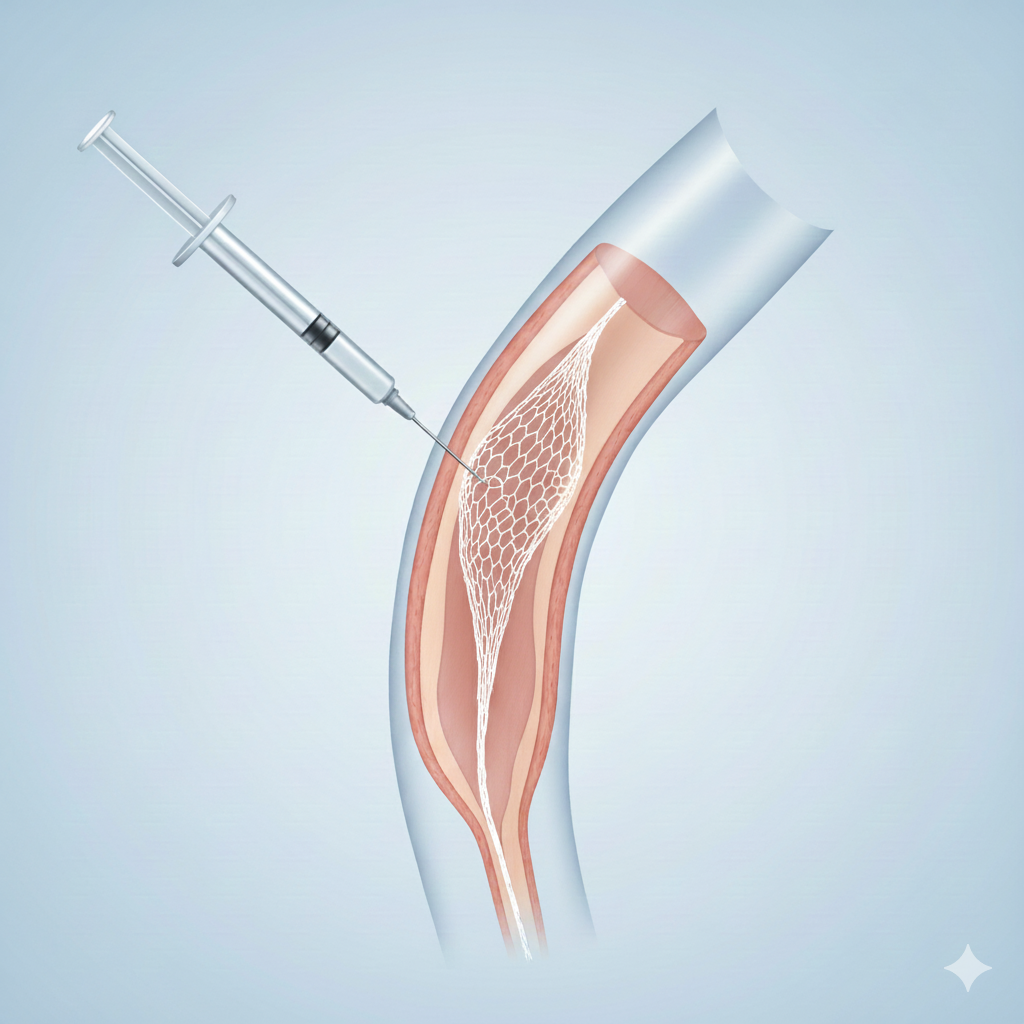
Interferon is an injectable medication applied directly to penile fibrosis, studied with the aim of reducing collagen formation, which could help attenuate the curvature
There are variations of this protein. In the case of Peyronie’s disease, interferon alpha is the type used.
How does interferon act on penile curvature?
Interferon alpha for penile curvature is applied directly to the fibrotic plaque inside the penis.
The application acts on collagen (the material that makes tissue hardened), decreasing its production and stimulating enzymes that break down excess collagen that has already formed.
In addition, the medication slows the growth of cells in the affected tissue, preventing plaque enlargement.
Benefits and risks of interferon
In theory, the benefit of interferon would be to help soften penile curvature and potentially influence aspects of penile function, according to some studies.
However, the efficacy results of interferon injections in clinical studies over time have been inconsistent and have varied widely in the literature.
The main multicenter placebo-controlled clinical trial on the topic, from 2006, published in the Journal of Urology, evaluated 117 patients. In this study, the medication was injected into the plaque for 12 weeks.
After this period, a small improvement of approximately 10° to 13° in penile alignment was observed compared with placebo, with wide variability – a result considered modest and, in many cases, not enough to eliminate the need for other therapeutic approaches.
It is worth noting that this injectable treatment for Peyronie’s disease may be uncomfortable for most patients, as the injection is applied directly into the penis. In addition to apprehension during the procedure, patients may experience the following adverse effects:
- Edema (swelling);
- Ecchymosis;
- Pain and tenderness;
- Hematoma.
In addition, one of the main side effects of interferon injections is flu-like symptoms. These tend to be more noticeable than the treatment benefits themselves, which helps explain the low recommendation of this therapy by urologists specialized in Peyronie’s disease.
Interferon vs. collagenase: what is the difference?
Although interferon and collagenase are injectable therapies for Peyronie’s disease, these medications have important differences.
While interferon is a protein with an antifibrotic effect, collagenase is an enzyme that acts directly and selectively on the collagen fibers of the plaque, fragmenting collagen and facilitating penile alignment.
There are also differences in adverse effects when comparing interferon vs. collagenase for Peyronie’s disease. Studies suggest that collagenase tends to show a more favorable tolerability profile than interferon.
Both medications have limited efficacy when penile curvature is very pronounced. However, collagenase is a more recent therapy and, in specific studies, has shown better results than interferon.
Collagenase can lead to curvature improvements in the range of 15° to 30°, versus a maximum reported reversal of 13° with the protein. Even so, in most studied cases, the improvement was not sufficient to fully restore penetrative function.
In addition, it is important to note that collagenase treatment is not available in the country. Interferon, on the other hand, is regulated by Anvisa and the cost of interferon treatment for Peyronie’s disease is around R$ 300.
Talk to Dr. Paulo Egydio and find out whether interferon is the best option for your case
Current medical literature considers interferon injections for Peyronie’s disease an option of limited relevance and rarely used as an alternative.
Other therapeutic options may be considered after an evaluation with Dr. Paulo Egydio.
The physician has more than 25 years of practice, studies, and participation in congresses related to men with Peyronie’s disease.
After a consultation, the doctor may identify plaque extent, the degree of deformity, and assess the impact on sexual life to recommend an appropriate medical, injectable, or surgical treatment for each case.
Schedule an appointment to discuss realistic treatment expectations for you with the guidance of a urologist dedicated to this field.