
To treat an enlarged prostate, the first step is to seek an accurate medical diagnosis to identify if the cause is benign prostatic hyperplasia (BPH) or prostate cancer. Treatments include medications, lifestyle changes, or surgeries.
The prostate is a fundamental gland for the male reproductive system. However, over time, it can grow abnormally and lead to conditions that alter its size, making men ask themselves, “how to reduce an enlarged prostate?”
An enlarged prostate can be a sign of benign prostatic hyperplasia (BPH) or prostate cancer. Both conditions can cause prostate enlargement and lead to health complications, which may include, in some cases, erectile dysfunction.
Although an enlarged prostate is not necessarily cancer, early diagnosis is crucial to differentiate between the two conditions and choose the right treatment for how to reduce an enlarged prostate. Keep reading!
What to do when the prostate is enlarged?
When the prostate enlarges, it is crucial to identify whether the patient is dealing with benign prostatic hyperplasia or prostate cancer, which can be serious.
In the case of BPH, the gland’s growth is related to aging and hormonal changes. In prostate cancer, growth is caused by malignant cells that can spread to other parts of the body if left untreated. Both conditions impair urinary function.
Therefore, to learn how to reduce an enlarged prostate, the first step is to get an accurate diagnosis from a urologist.
Does an enlarged prostate cause impotence?
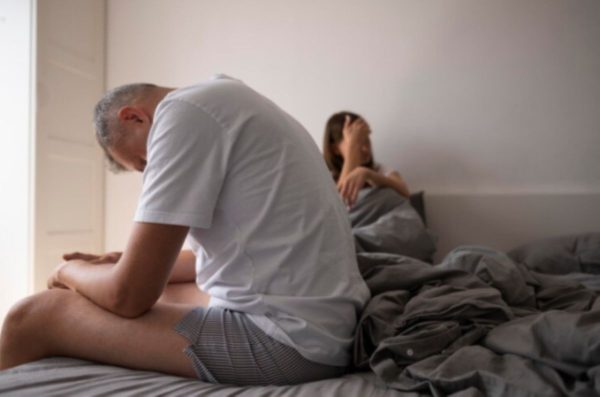
Both BPH and prostate cancer can affect male sexual function, and this is one more reason for men to start treatment for an enlarged prostate as soon as possible. In some cases, prostate enlargement may interfere with the nerves and structures involved in erection, which can lead to erectile dysfunction.
On the other hand, some treatments to reduce prostate size, such as endoscopic surgery, transurethral resection of the prostate, and even certain medications, may have side effects that make it difficult to achieve and/or maintain erections.
If erectile dysfunction persists, it is important to consult a urologist to assess the need for specific treatments. Depending on the patient’s clinical condition, they may need medications, injections, or a penile implant to restore penis function.
How to reduce the size of the prostate naturally?
Those who want to know how to reduce an enlarged prostate naturally often look to herbal options.
The extract of Serenoa repens (saw palmetto) is an option used to help relieve symptoms related to BPH, although further studies are needed to confirm its efficacy. Some scientific studies exist regarding its effectiveness, but more research is needed.
However, the extract should not be considered a substitute for conventional treatments or for prostate cancer.
💡 Your health comes first: Follow Dr. Paulo Egydio on TikTok and Kwai to actively take care of your sexual health.
How to quickly reduce prostate inflammation?
Anti-inflammatories and lifestyle changes can help relieve symptoms of acute prostate inflammation, always under medical recommendation and supervision.
Reducing alcohol intake, cutting back on bladder-irritating foods like coffee and spicy foods, and doing pelvic floor strengthening exercises are some measures that may provide quick and temporary relief, but treatment must continue.
These alternatives are more appropriate for mild to moderate cases.
Read also: Discover 14 foods that are good for the prostate.
What is the best medication to reduce prostate size?
Medication is one of the most commonly used treatments to control prostate enlargement, but it must be evaluated to see if it’s appropriate for the specific case.
For BPH cases, alpha-blockers help relax the prostate muscles, making it easier to pass urine. Meanwhile, 5-alpha-reductase inhibitors work directly on the prostate’s growth, reducing its size by inhibiting the production of dihydrotestosterone (DHT).
In the case of prostate cancer, medication may include hormone therapy to slow the growth of cancer cells. However, in many cases, surgery will be necessary.

So, how to reduce an enlarged prostate?
Treatments to reduce prostate size, whether for BPH or cancer, depend on several factors.
In benign prostatic hyperplasia, medications, lifestyle changes, and less invasive procedures may be enough to control the symptoms.
In cancer cases, treatments tend to be more aggressive, ranging from laser therapy to modern surgical interventions, such as robotic prostatectomy.
- Treatments for mild cases: medications and lifestyle changes;
- Treatments for intermediate cases: minimally invasive procedures, such as transurethral resection of the prostate and laser therapy;
- Treatments for severe cases: more complex surgeries are necessary, such as open surgery, laparoscopic surgery, or robotic prostatectomy.
Post-surgical care
Post-surgical care varies depending on the type of intervention performed.
The patient will be advised by the doctor on the need for rest and the resumption of activities, and will need regular follow-up to ensure a good recovery and avoid complications, especially after surgeries.
In addition, the urologist can help the patient deal with unwanted side effects, such as erectile dysfunction or urinary incontinence.
How to choose the best treatment to reduce an enlarged prostate?
To choose the best treatment, it is necessary to consider the patient’s age, clinical condition, and symptoms.
In the case of BPH, treatment may be less invasive. In the case of prostate cancer, the severity of the disease will determine the most appropriate option, which generally requires a more aggressive treatment approach.
Having a trusted doctor for an accurate diagnosis and effective treatment is important, not only for discovering how to reduce an enlarged prostate but also to ensure quality of life, patient longevity, and a fulfilling sex life.
Dr. Paulo Egydio can help in cases where men present with sequelae that affect their sexual health. Fill out the form and receive a personalized analysis to begin taking care of your sexual health.