

Diabetes affects erections because it can compromise blood circulation and hormonal health, which are essential factors for erectile function.
In type 1 diabetes, the body produces little or no insulin. In type 2 diabetes, insulin is produced, but the body develops resistance to the hormone and cannot use it efficiently.
But after all, which type of diabetes causes impotence? The answer is: both. Both type 1 and type 2 diabetes can impair erectile function when glucose levels remain high for long periods.
Below, understand how high blood sugar affects erections, what the warning signs are, and what can be done to help prevent this complication.
Does diabetes cause erectile dysfunction?
Yes. Diabetes is one of the main causes of erectile dysfunction of organic origin.
According to Dr. Paulo Egydio, a urologist specializing in men’s sexual health, erection problems related to diabetes usually appear between 5 and 10 years after diagnosis, especially when blood sugar control is not adequate.
High glucose levels over time cause progressive damage to nerves and blood vessels. These changes impair the transmission of nerve signals involved in sexual arousal and compromise the blood flow needed to achieve and maintain a satisfactory erection.
In addition, hyperglycemia can directly affect the penile arteries.
Studies indicate that many cases of impotence in diabetic men are associated with endothelial dysfunction, a condition in which the endothelium — the layer of cells that lines the inside of blood vessels — loses part of its ability to promote vascular dilation.
As a result, blood flow to the penis is impaired.
Why are diabetic men at greater risk of impotence?
Men with diabetes have a higher risk of developing erectile dysfunction because the disease can compromise several mechanisms that are essential for erections.
Over the years, high blood glucose levels can affect nerves, blood vessels, hormones, and even inflammatory processes in the body.
Below, understand the main factors involved in this relationship.
Diabetic neuropathy
This is one of the most common complications of diabetes and occurs when excess glucose damages the nerves over time.
In the context of sexual function, this problem can impair communication between the brain, the penile nerves, and the blood vessels responsible for erections.
As a result, arousal signals have more difficulty triggering an adequate erectile response.
Vascular problems
Diabetes also affects blood vessel health. High glucose reduces the arteries’ ability to dilate and makes it harder for the blood flow required to fill the corpora cavernosa of the penis.
In addition, the disease can compromise the production of nitric oxide, a substance that is essential for blood vessel relaxation and dilation during an erection. This combination increases the risk of vascular erectile dysfunction.
Hormonal changes
Excess sugar in the blood can interfere with testicular function and the hormonal mechanisms regulated by the brain.
In some men, this leads to reduced testosterone levels, a hormone involved in libido, sexual function, and general well-being. Low testosterone can contribute both to reduced sexual desire and to erection difficulties.
Chronic inflammation
Diabetes promotes a persistent inflammatory state in the body. This process increases the production of substances that can damage cells, tissues, and blood vessels.
Over time, blood vessels tend to lose elasticity and efficiency, impairing circulation throughout the body, including the penile region. This scenario contributes to the development and progression of erectile dysfunction.
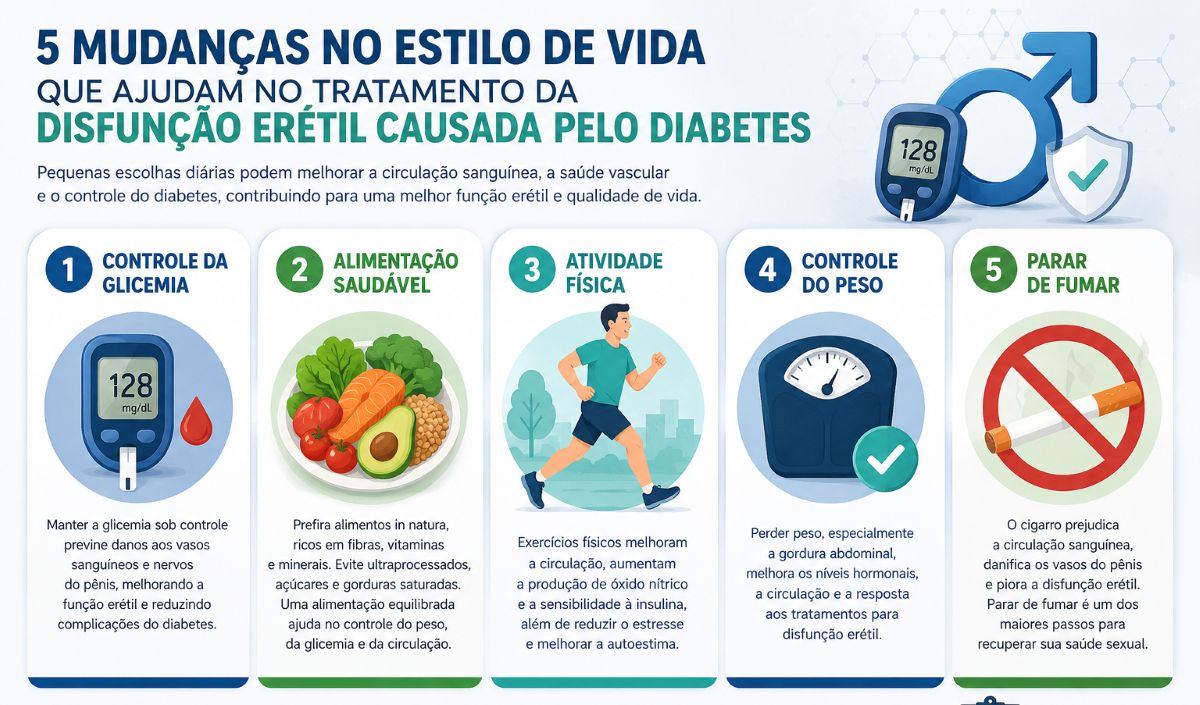
How to prevent erectile dysfunction in men with diabetes?
Can diabetes reduce testosterone?
Yes. Diabetes can reduce testosterone levels because it can compromise the function of the testicles as well as the hypothalamus and pituitary gland, regions of the brain responsible for hormonal control, as explained in an article published in the scientific journal Frontiers in Endocrinology.
In addition, chronic inflammation associated with excess blood sugar favors the accumulation of substances that damage cells and can also interfere with hormone production and balance.
Does erectile dysfunction caused by diabetes have treatment?
Treatment for erectile dysfunction caused by diabetes may include erection medications, metabolic control, hormone therapies, and lifestyle changes.
The choice of approach depends on the severity of the condition, diabetes control, and the presence of other health conditions.
Erection medications
Oral medications are usually the first line of treatment. They act as erection facilitators, meaning that sexual stimulation is required for them to work.
People with diabetes may take tadalafil after a cardiac evaluation, because high blood sugar levels can reduce and even cancel the effect of tadalafil and any other erection medication.
When oral medications do not produce the expected result, second-line therapies may be indicated, such as intracavernosal injections applied directly into the tissues of the penis, always with specialized medical guidance and follow-up.
Metabolic control
Metabolic control is an important measure in the treatment of erectile dysfunction associated with diabetes. Keeping glucose levels within recommended targets helps reduce the progression of damage to blood vessels and nerves, which are essential structures for the erection mechanism.
Hormone therapies
Men with diabetes may develop hypogonadism, a condition characterized by reduced testosterone production by the testicles. The problem is more frequent when obesity is also present.
According to data published by the American Diabetes Association, about one-third of obese men with diabetes have testosterone deficiency.
When laboratory tests confirm low hormone levels and there are compatible symptoms, the doctor may indicate hormone replacement therapy.
Testosterone replacement can be performed through different routes, such as:
- testosterone gel applied to the shoulders, arms, or back;
- transdermal patches applied to the abdomen, shoulder, or thigh;
- intramuscular injections applied to the buttock or thigh;
- hormonal implants inserted under the skin.
Lifestyle changes
Lifestyle changes are essential in the treatment of erectile dysfunction associated with diabetes.
This is because factors that impair erections, such as changes in blood circulation, chronic inflammation, and hormonal imbalances, can improve significantly with the adoption of healthy habits.
The main recommendations include:
- maintaining a balanced diet suitable for blood sugar control;
- exercising regularly;
- controlling blood pressure and cholesterol levels;
- losing weight, when necessary;
- not smoking;
- avoiding excessive alcohol consumption.
What are the warning signs of sexual impotence?
The main warning signs of erectile dysfunction associated with diabetes include:
- Weak erection: a situation in which the penis does not reach sufficient rigidity or remains partially flaccid, making satisfactory sexual intercourse difficult.
- Difficulty maintaining an erection: frequent difficulty maintaining penile rigidity throughout sexual intercourse, even when there is adequate desire and stimulation.
- Low libido: men with diabetes may experience reduced sexual desire, especially when the disease is associated with reduced testosterone levels.
When to see a urologist?
A man should see a urologist when erection difficulty is frequent and also when there is a reduction in morning erections and other symptoms associated with low testosterone, such as fatigue and decreased sexual desire.
To identify the causes of erectile dysfunction, the specialist may request a hormonal, metabolic, and vascular evaluation, which usually includes:
- Total and free testosterone;
- Prolactin dosage test;
- Blood glucose and glycated hemoglobin;
- Penile Doppler ultrasound to assess blood flow in the penis and identify possible vascular changes.
Frequently asked questions about diabetes and sexual impotence
1) Will every diabetic man have impotence?
Not every diabetic man will have sexual impotence, but diabetes increases the risk, especially when it remains uncontrolled for long periods.
2) Can impotence be reversible?
Yes. Sexual impotence in diabetic men can be reversible, especially when identified early and treated appropriately.
3) Does type 2 diabetes cause more erectile dysfunction?
Yes. Type 2 diabetes is more closely associated with erectile dysfunction because it often occurs together with factors such as obesity, hypertension, and vascular changes.
4) Does tadalafil work in diabetic men?
Yes. Tadalafil can work in diabetic men, helping improve penile blood flow. However, the medication’s effect may be lower in cases of uncontrolled diabetes or advanced vascular damage.
5) Does diabetes control improve erections?
Yes. Diabetes control can improve erections because it helps reduce damage to blood vessels and hormone production.