

Low libido, fatigue, and erectile dysfunction are the main symptoms of male hypogonadism, a condition characterized by reduced production of sex hormones.
Hypogonadism is a condition that can occur at any age and is more common than you might think.
It can affect both men and women. In male hypogonadism, there may be interference with the development of typical physical characteristics, low testosterone in men, and difficulty conceiving.
Identifying the condition early allows patients to seek the most appropriate treatment, which may contribute to better management of the clinical picture. Keep reading to learn more about hypogonadism.
What is hypogonadism?
Hypogonadism is a medical condition characterized by the impaired function of the gonads, leading to insufficient production of sex hormones.
In men, the gonads are called the testes; in women, they are the ovaries.
These hormones are essential for reproductive function. However, beyond affecting reproduction itself, this hormonal disorder also impacts the maintenance of secondary sexual characteristics, such as the body changes that occur during puberty.
In men, hypogonadism can hinder the growth of facial and body hair, voice changes, increases in muscle mass, and body-fat distribution, for example.
There are two main types of hypogonadism:
- Primary hypogonadism: also known as primary gonadal failure, occurs when the problem lies in the gonads themselves and may be caused by genetic issues, infections, injuries, or medical treatments that damage the testes.
- Secondary hypogonadism: dysfunction occurs in the hypothalamus or pituitary, brain regions that regulate gonadal activity by releasing hormones that stimulate the production of sex hormones.
Symptoms of male hypogonadism
Symptoms of hypogonadism in men can vary depending on the age at onset. They may also vary in intensity and will not necessarily be present in all patients diagnosed with hypogonadism.
Main possible symptoms include:
- Infertility with reduced sperm production, impairing reproductive capacity;
- Decreased libido (reduced sexual desire);
- Erectile dysfunction (difficulty achieving erections);
- Decreased bone density, with increased risk of osteoporosis and fractures;
- Loss of muscle mass and/or increase in body fat;
- Mood changes, such as depression, irritability, and anxiety;
- Fatigue;
- Reduced growth of facial, pubic, and body hair.

Causes and risk factors
Male hypogonadism may involve problems in the gonads themselves (primary) or in brain regions that regulate hormone production (secondary).
The main risk factors for hypogonadism include aging, family history of the condition, chronic diseases, use of substances such as alcohol, and a sedentary lifestyle.
Among the more likely causes of primary hypogonadism are:
-
- Genetic conditions such as Klinefelter syndrome, which involves the presence of an additional X chromosome in men;
- Autoimmune diseases in which the immune system may attack the testes;
- Chronic illnesses such as kidney or liver failure that can affect testicular function;
- Trauma, injury, or infections (such as orchitis, which can be caused by the mumps virus) affecting the testes and their ability to produce testosterone;
- Invasive cancer treatments, such as radiotherapy or chemotherapy.
In cases of secondary hypogonadism, the causes may include:
- Problems in the hypothalamus or pituitary, such as tumors, injuries, infections, or conditions like Kallmann syndrome that affect these brain regions;
- Chronic diseases that may indirectly alter hormonal regulation;
- Malnutrition and eating disorders;
- Use of certain medications, such as opioids or corticosteroids.
Does hypogonadism affect male fertility?
Although hypogonadism does not always cause infertility, the condition may contribute to male fertility problems.
The testes—key organs for male reproductive health—are affected, resulting in insufficient testosterone production.
Because this hormone is important for libido and erectile function, men with hypogonadism may experience difficulty with sexual activity.
In addition, men may have reduced sperm production or low sperm count. Sperm quality may also be affected in terms of motility and structure, both important for fertilization.

How is hypogonadism diagnosed?
To establish a diagnosis of hypogonadism, the urologist will perform a clinical assessment considering medical and family history, symptoms, pre-existing hormonal conditions, lifestyle habits, and current medications.
The physician will also evaluate features such as hair distribution, testicular size, and muscle development.
Additional tests may be required to better assess severity and determine the cause.
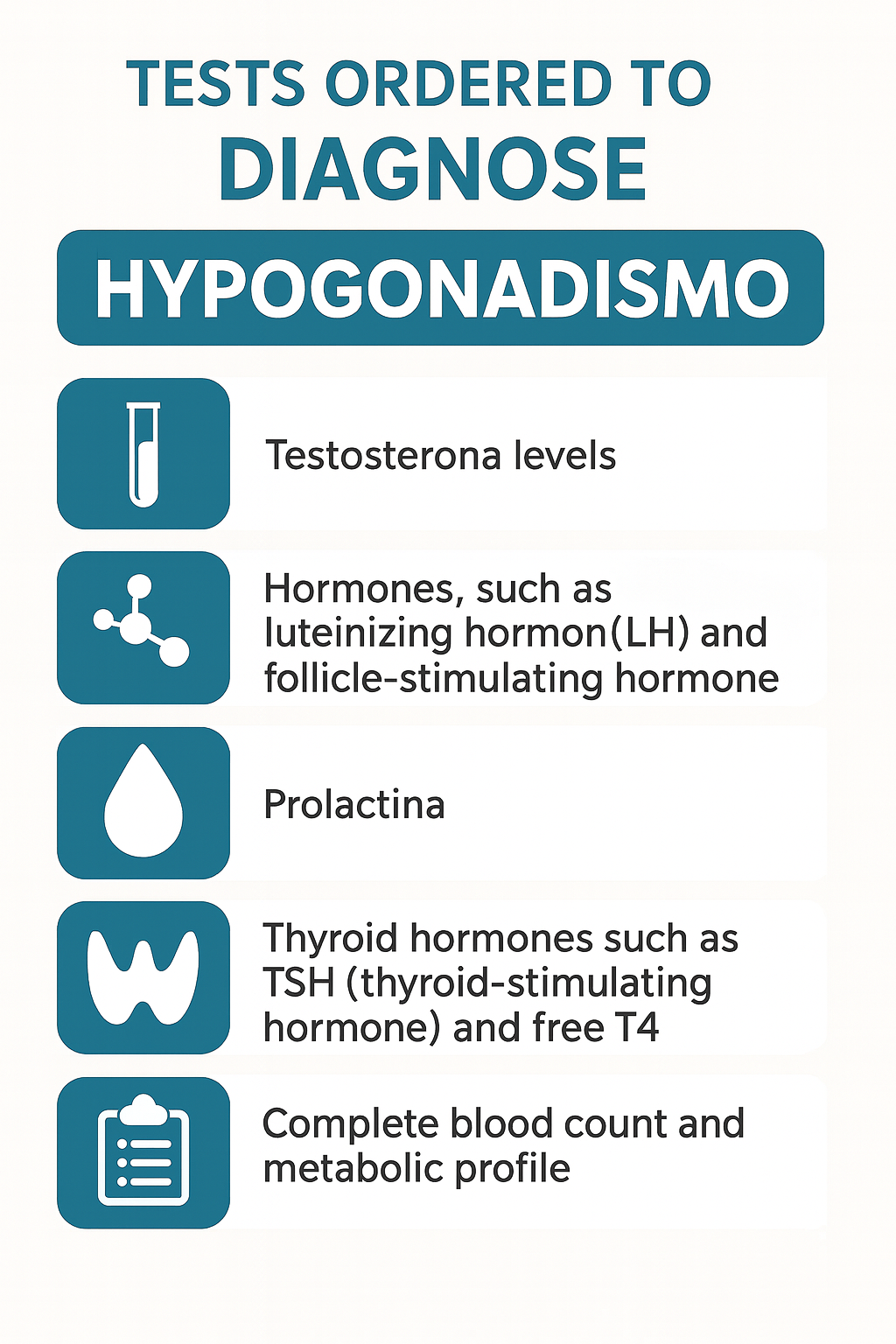
If a tumor or another structural abnormality in the pituitary or hypothalamus is suspected, magnetic resonance imaging or computed tomography of the head may be needed.
In some cases, the physician may also request a testicular ultrasound to assess testicular anatomy and detect possible structural abnormalities.
In congenital hypogonadism or when a genetic condition such as Klinefelter syndrome is suspected, genetic testing may be recommended.
For men who also have infertility, a semen analysis may be performed to evaluate sperm count, motility, and morphology.
Treatment for male hypogonadism
Treatments for hypogonadism vary according to the underlying cause. They also depend on symptom severity and the patient’s goals after treatment, especially when there is a desire for paternity.
When hypogonadism is primary, Testosterone Replacement Therapy (TRT) may be considered, with hormone administration via intramuscular injections, transdermal patches or gels, or oral formulations.
This approach aims to restore hormone levels and may help with symptom control, such as low libido, fatigue, and changes in body composition.
For infertility management, therapies to stimulate sperm production can be considered. These include hormones such as follicle-stimulating hormone (FSH) and luteinizing hormone (LH), or assisted-reproduction techniques such as in vitro fertilization (IVF).

When hypogonadism is secondary, additional hormones such as FSH and LH may be required to stimulate testosterone and sperm production.
If secondary hypogonadism is caused by conditions such as pituitary tumors, hypothyroidism, or obesity, treating the underlying condition may help restore hormonal function.
What can you do to reduce risks and effects of hypogonadism?
Healthy habits can support men’s hormonal health and help with appropriate management of hypogonadism, such as:
- Adopting a healthy lifestyle with balanced nutrition and regular exercise;
- Managing chronic medical conditions;
- Avoiding exposure to harmful substances and maintaining regular medical check-ups.
Keep in mind that preventing hypogonadism is not always possible, especially because many causes are genetic or related to specific medical conditions.
Find more content on men’s health on Dr. Paulo Egydio’s channel
Hypogonadism and other medical conditions that affect men’s health can have a negative impact on life. Getting information about diagnosis and treatment options is the first step toward understanding and dealing with these situations.
Dr. Paulo Egydio is a urologist with more than 25 years of experience caring for patients with conditions that affect male sexual and reproductive health.
Visit Dr. Paulo Egydio’s YouTube channel to learn more about men’s health.