

According to urologist Dr. Paulo Egydio, what is the best penile prosthesis is the one that fits the patient’s needs, aiming to straighten the penis and restore penile rigidity according to each patient’s clinical condition and individual expectations.
What is the ideal penile prosthesis according to Dr. Paulo Egydio? This is a recurring question at the EMC clinic, and one that the physician addresses based on individualized clinical evaluation and the available scientific literature: it depends.
To make it easier to understand, the doctor explains to men which factors should be considered when deciding on penile prosthesis implantation, and he often uses a hypothetical situation—where he himself is the patient—to build a line of reasoning that may help.
Below are the main clinical criteria considered when choosing the best penile prosthesis.
Who Is Dr. Paulo Egydio
Dr. Paulo Egydio is a urologist who graduated from the Federal University of Juiz de Fora School of Medicine, completed his medical residency at the University of São Paulo School of Medicine (USP), completed two postgraduate programs in the United States, and earned his PhD at USP in 2000.
While studying at USP, he established at Hospital das Clínicas an outpatient clinic dedicated to Peyronie’s disease, which operated until 2006. In that clinic, the physician implemented the surgical treatment of penile curvature by refining an already well-established technique based on geometric principles—named by his colleagues the Egydio Technique.
Dr. Paulo Egydio continues his work in penile reconstruction and penile prosthesis implantation, treating patients with different urological conditions according to individualized medical indication.
He is invited annually to congresses and to teach in Brazil and abroad, and he is the author of articles and books, with recognized academic and scientific work, including participation in congresses and publications in the field.
What Is the Best Penile Prosthesis According to Dr. Paulo Egydio?
The penile prosthesis considered most appropriate is the one that best fits the patient’s reality, expectations, and clinical conditions.
This means that doctor and patient need to talk openly so the physician can understand the patient’s needs, lifestyle, and goals.
This conversation includes comparing penile prosthesis options, which helps the patient choose a penile prosthesis safely, with realistic expectations about possible treatment outcomes.
Medical support should also extend into the postoperative period, with the surgeon helping with physical and emotional adaptation—something that can be important during the first sexual experiences after implantation.
Therefore, the answer to “what is the best penile prosthesis” depends on the patient’s needs.
Main Types of Penile Prosthesis
See this comparison between inflatable vs semi-rigid penile prosthesis:
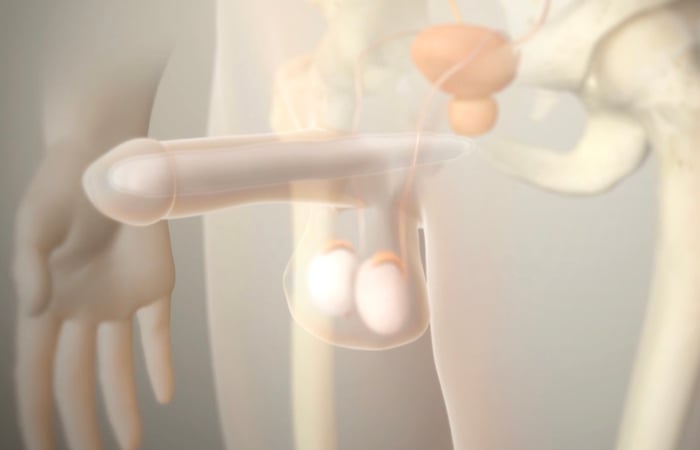
Malleable Penile Prosthesis
The malleable prosthesis has two metal rods covered with silicone.
In daily life, a man can keep it close to the groin or to the side, whichever feels more comfortable. For sexual activity, he simply positions the prosthesis in an erect state.
The main advantage of the malleable penile prosthesis is durability, because it rarely fails. However, it does not allow the penis to become fully flaccid, which may cause discomfort or embarrassment for some men.
Inflatable Penile Prosthesis
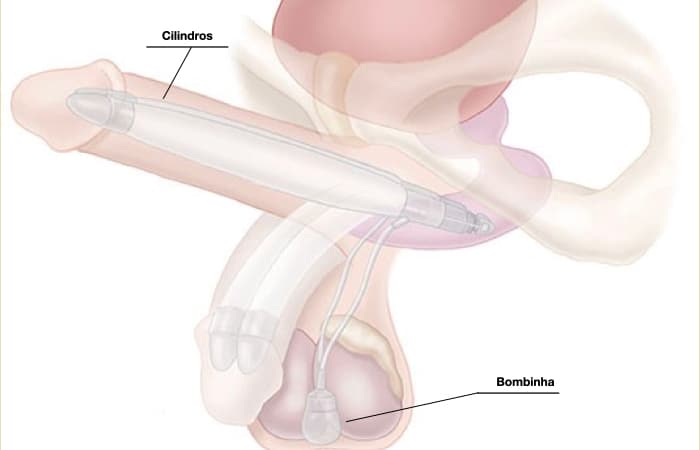
The inflatable penile implant is a hydraulic system made up of cylinders and a pump placed in the scrotum. To make the penis erect, the pump is pressed to inflate the cylinders.
The advantage of the inflatable penile prosthesis is making the penis more discreet. However, it is a more delicate system and more prone to malfunction, which may require implant replacement.
What to Consider When Choosing the Best Penile Prosthesis
Dr. Paulo Egydio explains that an attentive and open conversation is necessary. Here are the factors that should be considered.
Age
Age is an important criterion. The greater the life expectancy, the more the urologist needs to think about long-term planning.
In this context, penile prosthesis durability can increase safety and functionality over the years.
Penile Anatomy
Second, it is essential to understand the patient’s penile anatomy to choose a penile prosthesis.
For this, tests such as Doppler ultrasound are part of the preoperative evaluation, because they can show changes in penile blood flow and in the corpora cavernosa, as well as identify the presence of fibrosis.
Lifestyle
The doctor also needs to assess the patient’s lifestyle. Younger men often have activities where the body is more exposed, such as sports and going to the beach.
A malleable prosthesis can make the penis look more bulky and noticeable under clothing, which may be a source of pride or discomfort. The patient should feel comfortable being open about how he feels regarding this type of prosthesis.
Extent of Fibrosis
The presence of penile fibrosis associated with reduced length and width can decrease tissue elasticity, which reduces the available space for implantation.
Without enough space, the prosthesis may not provide mechanical resistance compatible with the function for which it was indicated.
Hand Strength and Dexterity
With an inflatable penile prosthesis, erection is achieved by pressing the pump placed in the scrotum. This action transfers fluid to inflate the cylinders and requires good manual dexterity.
For this reason, men with Parkinson’s disease or malformations may have some difficulty using this mechanism. In such cases, a malleable prosthesis may be the most appropriate model.
Cost
The cost of a penile prosthesis should also be considered.
A malleable prosthesis is typically more affordable and may be provided by Brazil’s public health system (SUS) in specific situations, such as after radical prostatectomy.
An inflatable model, in turn, may cost more than R$20,000 (excluding medical fees) and is not covered by health insurance plans, which can make the procedure unfeasible for many men.

To understand what is the best penile prosthesis for your case, it is important to consult a specialist to evaluate your situation.
If you may be a candidate for implantation, fill out the pre-assessment form to receive an email response after your information is reviewed.