
Genetic and hormonal factors determine what is the normal penis size.
What is the normal penis size? The discussion about penis measurements has been a research topic for decades. For reference, the first study was published in 1942 in the Journal of Urology. Before answering, it’s important to note that genetic and hormonal factors—and even measurement methodologies—influence results. Keep reading to get science-based answers to your questions.Top questions about what is the normal penis size
Penis size is one of the biggest curiosities and concerns among men. From adolescence, many boys wonder whether their size is within the average, which can trigger anxiety and insecurity. Because the topic is surrounded by myths and controversy, it’s essential to share reliable information that clarifies doubts and debunks misconceptions. Below are the most common questions about penis size.What is the normal penis size?
According to a study in the World Journal of Men’s Health (2023), the average erect penis length is 15.2 cm. The research was led by Dr. Michael Eisenberg, a urologist and male fertility specialist at Stanford Medicine. The team compiled data from 75 studies conducted between 1942 and 2021, totaling 55,761 men worldwide. They observed an increase in average length—from 12.2 cm to approximately 15.2 cm. This change appears global; one hypothesis is environmental and chemical exposure that accelerates puberty.What is the average size among Brazilian men?
Among Brazilians, erect penis length ranges from about 10 cm to 17 cm, according to an article in the Boletim de Informações Urológicas of the Brazilian Society of Urology.
What is the penis size by age?
Is there an ideal penis size at each age? Before puberty, length is usually between 4 and 5 cm (flaccid). During puberty, rising testosterone stimulates penile growth and development. Around 13–14 years, noticeable changes occur, with lengths of ~6–7 cm flaccid and 10–12 cm erect. Growth generally continues until ages 16–17, when the organ reaches its definitive size. However, obesity can impair penile development, as reported in the Journal of Clinical Endocrinology & Metabolism. That study analyzed 1,130 males aged 0–20. One finding was ~10% less penile growth compared with normal-weight peers. Researchers also found obese participants had ~50% lower testosterone.When is a penis considered “large”?
From what length is it considered large? A review published in the British Journal of Urology analyzed 15,000 men (≥17 years) and found that penises measuring above 16 cm (erect) fall into the “large” category.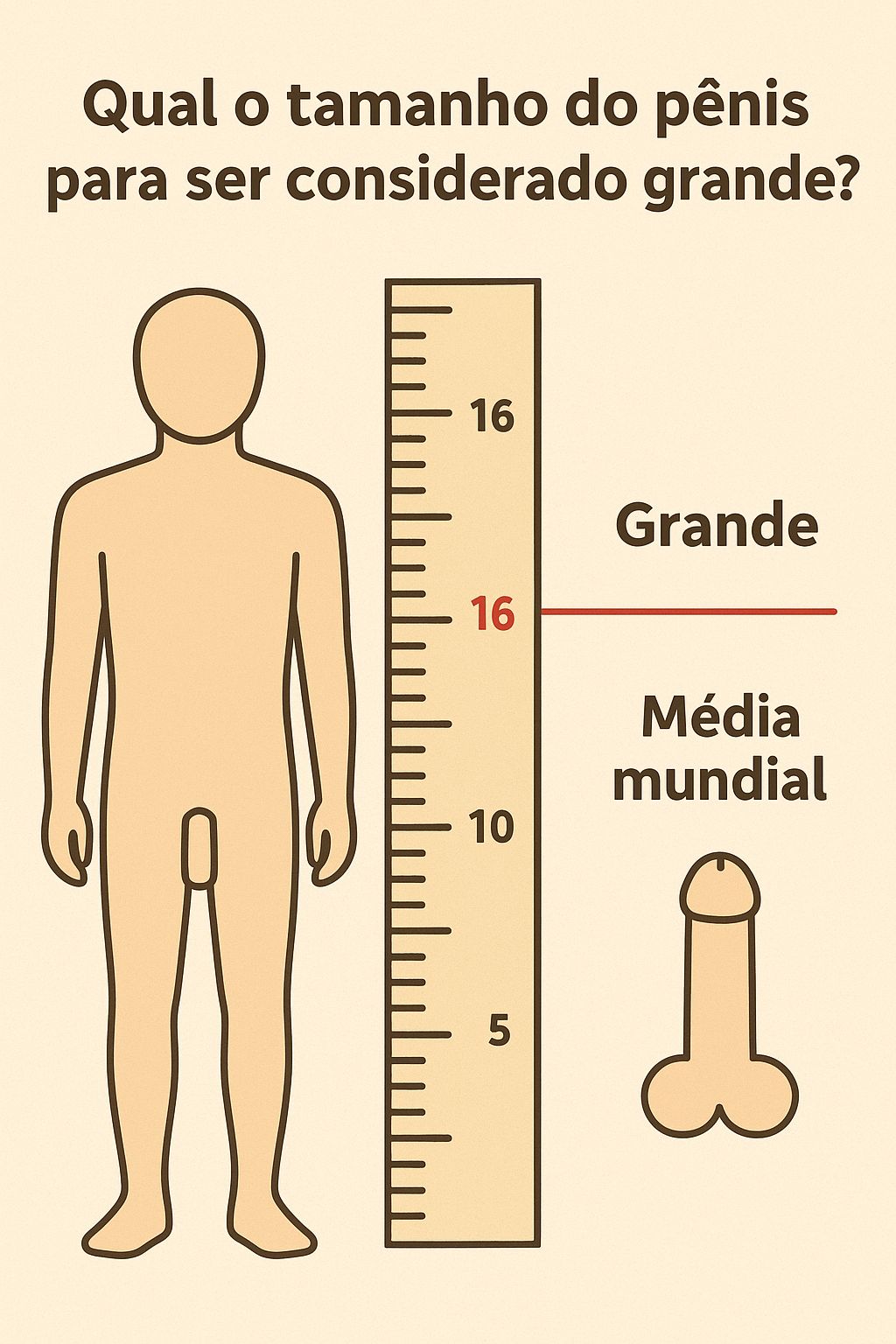
Neutral male silhouette on a beige background; a ruler highlighting 16 cm as a large penis.
When does penis size really matter?
Sometimes concern about size reflects body image distortion with psychological roots. However, when an erect penis measures under 9 cm, it is characterized as micropenis. This condition results from problems in testosterone production or action between the second and third trimesters of gestation. When micropenis is diagnosed in childhood, treatment options such as hormone therapy or surgery may yield better results at that stage. Size should also be considered when there’s a condition affecting men’s sexual health, such as Peyronie’s disease.Is there any correlation between penis size and height?
There is no direct correlation between penis size and a person’s height. These two traits are influenced by different genetic and hormonal factors and develop independently. Many perceptions about penis size are rooted in myths and misinformation. Each body develops uniquely, and trying to link these characteristics can create unrealistic expectations and unnecessary worry.What determines penis size?
Key determinants of penile size include:- Genetic factors: genes inherited from parents significantly influence physical development, including penis size;
- Hormones: hormones—especially during puberty—play a crucial role. Testosterone drives penile growth and other male sexual characteristics;
- Nutrition and overall health: a balanced diet in childhood and adolescence supports whole-body development, including the penis.
Is there a link between penis size and erection problems?
There’s no direct link between penis size and difficulty achieving an erection. Erections depend mainly on blood flow and cardiovascular health—not the size of the organ. Erectile dysfunction can stem from heart disease, diabetes, hypertension, obesity, stress, anxiety, and unhealthy habits such as excessive alcohol use and smoking. These factors impair circulation and nerves, affecting erectile capability.Myths and facts about the normal penis size
Penis size is surrounded by myths. Debunking them helps reduce anxiety and promotes a healthier, more realistic view of sexuality. Here are common myths about penis size:Do sexual partners prefer bigger penises?
Myth: There’s a belief that partners prefer bigger penises. In reality, preferences vary widely. Emotional compatibility, communication, and sexual skills are usually far more important for satisfaction than size.Do smaller penises provide less pleasure?
Myth: Satisfaction is not directly tied to size. For instance, the vagina concentrates most nerve endings in the first centimeters, so stimulation does not depend on penile length.Does masturbation influence penis growth?
Myth: The benefits of masturbation include self-knowledge, stress relief, and improved mood. However, it does not affect length. Are there effective methods to increase penis size? Myth: Many products and techniques claim to increase penis size, but most lack scientific evidence and may pose health risks.Can the penis get smaller?
Yes. Peyronie’s disease is one reason. A 2024 review in Sexual Medicine Reviews reports a global prevalence between 0.4% and 9%. The condition is marked by a noticeable curvature during erection. Causes include injuries during sex, sports, or accidents. These injuries form internal scars that reduce elasticity. Without treatment, the penis may thin and lose length.Why is my penis getting smaller?
As noted, Peyronie’s disease can thin and shorten the penis. There are different levels of curvature, and medication or surgery isn’t always necessary. When curvature is downward, surgery may be indicated even at lower degrees. In this direction, vertical rigidity is often compromised, making penetration difficult.Trauma and microtrauma
Trauma and microtraumas to the penis commonly occur during sex—especially in positions where the man has less control. Insufficient lubrication and vigorous movements also contribute to small injuries. Minor scratches or abrasions after intercourse are usually temporary. Treatment is simple: healing ointments and abstinence until recovery.Erectile dysfunction
Erectile dysfunction (ED) is associated with circulation issues such as diabetes, hypertension, and smoking. Low testosterone may also impair erections because the hormone helps regulate erectile function. Peyronie’s disease is another cause of ED: internal scarring creates a hardened plaque. That plaque reduces tissue elasticity, limiting expansion and blood inflow.Lack of nocturnal or morning erections
Nocturnal erections respond to signals from the brain to genital nerves. This stimulus increases penile blood flow. Sleep- and morning-time erections help oxygenate penile tissue. Persistent absence may indicate a problem.Diabetes
Poorly controlled diabetes raises blood sugar, damaging nerves and blood vessels—including those in the penis. If blood flow is insufficient, diabetes can lead to erectile dysfunction. If you have a history of diabetes—or haven’t checked your health in a while—consult a physician to assess glucose levels and begin appropriate treatment.Prostate cancer
Surgical treatment for prostate cancer can cause ED if nerves involved in erection are affected. Prostate removal can also leave scar tissue that retracts and reduces penile length.Priapism
Priapism is a prolonged erection lasting over three hours, sometimes without sexual arousal. It’s a urologic emergency in which the penis doesn’t return to normal after ejaculation. It can cause pain, swelling, and skin changes. Without prompt care, scarring may develop and alter penile size. In severe cases, tissue necrosis can occur.How to know if the penis has gotten smaller
Knowing your penis type helps you identify changes. With that reference, you can measure it. Follow these steps:- Choose a room with a comfortable temperature;
- Ensure the penis is erect;
- Place a ruler on top, from the pubis to the glans, not counting the foreskin.
My penis got smaller—what now?
See a urologist if you notice a reduction in size to investigate causes and define the right approach—regardless of whether you measure the penis or not. Early specialist care helps diagnose and treat promptly.Talk to Dr. Paulo Egydio
Understanding what is the normal penis size helps you detect changes sooner. If you notice any anatomical change, complete the pre-analysis form to receive initial guidance and schedule an appointment. Learn more:- Most common prostate diseases and symptoms
- Penis types: differences, myths, curiosities
- Male masturbation: benefits and myths
- Male hormones that influence your health
- 10 tips to improve sexual performance
- What is ejaculation? Key answers
- What is andropause? Signs, symptoms, treatments
- Main penile surgeries: are they effective?
- Penis anatomy: structure, erection, ejaculation
- Top penile diseases: how to identify and treat
- Penile pain: 12 causes, symptoms, treatments
- Men’s sexual health: 7 habits that affect performance and how to improve