

Chronic prostatitis is one of the types of inflammatory processes that affect the prostate. Management may require long-term follow-up, since symptoms can be persistent in some cases.
Prostatitis is a relatively common male health condition and deserves appropriate medical attention, especially when there are persistent symptoms that may impact well-being.
There are several types of prostatitis, which are still being studied by physicians. Among them is chronic prostatitis, which may present recurrent episodes and usually requires continuous follow-up.
Get to know this condition, what the main types are and why it is important to seek medical help to take care of chronic prostatitis.
What is prostatitis
Prostatitis is a disease of the prostate – a gland located below the bladder, responsible for producing prostatic fluid. Although the condition is characterized by inflammation, some cases do not present this typical sign.
The condition may be caused by bacterial infections that usually start in the urinary tract. However, there are cases in which the cause is not fully known.
According to the article Epidemiology of prostatitis, which analyzed five population-based studies with 10,617 men, the overall incidence of some form or symptoms of prostatitis was estimated, on average, at 8.2% of participants.
Types and classifications of prostatitis
Since 1999, the National Institutes of Health (NIH), a medical research agency linked to the United States government, has classified prostatitis as follows:
- Acute prostatitis: caused by a sudden bacterial infection of the prostate that affects the urinary system.
- Chronic bacterial prostatitis: caused by a bacterial infection of the prostate that develops slowly and affects the urinary system, with a causative agent that is difficult to treat.
- Chronic prostatitis/chronic pelvic pain syndrome, inflammatory: inflammation of the prostate with no defined cause.
- Chronic prostatitis/chronic pelvic pain syndrome, non-inflammatory: not caused by infection and without signs of inflammation. It is associated with neuromuscular factors, pelvic floor tension or psychological aspects – which is why it is popularly known as emotional prostatitis.
- Asymptomatic inflammatory chronic prostatitis: inflammation of the prostate with no defined cause and no symptoms. It is usually identified in routine tests, such as PSA.
Symptoms and warning signs of chronic prostatitis
Symptoms of prostatitis vary according to the type of inflammation. In many cases, there may be pain or discomfort in specific areas.
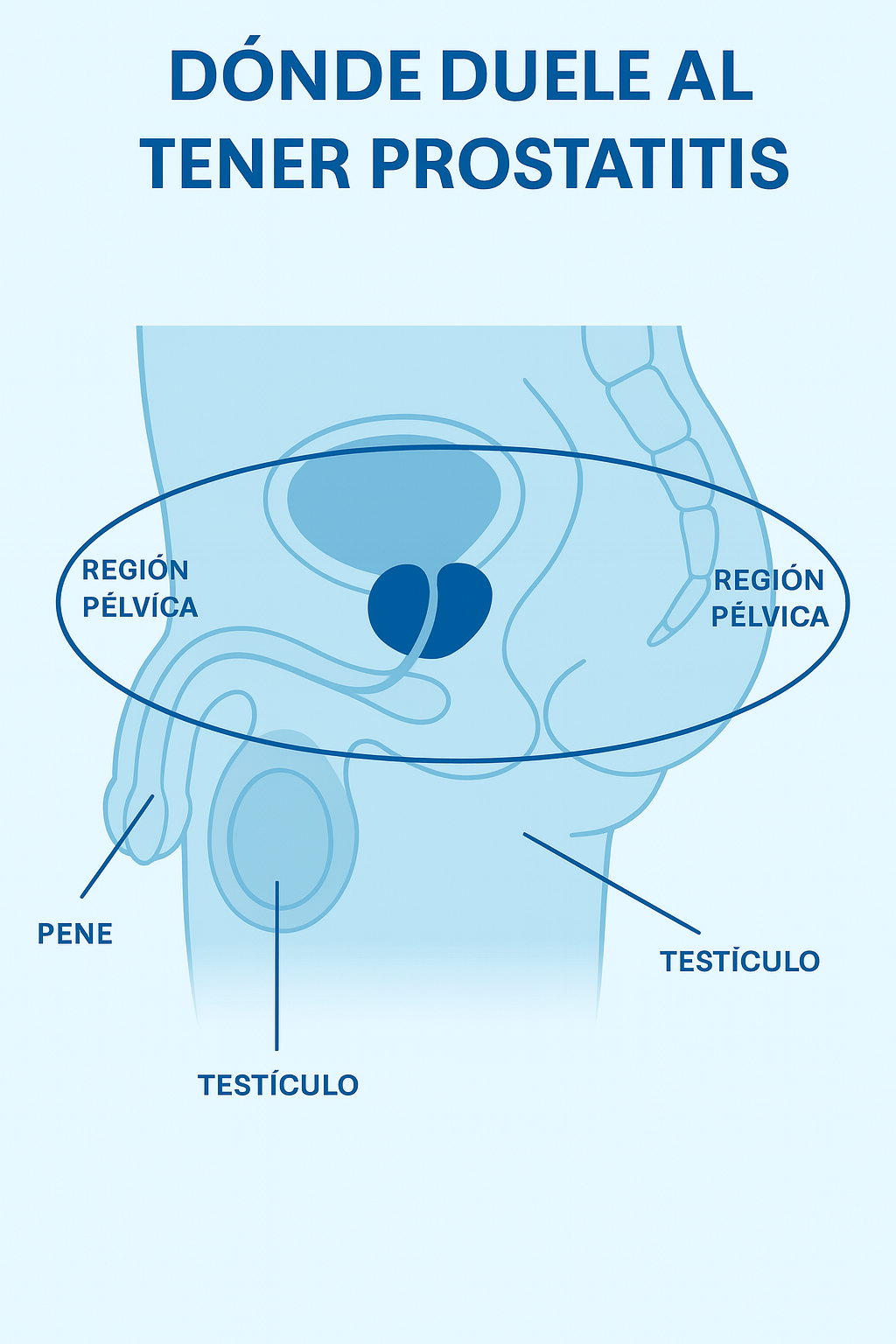
In addition to pain, the most common warning signs of prostatitis are:
- Pain or discomfort in the area between the scrotum and the anus, in the lower back, penis or testicles;
- Pain or burning when urinating;
- Urgency to urinate;
- Frequent urination, especially at night;
- Pain during ejaculation;
- Pain during erection;
- Erectile dysfunction;
- Pain when defecating.
In cases of acute bacterial prostatitis, symptoms tend to be more severe and may also include:
- Blood in the urine or semen;
- Fever and chills;
- A general feeling of malaise.
It is important to remember that it is possible to have prostatitis without presenting symptoms (asymptomatic inflammatory chronic prostatitis).
Causes of prostatitis
When there is a bacterial infection, the agents responsible for prostatitis may be Escherichia coli and Enterococcus fecalis, which can lodge in the urethra or rectum.
In many cases, the cause cannot be identified. It is believed that micro-organisms that have not yet been identified may be responsible, as well as urinary reflux.
Depending on the type, a combination of neuromuscular, emotional and psychosomatic factors – such as pelvic floor muscle tension, local nerve dysfunction, prolonged stress and changes in pain perception – may favor chronic prostatitis.
Diagnosis and medical evaluation of prostatitis
Diagnosis is made by a urologist, who will order tests for the man with suspected prostatitis.
In most cases, the physician will evaluate the clinical history, perform physical examinations, such as digital rectal examination, and request the following laboratory tests:
- Urinalysis (EQU) to assess the health of the urinary tract;
- Urine culture to detect whether there are bacteria in the urine.
In severe cases, when there is intense pain, blood in the urine or difficulty urinating, additional tests such as magnetic resonance imaging, computed tomography, cystoscopy or ultrasound may be necessary.
The PSA test is not indicated for the diagnosis of prostatitis. If the digital rectal examination finds abnormalities, this test may be requested to investigate prostate cancer, but not prostatitis.
Why chronic prostatitis can be more serious than you might think
When it does not receive appropriate follow-up, chronic prostatitis can cause persistent symptoms that require medical attention.
In some situations, persistent inflammation may favor bacterial proliferation in the gland, requiring medical evaluation to define the best approach.
In some cases, nearby structures may be affected, which reinforces the importance of proper diagnosis and follow-up.
When the infection is not completely eliminated, the condition may progress to chronic bacterial prostatitis or chronic pelvic pain syndrome. These conditions can be persistent and require continuous follow-up to control symptoms.
The impact of chronic prostatitis may also affect sexual life. Prostatitis and erectile dysfunction are related, since damage in the pelvic region, such as impaired blood flow and nerves, favors difficulty in achieving or maintaining an erection. In some men, prostatitis may be associated with changes in sexual function, which can influence emotional well-being.
Is prostatitis contagious?
Prostatitis is not transmitted directly from person to person, even though some types are caused by bacterial agents. Therefore, prostatitis is not considered a contagious condition.
Treatment and recovery from chronic prostatitis
Treatment of prostatitis must be individualized, according to the type and origin of the condition.
Prostatitis of bacterial origin is treated with antibiotics, which act to fight the infection and gradually reduce inflammation.
Acute cases may improve within about a month. Chronic cases, however, often require prolonged or repeated courses of antibiotics and, even after control, may not have a definitive cure.
For non-bacterial forms or chronic pelvic pain syndrome, treatment focuses on managing symptoms, since the condition also does not have a definitive cure. Therefore, symptom control may take several weeks or even many months.
Analgesics and anti-inflammatory medications are used to relieve pain and discomfort, and alpha-blockers may facilitate urination.
In cases of persistent pain, pelvic physiotherapy can help relax the pelvic floor muscles and reduce local tension. Warm sitz baths and gentle massage of the prostate region may also be recommended.
In addition, adequate rest, avoiding activities that may worsen symptoms, and stress reduction are important measures. A diet that supports prostate health and proper hydration help minimize the symptoms of chronic prostatitis and support recovery.
Questions about chronic prostatitis? Talk to Dr. Paulo Egydio
It is essential to consult a physician at the first sign of inflammation in the prostate to reduce the risk of chronic prostatitis and its impact on male health.
Dr. Paulo Egydio, who has already seen more than 7,000 patients throughout his professional life, can assist men who suspect this problem in his office, with discretion and empathy.
Talk to Dr. Paulo Egydio and receive guidance to start taking care of prostatitis. Schedule your appointment and avoid unwanted impacts on your life.
Learn more:
- Types of penis: what they are, differences, myths and curiosities
- Male masturbation: benefits and myths debunked
- Male hormones that influence your health
- 10 tips to improve sexual performance
- What is ejaculation? Answers to your main questions
- What is andropause? Signs, symptoms and treatments
- Get to know the 4 main penile surgeries: are they effective?
- Penis anatomy: structure, erection and ejaculation
- Main penile diseases: how to identify and treat
- Penile pain: main causes, symptoms and treatments