
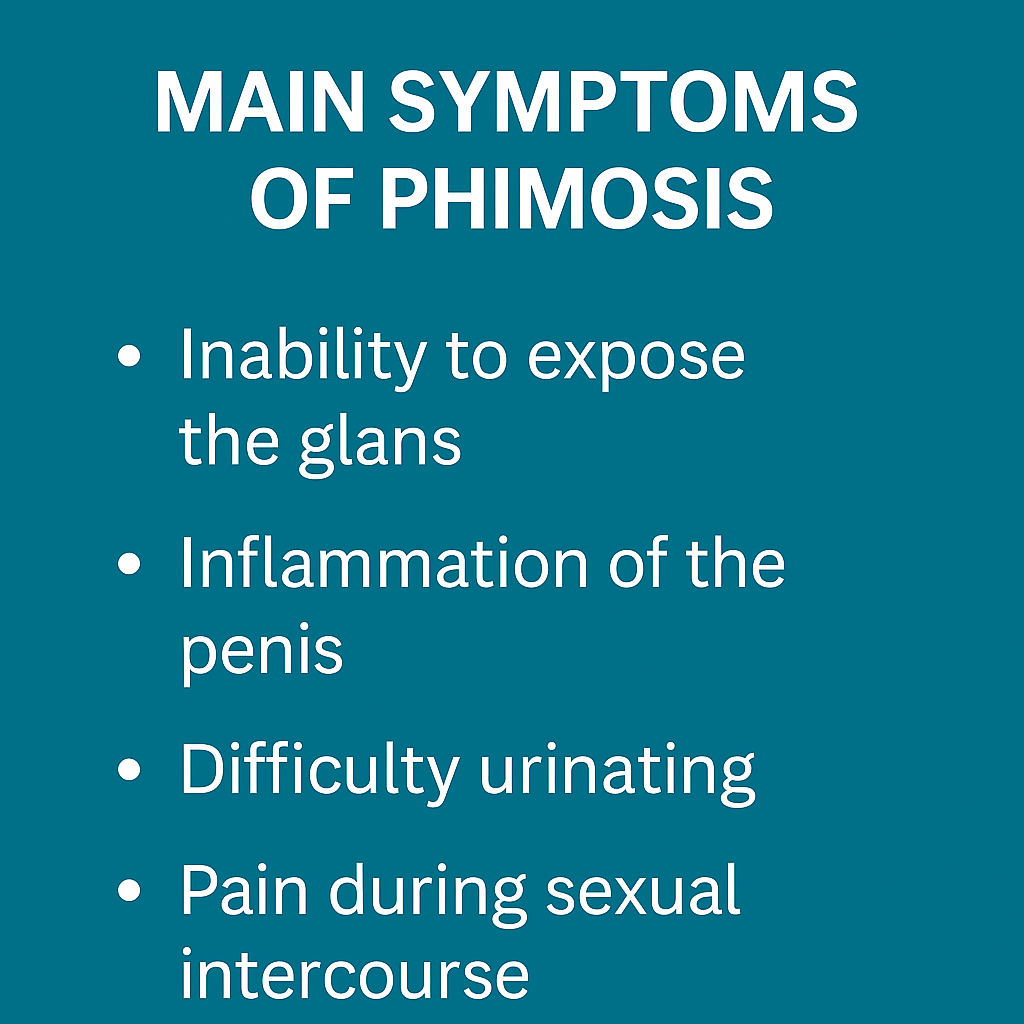
The main symptoms of phimosis in adults include: difficulty exposing the glans, inflammation in the penis, pain during sex and difficulty urinating.
Phimosis is a condition that affects the skin that covers the tip of the penis. Although it is commonly associated with the early years of life, if neglected in adulthood, it may be associated with discomfort and limitations, depending on individual clinical evaluation.
One of the possible consequences of phimosis is the difficulty of performing intimate hygiene properly. Difficulty with hygiene may be associated with a higher risk of irritation, inflammation, and infections. In some studies, the condition is considered a possible risk factor for penile cancer in specific contexts. Therefore, men should be concerned about this condition!
Check out an informative guide about the condition and understand possible related medical guidance.
What is phimosis?
In simple terms, phimosis is the narrowing of the foreskin due to excess skin that covers the penis, making it difficult to adequately expose the glans.
This condition is relatively common and normally diagnosed while still a baby. Many times, it resolves naturally as the child grows.
Retraction may occur on its own in childhood and even in adolescence. There is no age limit for the persistence of the situation.
However, if retraction does not occur normally in adulthood, it may cause discomfort, difficulty in genital hygiene and, in some cases, problems during sexual activity. A medical evaluation may be recommended to clarify doubts and discuss possible options.
Types and grades
According to the Ministry of Health, there is physiological phimosis, which is present from birth and diagnosed in childhood, and secondary phimosis, which may arise at other stages of life after an important event.
Generally, the causes of phimosis in adults originate from an infection or trauma to the penis.
Phimosis is also classified according to severity, as follows:
| Phimosis Grade | Description |
|---|---|
| Grade 1 | Retraction of the foreskin is possible with difficulty. Almost the entire glans becomes exposed. |
| Grade 2 | Retraction of the foreskin is possible with difficulty. About half of the glans becomes exposed. |
| Grade 3 | Retraction of the foreskin is quite restricted. Most of the glans remains covered. |
| Grade 4 | Retraction of the foreskin is not possible. The glans remains totally covered. |
Symptoms of phimosis in adults
One of the main symptoms of male phimosis is the inability to fully expose the glans when the foreskin is pulled back.
When is phimosis concerning?
The condition becomes concerning when it makes adequate hygiene difficult or impossible on the penis.
This factor contributes to the increased possibility of contracting sexually transmitted infections, such as HPV. Phimosis is also one of the main risk factors for penile cancer.
Other possible complications are inflammation and infections in the penis, as well as urinary infections.
Related: Common causes of sores on the penis
How is the diagnosis made
Phimosis is diagnosed through medical evaluation in a physical exam, preferably performed by a urologist.
First, the doctor will assess the ability to retract the foreskin over the glans.
In more severe cases, additional exams, such as ultrasound, may be indicated.
During the consultation, the doctor considers the patient’s age, presence of symptoms, and ability to perform intimate hygiene to recommend the best treatment.

Treatments for phimosis in adults
Circumcision (circumcision) is the most common treatment for phimosis in adults.
Phimosis surgery, called postectomy, is a surgical procedure that aims to remove all or part of the foreskin with a small cut. During the procedure, under local or general anesthesia, the surgeon makes an incision in the foreskin to expose the glans. Then, the foreskin is removed, freeing the glans.
Can phimosis be operated at 30 years old?
This type of intervention is widely used and may be indicated according to medical evaluation. Like any procedure, it has criteria, benefits, and risks that must be discussed in consultation.
Although surgical treatment is indicated in certain situations, surgery is not the only option. In some cases, non-surgical alternatives may exist.
Non-surgical treatments
In some cases, phimosis may be treated without the need for surgical interventions. The procedures include:
- Stretching exercises: in initial and mild cases, the patient may gradually move the foreskin in stretching exercises guided by a doctor.
- Application of creams and ointments for phimosis: they contain corticosteroids and aim to treat inflammation to assist in foreskin retraction.
- Manual dilation of the foreskin: involves applying gentle and gradual pressure to stretch the foreskin, allowing it to retract properly. It is performed exclusively by a doctor and should not be done at home.
None of the treatments should be performed without medical indication. The evaluation of a urologist is essential to determine the best option for each case.
Frequently asked questions
Is it possible to prevent phimosis?
Physiological phimosis cannot be prevented, as it starts in childhood and varies individually according to each case.
Regarding secondary phimosis (which may be acquired in adulthood), local hygiene is the best way to prevent infection or inflammation that may cause the condition.
Can I live with phimosis?
In adults, the condition may be uncomfortable and, in some cases, associated with limitations.
In children who have not yet treated the condition, phimosis may also be uncomfortable, causing pain and inflammation.
What happens if phimosis is not treated?
If the condition is not treated, complications and consequences may arise due to excess foreskin, such as:
- Difficulty with hygiene;
- Recurring infections;
- Pain;
- Difficulties in male sexual life;
- Urine retention in more severe cases;
- Higher risks of STIs and penile cancer.
Does phimosis affect fertility?
It does not directly affect male fertility. However, in more severe cases, complications may arise that indirectly impact fertility.
Recurring inflammation or infection in the foreskin and glans may lead to problems in the ducts that transport sperm from the testicles to the urethra and in the testicles themselves, affecting sperm quality.
Pain and discomfort may affect sexual relations, making ejaculation for conception difficult.
Is phimosis the same as adhesion?
There is a difference between phimosis and adhesion.
In the case of adhesion, there is a connection or fixation of the foreskin to the glans. Adhesions may be identified mainly in children in the first years of life, when the foreskin has not yet completely detached from the glans.
Adhesions normally disappear on their own as the child grows.
Talk to Dr. Paulo Egydio and learn which treatment is indicated for your case
A consultation with a healthcare professional is essential when addressing phimosis and male sexual health.
Trust the team of Dr. Paulo Egydio to assist with this condition, which may be uncomfortable and embarrassing, but that has treatment for men of all ages. Just seek help!
Talk to Dr. Paulo Egydio to receive medical guidance and avoid complications from conditions that may affect your sexual quality of life.