Penile reconstruction surgery is a procedure indicated for men with penile fibrosis who have developed Peyronie’s disease. Its goal is to restore the functional and anatomical characteristics of the penis. Learn more.
Penile reconstruction surgery is not for every man. It is recommended to correct penile curvature, loss of length and areas of narrowing in men with Peyronie’s disease.
This treatment also aims to optimise the penis for placement of a penile prosthesis when erectile dysfunction is present together with Peyronie’s. The implant is inserted immediately after the reconstruction, during the same operation.
Nevertheless, the indication for this surgery requires caution. A urologist can determine when it should be performed and align expectations with the patient. Find out the details of penile reconstruction surgery.
How is penile reconstruction surgery performed?
Penile reconstruction surgery seeks to restore the penis, correcting deformities that may affect it.
Among the conditions that cause deformities are Peyronie’s disease and congenital curvature (also known as curvature in young men). They give rise to symptoms such as curvature, narrowing and loss of length because of the loss of elasticity of the inner penile tissues.
These conditions can also lead to or be aggravated by erectile dysfunction. In such cases, besides deformities, the man has difficulty achieving or maintaining an erection – and in specific situations a penile prosthesis may be considered in the same operation.
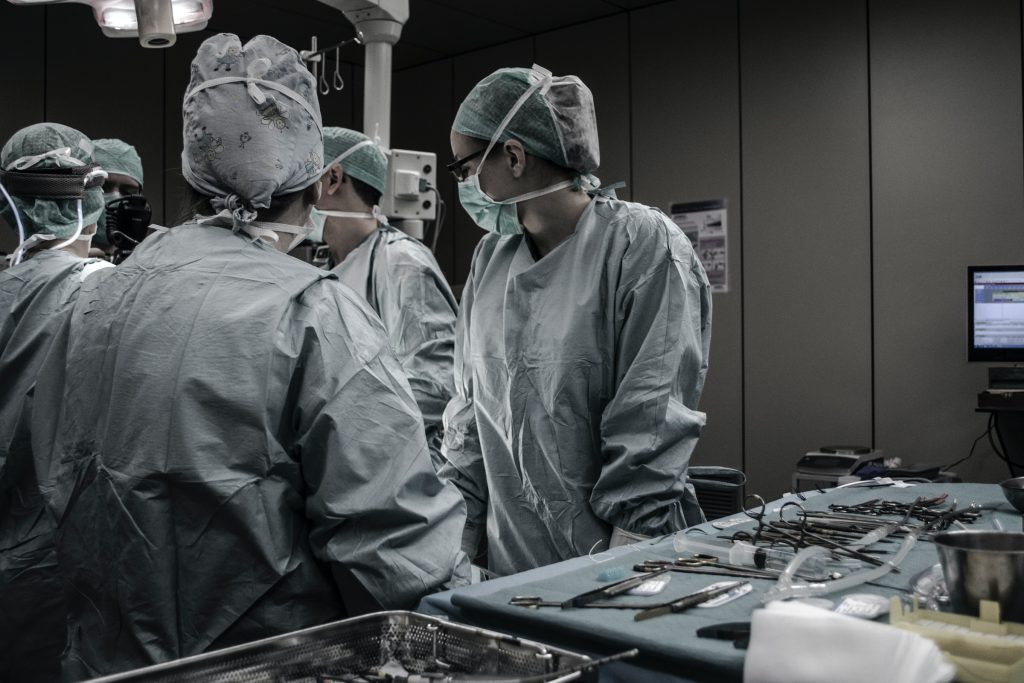
Penile reconstruction surgery is performed by urologic surgeons.
Although there are several surgical strategies to recover penile dimensions, one of the most established techniques involves geometrically calculated micro-incisions in the penile tissue. This produces a controlled expansion intended to enlarge the penile tissues within the anatomical and neurological limits.
After restoring penile size, if the man is diagnosed with erectile dysfunction, the appropriate-sized penile prosthesis is inserted.
How much does penile reconstruction cost?
It is not possible to set a fixed price for penile reconstruction surgery. Each procedure is highly personalised, depending on the severity of the deformity, type of prosthesis and surgical techniques employed.
In addition, the cost of medical consultations, diagnostic tests, medication, hospital fees, surgical team and anaesthesia must be considered if there is no health-insurance coverage.
Taking all expenses into account, penile reconstruction surgery can exceed BRL 50,000.

When is penile reconstruction surgery indicated?
In general, penile reconstruction surgery is for men whose penile deformity prevents satisfactory penetration. This may occur when there is:
Penile trauma and injury
During sex, while sleeping face-down or when wearing very tight clothing, the penis can suffer minor traumas and injuries that favour the formation of fibrotic plaques, leading to Peyronie’s disease.
Erectile dysfunction
When a man has erectile dysfunction and still attempts penetration, the organ becomes more prone to trauma and injury, which in some cases results in fibrosis.
Congenital curvature
In congenital curvature, the patient is born with tissues that differ in elasticity.
Previous medical procedures
Men who have undergone unsuccessful penile surgeries or procedures may be left, as an adverse effect, with a curved, narrowed or shortened penis and erectile dysfunction.
When is a prosthesis indicated even without loss of length?
A penile prosthesis is indicated for men with severe erectile dysfunction who do not respond adequately to other treatments.
However, it is essential to clarify: implanting the prosthesis alone will not treat erectile dysfunction. Its purpose is to provide vertical firmness, and for this the penis must be reconstructed.
If penile reconstruction surgery is not performed and the penis has any deformity or unfavourable anatomy, the prosthesis will not be sufficient to restore rigidity.
One example is when the penis has a narrowing point and an inflatable prosthesis is inserted. At that point the implant will have limited inflation and will not provide the firmness needed for penetration.
Peyronie’s disease and penile reconstruction surgery
Penile reconstruction is a treatment that may be indicated for certain cases of Peyronie’s disease.
Initial approaches are conservative. Medication or penile injections can help many men with curvature. If none of these offer satisfactory sexual function, surgery becomes an option after detailed tests.
For Peyronie’s, male genital reconstruction consists of expanding penile tissues while correcting the curvature, with the possibility of recovering dimensions without grafts. Instead, multiple small incisions create the tissue expansion needed to straighten the organ.
It is important to clarify that this procedure differs from phalloplasty, which is indicated in specific situations where cosmetic goals are sought rather than merely restoring sexual function.
Congenital curvature and penile reconstruction surgery
Surgery to reconstruct the penis is currently the only available treatment for curvature in young men.
In this scenario, the surgical treatment for congenital curvature seeks to align the penis as much as possible through geometric relaxing incisions that lengthen the short side and match it to the long side, without grafts.
Because this curvature is present from birth, there is less scope to increase dimensions compared with a penis that became curved over time, as the nerves are retracted. Nevertheless, in some cases the outcome can exceed the patient’s expectations.

Criteria for indicating penile reconstruction surgery
The indication for penile reconstruction surgery must be made very carefully by a urologist.
Only men who have lost penile function – that is, cannot penetrate their partner – and who have not responded well to medication and injections should undergo it.
To find out whether this is your case, consult a physician! In the office, a series of tests will reveal whether your penis has fibrotic plaques, how blood circulation is, what deviations exist and other key information for surgery.
Based on the tests, the doctor can also define the best technique to treat the curvature and the type of prosthesis. These decisions are individual and depend on each patient’s case and anatomy.
Identifying penile length loss
A patient with Peyronie’s disease may have difficulty noticing penile length loss over time. Therefore, it is very important to carry out frequent visual and tactile observations.
Loss of length may be accompanied by other symptoms such as curvature, narrowing, nodules and difficulty with penetration.
Confirmation must be made by a physician. If visible loss is not present, some tests will help identify the problem. The use of Doppler ultrasound, for example, is important to confirm the presence of fibrosis that leads to shortening.
How long is the recovery after penile surgery?
Recovery after penile reconstruction surgery is not complex and discharge occurs in stages. When the patient follows all postoperative instructions, recovery usually takes:
- 7 to 10 days to return to work (provided it does not involve heavy physical exertion) and to drive;
- 30 to 45 days to resume exercise;
- 45 to 60 days to resume sexual activity.
Depending on the complexity of the case, sexual rehabilitation with assistive devices, physiotherapy and sex therapy may be required.
Myths and facts about penile reconstruction
Penile reconstruction surgery is one of the complex urological procedures, yet it is an effective and safe treatment for penile curvature. It is surrounded by misconceptions. Let us clarify what is myth or fact about this procedure:
If the penis has not changed when flaccid, there is no Peyronie’s disease
Myth. Peyronie’s disease can only be identified when the penis is fully erect. Many men do not notice curvature because they have not had a full erection for some time.
Penile reconstruction is only necessary when there is visible deformity
Myth. Even without visible deformities such as curvature, narrowing or loss of length, reconstruction can optimise the outcome and ensure the prosthesis makes full anatomical use of the penis.
The penile prosthesis can improve performance and rigidity even without length gain
Fact. The main function of the prosthesis is to provide high-quality, secure and lasting erections for penetration, with or without increased length.
Surgery can recover part of the lost length without the patient noticing
Fact. In many cases, penile reconstruction allows recovery of the retraction that evolved over time. Because the shortening can be gradual, the patient sometimes does not notice the change.
If the patient is satisfied with the size, it is not worth doing reconstruction, just placing the prosthesis
Myth. Well-indicated penile reconstruction improves prosthesis fit, reduces residual curvature risk and provides more natural and stable results.
Watch out for misleading information and always rely on a urologist to learn about treatment options for your penis, whether it is curved, narrowed or shortened. Count on Dr Paulo Egydio to assess the situation and help improve the organ’s functionality so you enjoy a healthy sexual life.
Read also
- Benefits of the Egydio TEP Strategy
- Free and Total Testosterone: Learn How to Interpret Results
- Is My Penis Thin? Find Out Now!
- Boosting Erectile Function: 3 Practical Tips & Effective Treatments
- Meet the Urologist: Specialties, Tests, and When to Seek Help
- Male Masturbation: Benefits and Myths Uncovered
- What is Prostatitis? Learn About Symptoms, Causes, and Recommended Treatments
- How to Measure Your Penis Correctly at Home
- Erection Duration: Understanding Normality & Seeking Help
- What to Do When a Man Loses Desire for His Wife? Discover Possible Causes and Treatments