

Gradual decrease in penile size can affect men of all ages. Penile atrophy is a condition in which the length and girth of the penis decrease over time. This may result from a variety of factors, including age, lifestyle, and medical conditions.
As men age, changes in the body are natural. It is important to note that atrophy not only affects the physical size of the penis, but can also have a significant impact on self-esteem and mental health.
Below you will find everything you need to know about this issue: the most common causes and what to do about it.
What is penile atrophy?
Penile atrophy occurs when penile size gradually decreases.
There are several reasons why this can happen. It may be due to lack of use (when there is no regular sexual activity or stimulation) or due to medical conditions that affect blood circulation and the overall health of erectile tissue.
This erectile tissue that makes up the penis is responsible for erections. It is sensitive to hormone levels in the body, especially testosterone, the main male hormone.
When testosterone levels decrease—due to aging or other factors such as testicular injury, pituitary or hypothalamic disorders, obesity, and chronic stress—erectile tissue may become less active and the penis may appear smaller.
What are the causes of penile atrophy?
Why do some men experience a decrease in penile size? In general, the penis atrophies when fibrosis develops, which may arise due to several factors, such as:
Diabetes mellitus
Diabetes is related to increased blood sugar. Poor control damages blood vessels and nerves, which can consequently cause erectile dysfunction.
Obesity
Obesity disrupts healthy hormone function and, consequently, makes nocturnal erections more difficult.
It also impairs blood flow in the corpora cavernosa and predisposes to fibrosis. Independently, due to fat in the pelvic region, obesity can bury the penis and reduce its functional size.
Radical prostatectomy or prostate surgery
After radical prostatectomy (surgery to treat prostate cancer), men tend to have fewer nocturnal erections. Lower oxygenation and reduced blood flow can facilitate the development of penile fibroses.
Cardiovascular problems
Cardiovascular diseases, such as atherosclerosis and hypertension, can contribute to size loss because they impair circulation throughout the body, including within the penis.
Peyronie’s disease
When a patient develops Peyronie’s disease, has erectile dysfunction, or sustains a penile fracture (which triggers scarring), the likelihood of penile fibrosis increases.
Aging
As men age, changes in the body—including the penis—are expected.
Over time, erectile tissue may lose elasticity and its ability to fill adequately with blood during erection. As a result, penile size and erection quality may decrease.
Medications
Certain medications may be linked to penile atrophy. Some drugs for high blood pressure—such as beta blockers and diuretics—can have side effects that affect erectile function and the health of erectile tissue.
In addition, antidepressants (especially SSRIs) and hormone therapies used in prostate cancer can contribute to penile atrophy.
Penile disuse
One common cause of atrophy is penile disuse. Like any other body part, the penis benefits from regular activity to remain healthy and functional.
When there is no regular sexual activity or adequate stimulation, erectile tissue can begin to lose elasticity and size over time.
All these conditions tend to generate penile fibrosis to a greater or lesser degree, depending on how much fibrosis develops over a lifetime.
How do I know if I have penile atrophy? 4 frequent signs
To confirm penile atrophy, one of the first things you may notice is a change in size or firmness during erection.
If your penis looks smaller than it used to or feels less firm during erection, this may be a sign.
Here are three other signs that can help you recognize possible penile atrophy:
- Difficulty achieving or maintaining an erection: trouble becoming aroused and less firm erections may indicate a penile health issue.
- Reduced sexual sensitivity: feeling little or less pleasure during sexual activity may signal deterioration of erectile tissue.
- Changes in appearance at rest: a smaller or more retracted penis than usual at rest can be an indicator.
Does penile atrophy affect sexual function?
Atrophy can affect sexual function, mainly due to possible erectile dysfunction.
Because penile atrophy can reduce size and firmness during erection, achieving a rigid erection may become more difficult.
Men dealing with penile atrophy may also experience performance concerns, including difficulty reaching orgasm, premature or delayed ejaculation, and a general decrease in sexual satisfaction.
Therefore, it is important to be aware of these effects and consult a specialist if you are experiencing issues related to penile atrophy. With medical follow-up, it is possible to pursue strategies to control symptoms and preserve sexual life.

Can penile atrophy be prevented?
If not addressed properly and early, penile atrophy can cause significant problems for male sexual health.
The good news is that several measures may help maintain penile health and reduce risk:
- Maintain an active sex life: regular use during sexual activity can help support erectile tissue health and proper blood flow, reducing atrophy risk.
- Adopt a healthy lifestyle: balanced diet, regular exercise, weight control, avoiding smoking, and limiting alcohol.
- Control underlying conditions: issues such as diabetes, heart disease, and hypertension can increase the risk of penile atrophy. Proper treatment and regular medical follow-up are important.
- Avoid injuries: trauma to the penis can damage erectile tissue and increase atrophy risk; take precautions during certain activities.
Can penile atrophy be reversed?
Atrophy can be managed, but in many cases there is no definitive “cure.”
Treatment goals generally include symptom control, supporting sexual function, and slowing progression.
Procedures such as bioplasty or hyaluronic acid fillers for penile girth are marketed as permanent solutions for atrophy or size loss; however, these techniques are considered experimental. Consult a urologist before any decision.
What treatments are recommended for penile atrophy?
Treatment options vary depending on the underlying cause.
A physician may suggest penile/pelvic-floor exercises to support muscle function and blood flow.
Another option is a vacuum device (penis pump), which creates negative pressure around the penis to draw blood into the organ and induce an erection. This can help men who struggle to obtain or maintain erections due to penile atrophy.
“What about medication for penile atrophy?” There are no drugs that specifically treat penile atrophy.
However, when atrophy is associated with erectile dysfunction, a urologist may prescribe medications such as tadalafil or sildenafil.
Does atrophy mean you need a penile prosthesis?
Many patients who are candidates for penile implants also present some degree of atrophy.
However, it is essential to understand that a prosthesis does not increase penile size. The primary goal of a penile prosthesis is to provide firmness so that sexual activity is possible.
Regarding size, it is fundamental to assess whether atrophy is present. If so, reconstructive approaches may be discussed.
Any expansion is limited by nerves and vessels. The penis does not always return to a previous size; reconstruction may aim to improve dimensions within each patient’s anatomical limits.
Nerves and vessels can change naturally with age; prior surgeries may also reduce recovery potential.
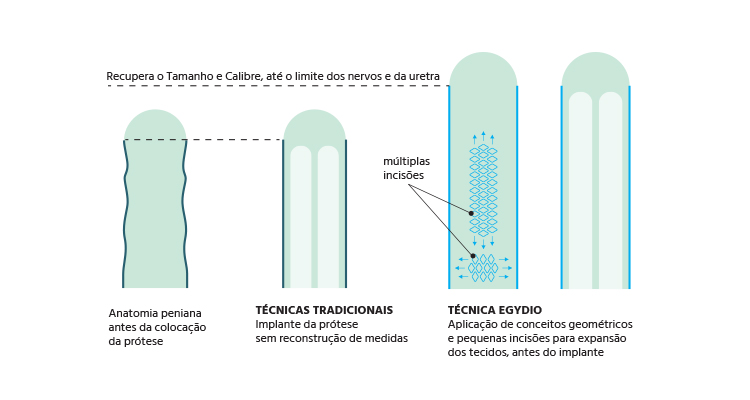
Is it possible to lengthen an atrophied penis?
A set of nerves and vessels runs over the penis toward the glans and determines how far the surgeon can proceed.
Tissues located below these nerves may be addressed to expand, within the limits set by nerves and vessels.
This tissue expansion aims to improve penile dimensions and may apply to atrophied, thin, and/or tortuous penises.
It is not possible to know in advance how far nerves, vessels, and tissues will allow expansion; this is determined intraoperatively. A surgeon aligned with best practices will not promise a final size.
Understanding these limitations helps avoid unrealistic expectations. Surgical procedures must respect anatomical limits and society guidelines.
Understanding the cause of penile atrophy is the first step in protecting penile health. Although challenging, in many cases symptom and function improvement can be pursued with appropriate medical follow-up.
Have questions about penile atrophy? Talk to Dr. Paulo Egydio
Do not hesitate to seek professional help if you experience symptoms of penile atrophy. Start an online pre-analysis with Dr. Paulo Egydio and receive personalized guidance by email.
Prioritizing urological health is an important step toward physical and emotional well-being.
Read also
- Benefits of the Egydio TEP Strategy
- Free and Total Testosterone: Learn How to Interpret Results
- Is My Penis Thin? Find Out Now!
- Boosting Erectile Function: 3 Practical Tips & Effective Treatments
- Meet the Urologist: Specialties, Tests, and When to Seek Help
- Male Masturbation: Benefits and Myths Uncovered
- What is Prostatitis? Learn About Symptoms, Causes, and Recommended Treatments
- How to Measure Your Penis Correctly at Home
- Erection Duration: Understanding Normality & Seeking Help
- What to Do When a Man Loses Desire for His Wife? Discover Possible Causes and Treatments