

The main tip for talking to a urologist about erection problems is to remember that they are prepared to assess your sexual health and guide your care.
Fear about how to talk to a doctor about erectile dysfunction can keep men from seeking appropriate evaluation and treatment. Shame, fear of judgment, and a sense of failure create barriers for men of all ages.
It is also important to consider that, culturally, many men were taught to hide vulnerabilities—especially those related to sexuality—which contributes to this male taboo during urology visits.
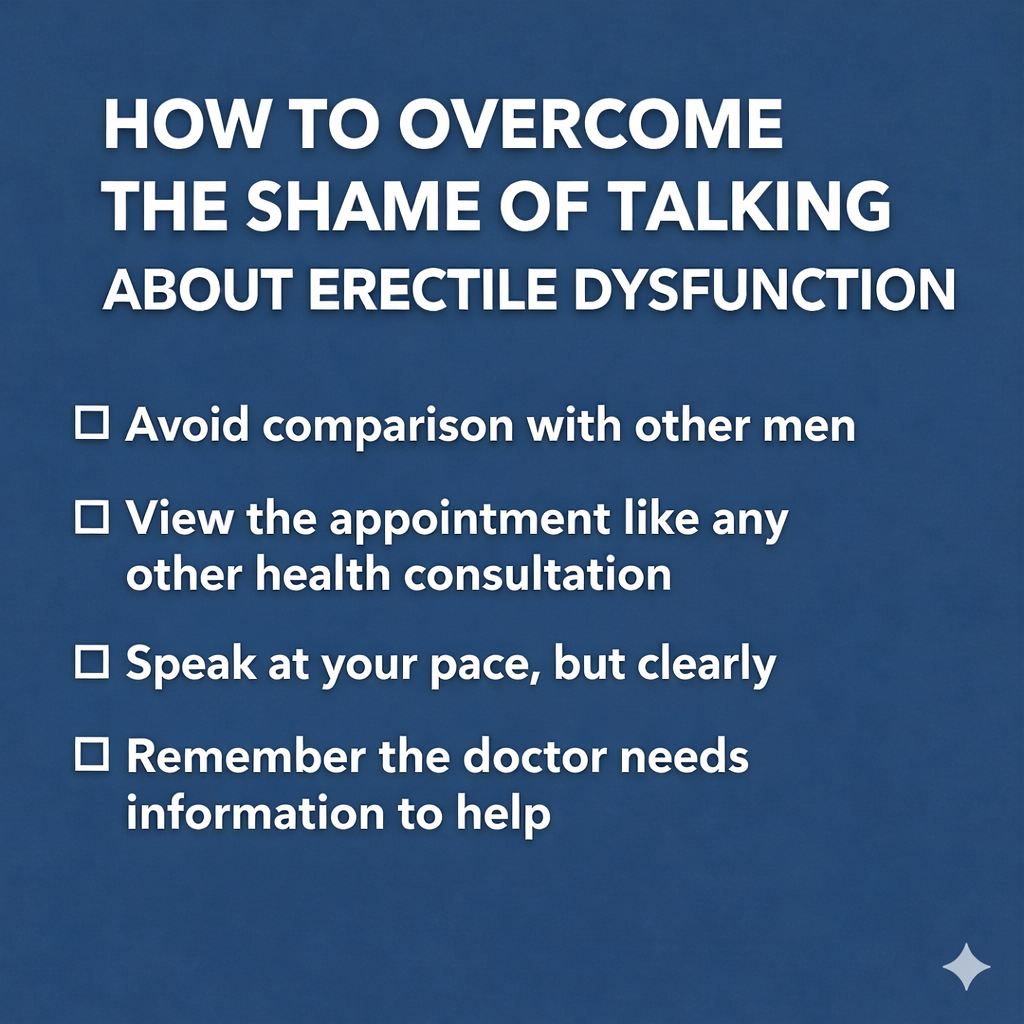
To normalize the conversation, keep in mind that urologists deal with erectile dysfunction frequently. The appointment is an safe space to ask questions, report symptoms, and talk about difficulties, as the visit tends to be welcoming and confidential.
Learn how to bring up erectile dysfunction during your appointment, set embarrassment aside, and build an open dialogue with your urologist.
How to talk to a doctor about erectile dysfunction without embarrassment
According to the Brazilian Ministry of Health, 45% of Brazilian men have erectile dysfunction. The condition can affect all age groups, but it is more common after age 60.
Erectile dysfunction is so common because an erection depends on a combination of physical, hormonal, and psychological factors. When something is not working well, a man may have difficulty in bed. If the cause is not addressed, erectile dysfunction can worsen.
In other words, erectile dysfunction is a medical condition. Understanding this complexity helps men recognize that difficulty or inability to get an erection is not a measure of virility.
Why talking to your doctor matters
A satisfying sex life can influence a man’s quality of life and self-esteem. When sexual life is affected, an open conversation supports investigation and helps choose the most appropriate next steps.
By learning how to talk to a doctor about erectile dysfunction, patients are also more likely to avoid self-medication and home remedies without scientific evidence. These choices can be risky and may cause serious side effects.
In addition, erectile dysfunction may be the first sign of cardiovascular disease or hormonal changes, such as low testosterone, or metabolic conditions like diabetes.
The earlier a man is evaluated, the greater the chance of identifying causes and defining next steps. In many cases, it is possible to treat or manage related conditions.
What your urologist really needs to know (and why it matters)
Knowing how to prepare for an appointment about erectile problems is important. With the right information, your urologist can assess the situation more accurately.
When the problem started and how often it happens
Reporting when the difficulty began and how often it occurs is essential to distinguish an occasional issue from an established clinical pattern.
You should also explain whether the difficulty happens in all situations or only in specific moments. This helps clarify whether the cause may be physical or emotional.
Other related symptoms
Erectile dysfunction may come with other signs. That is why it is important to describe symptoms clearly, such as:
- Low libido, which may suggest hormonal changes;
- Fatigue, anxiety, or stress, which can affect sexual performance;
- Pain, curvature, or penile deformities, which may indicate Peyronie’s disease;
- Difficulty penetrating a partner, even when positioning the penis by hand;
- Premature ejaculation or delayed ejaculation.
Medical history and medications
Conditions such as high blood pressure, diabetes, high cholesterol, and depression can interfere with vascular, hormonal, and emotional mechanisms that are important for erections. Your doctor needs to know your full medical history and current health status.
You should also list any medications you use. Some, such as antidepressants, blood pressure medications, anabolic steroids, and recreational drugs may affect erections. Avoid hiding information, because it can interfere with evaluation and care planning.

How to start the conversation without embarrassment
The best way to talk about erectile difficulties with your doctor is to follow a few practical tips.
1 – Use simple, direct explanations
Use objective phrases that describe the problem and what you want to understand.
Often, saying “I have difficulty maintaining an erection in some situations and I’d like to understand what might be going on” or “I’ve noticed my erections feel weaker and I want to discuss options to improve them safely” is enough to start the conversation.
2 – Bring notes
Whenever possible, arrive with a list of symptoms, frequency, and the situations in which erection problems happen.
Also bring a few questions to ask about erections and erectile dysfunction.
3 – Remember your doctor is used to these conversations
For a urologist, talking about sexuality is part of routine care. They are not there to judge. There are evaluation and treatment options for many cases, and the best approach depends on the cause.
Also remember: the appointment is confidential. What you share stays between you and your doctor.
Practical strategies to overcome embarrassment
Learn what to do to avoid uncomfortable moments during your urology appointment.
What to expect at a urology appointment
At the end of a urology visit to evaluate erectile dysfunction, patients often leave with diagnostic hypotheses and an initial plan; in other cases, the urologist may request additional tests.
To get there, the first step is a clinical conversation. The doctor will ask about sexual history, lifestyle habits, medical conditions, psychological factors, and medication use that may influence erections.
Then, some tests may be performed, such as penile palpation, erection testing and rigidity assessment, and Doppler ultrasound. When needed, lab tests may evaluate hormones, blood sugar, cholesterol, and more.
Related: Penile Doppler: details of the ultrasound and what it reveals about your sexual health
In many cases, lifestyle changes and psychotherapy may be enough to help with psychogenic erectile dysfunction.
When symptoms are more significant or have a physical cause, oral medications or injectable options may be considered. More severe cases may require surgery for penile implant placement.
When it’s time to seek help
Seeking help is a form of self-care. Consider seeing a urologist if:
- Erection difficulties happen in most sexual encounters;
- There is pain or discomfort during an erection;
- The penis shows curvature, narrowing, or a noticeable reduction in size;
- There is a drop in libido;
- You are using home remedies;
- You have a diagnosed hormonal condition;
- You have had pelvic surgeries, such as radical prostatectomy;
- Sexual satisfaction is impacted.
Talk to Dr. Paulo Egydio
When talking with Dr. Paulo, you’ll receive guidance on how to discuss erectile dysfunction during an appointment without embarrassment, in a welcoming and respectful environment, with an appropriate approach to investigate mild, moderate, and severe cases.
The urologist has over 25 years of experience treating conditions that affect sexual function. His training and scientific work support an evidence-based practice aligned with guidelines.
Dr. Paulo also follows the evolution of clinical, medication-based, and surgical treatments for erectile dysfunction, offering guidance and follow-up to seek improvement in function and quality of life, according to each case.
Talking about erectile dysfunction with a urologist can support diagnosis and care planning. Get an email with initial information and schedule your appointment to continue caring for your sexual health.