

Check out practical tips for male well-being in midlife.
What are the essential health priorities for a man in his 40s?
At any age, health involves habits such as balanced nutrition, regular exercise, medical follow-up, and stress reduction.
But maintaining a healthy lifestyle is simpler than it seems. Here is the list we prepared with 15 healthy habits for men 40+.
Healthy habits for men over 40: 1. Get an annual checkup
An annual checkup for men over 40 is one of the first health priorities in this age group.
This follow-up is important for early detection, which may support timely identification and appropriate management.
The interval may be shorter when a man has a condition that requires closer monitoring.
Routine exams include blood and urine tests, as well as urological and hormonal evaluations. See:
- PSA test and digital rectal exam.
- Tests to measure testosterone levels and other hormones.
- Thyroid function evaluation.
2. Control cholesterol and blood pressure
Men’s health after 40 requires greater attention to cardiovascular well-being.
Monitoring is important to diagnose and control blood pressure and diabetes, which are risk factors for serious conditions such as stroke.
Tests such as electrocardiogram, echocardiogram, and exercise stress testing help assess heart function.
Healthy habits for men over 40: 3. Maintain a balanced diet
A balanced diet rich in fruits, vegetables, legumes, seeds, and healthy fats supports overall health.
A healthy diet should include omega-3, vitamin E, and magnesium, nutrients that support blood circulation.
Zinc, vitamin B12, and vitamin C are associated with testosterone production, the main male sex hormone.
4. Exercise regularly
An exercise plan for men in their 40s should include aerobic training, strength training, and mobility work.
A common recommendation for aerobic activity, such as brisk walking or cycling, is 30 minutes a day, 5 times per week.
Two to four strength-training sessions per week contribute to preserving muscle mass.
In addition, mobility and stretching workouts should be done at least 3 times per week.
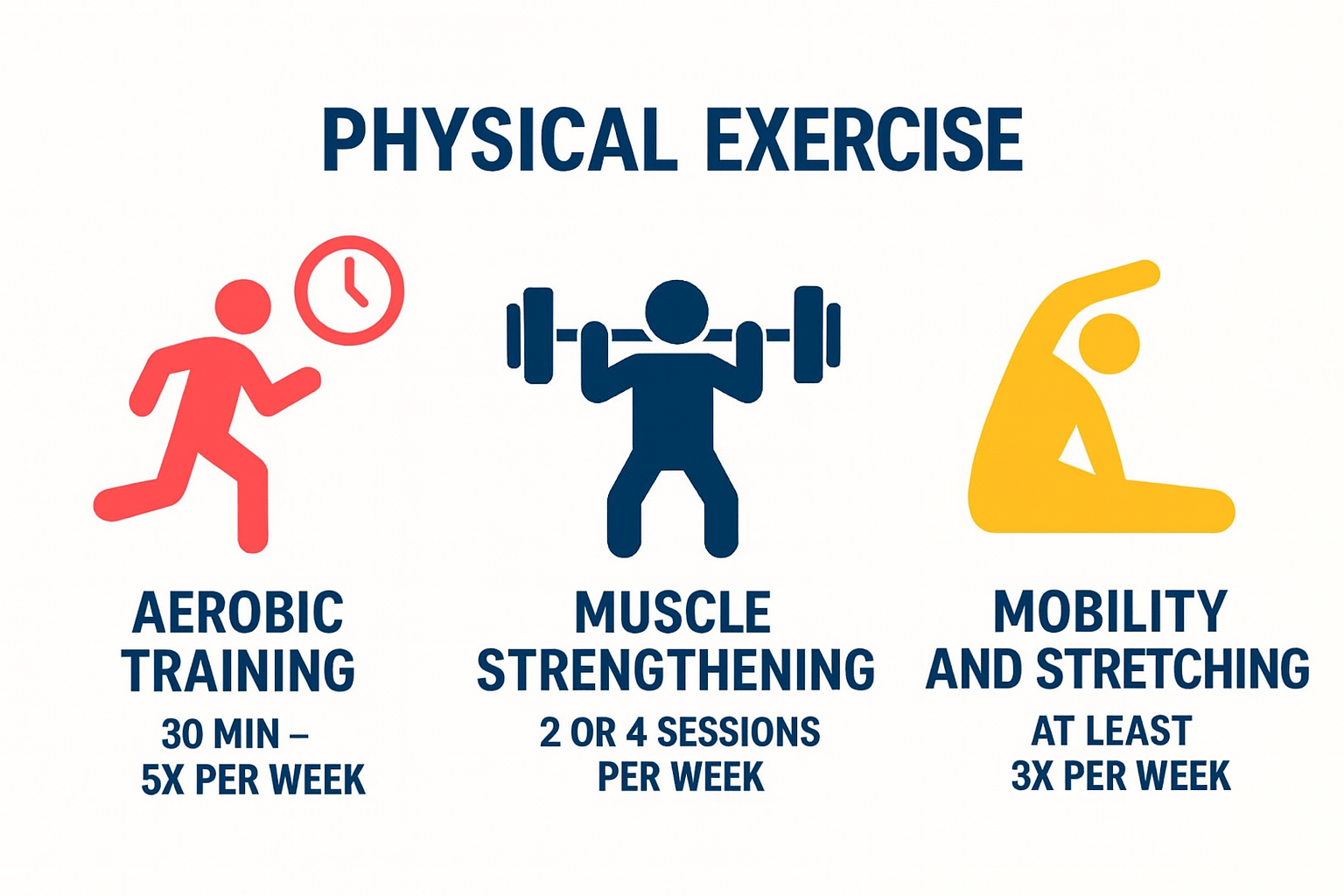
Infographic: physical exercises for men in their 40s.
5. Prioritize sleep quality
It is impossible to talk about healthy habits without mentioning sleep quality.
Sleeping well is important for men 40+ because a significant portion of testosterone production occurs during REM sleep, a deep and restorative stage.
Therefore, short sleep may be associated with lower testosterone levels, which can affect libido and erections.
Sleep deprivation is related to increased appetite and metabolic changes because it reduces leptin and raises ghrelin levels, hormones associated with satiety and hunger.
Poor sleep quality can also affect mood and concentration, impacting work, studies, and physical activity.
6. Reduce stress after 40
One of the key lifestyle updates in your 40s is adopting habits that reduce stress — and sleeping well is a major one.
Set consistent sleep and wake times, avoid caffeine, and do not eat heavy meals one hour before bed.
Meditation, yoga, sports, a healthy diet, and avoiding excessive alcohol also help reduce stress.
7. Take care of weight and metabolism
Metabolism slows down after 40, which can favor fat gain and loss of lean mass.
For this reason, routine habits should include a healthy diet with adequate protein intake to support muscle strength and satiety.
Reducing or eliminating ultra-processed foods helps avoid fat accumulation and blood glucose spikes.
8. Maintain a healthy routine
A healthy routine requires daily organization of work, study, meals, exercise, and rest.
This planning helps balance commitments and prevents work from taking over other important areas, such as self-care, physical activity, and sleep.
With healthy habits distributed throughout the day, it becomes easier to maintain focus, energy, and quality of life.
9. Support male hormonal health
Men should pay closer attention to hormonal health after 40, since testosterone naturally declines in this phase.
Lower libido, erectile dysfunction, increased body fat, reduced lean mass, and mood changes are some possible signs of low testosterone.
Therefore, consult a urologist to investigate potential causes of imbalance.
With an accurate diagnosis, the professional may guide lifestyle adjustments and, when appropriate, prescribe hormone therapy.

Infographic: male hormonal health after 40.
10. Consume essential vitamins and nutrients
Some vitamins and nutrients become more relevant after 40.
Vitamin D supports immunity and contributes to bone and muscle health. Vitamin B12 plays a role in cellular synthesis, while vitamin C acts as an antioxidant.
In addition, omega-3 is associated with beneficial effects on circulation, which relates to erectile function since erections depend on healthy blood flow.
Other important nutrients in this context include magnesium and zinc, which are associated with testosterone production, a hormone that influences sexual function.
11. Invest in practices that improve energy and daily vitality
Adopting morning routines with stretching and breathing exercises can help you start the day with more energy.
Light walks after meals support digestion and improve circulation.
Standing up every hour during work to stretch reduces accumulated tension and helps maintain focus.
12. Prevent male diseases early
Preventive care for men, such as regular annual checkups, should begin as early as possible to support early detection of serious conditions.
After 40, monitoring prostate health helps identify inflammation, gland enlargement, and possible warning signs of cancer.
Preventing cardiovascular disease with physical activity, healthy eating, and specific evaluations is important because these changes often show no symptoms.
Musculoskeletal health, which includes bones, muscles, and joints, also deserves attention early on.
Strength training, mobility exercises, and adequate calcium levels can help prevent pain, weakness, and lean mass loss.
13. Reduce alcohol and quit smoking
The excessive consumption of alcohol is associated with negative impacts on overall health, including urological and sexual aspects, as it may affect prostate cell health and function.
Smoking is associated with circulatory changes that can impair blood flow. Therefore, reducing alcohol intake and quitting smoking are linked to positive health effects.
An article published by National Geographic Brasil explains that breathing improves a few weeks after quitting smoking, which can make exercise easier.
According to the same publication, a long-term benefit is reduced risk of heart attack and stroke.
Another study on alcohol abstinence suggests that 30 days without alcohol may help reduce blood pressure.
In the long term, the When Less is More report explains that the risk of liver cancer may decrease between 6% and 7% after one year without alcohol.
14. Encourage balance between professional life and health
Work-related stress increases cortisol levels, the “stress hormone.”
Professional overload may also raise prolactin levels, a hormone that can reduce testosterone levels, affecting mood and sexual health.
Therefore, balancing professional life and health care is essential to avoid physical and mental strain.
Keeping defined schedules, prioritizing sleep, adopting a balanced diet, exercising regularly, and including self-care activities can improve focus, increase productivity, and support mental health.
15. Maintain regular medical follow-up
Periodic visits with a urologist and a cardiologist help with early identification of changes that may affect men’s health.
In addition to diagnosis, physicians may guide healthy habits for men over 40, including nutrition, sleep quality, and exercise.
What changes in a man’s body after 40?
After 40, there is a gradual decline in testosterone, which can affect male hormonal health.
With this reduction, metabolism becomes slower, which may favor abdominal fat accumulation and requires weight and metabolism care to reduce the risk of high cholesterol, hypertension, and diabetes.
Prostate health also requires monitoring because the gland may increase in size and cause urinary discomfort.
In addition, hormonal and metabolic changes related to low testosterone levels can affect mood, sleep, and energy.
When should you see a urologist?
The recommendation is to schedule annual urology appointments to monitor existing conditions, support disease prevention, and help identify problems such as prostate cancer early.
A urologist is the specialist responsible for diagnosing and treating conditions of the urinary system and the male reproductive system.
Urinary changes, erectile dysfunction, premature ejaculation, anatomical changes, and penile discharge are some of the main reasons to seek this professional.
Subscribe to Dr. Paulo Egydio’s channel for more information on sexual health
Male well-being in midlife involves regular medical follow-up, healthy habits, and reliable information.
Subscribe to Dr. Paulo Egydio on YouTube for updated content produced by a men’s health specialist.