

Berries, garlic, broccoli, soy, and green tea are among the foods good for the prostate.
Foods good for the prostate are rich in healthy fats, antioxidants, and omega-3. So make room on your plate for nuts, avocado, fatty fish, vegetable oils, colorful fruits and vegetables, green tea, and more.
Investing in foods good for the prostate is a great way to keep this gland healthy. This habit may help lower the risk of benign prostatic hyperplasia, prostatitis, or prostate cancer—conditions more common in older men.
See which foods deserve a place in your daily routine.
Tomato
Tomatoes are foods good for the prostate because they’re high in lycopene—especially when cooked or processed.
Lycopene is an antioxidant that may help reduce the risk of prostate cancer and has anti-inflammatory properties that benefit prostate health.
Berries
Raspberries, strawberries, blackberries, and blueberries contain flavonoids and polyphenols with anti-inflammatory and antioxidant action that can support prostate health and are associated with a lower risk of some prostate conditions.
They also provide vitamins, minerals, and fiber—great for overall health.
You might wonder: “What’s the best juice to ‘deflate’ the prostate?”
There isn’t a single magic juice. Prefer drinks made with fruits rich in anti-inflammatory and antioxidant compounds.
Dried fruits
Adding dried fruits such as prunes, apricots, figs, and dates can support prostate health.
They provide nutrients, antioxidants, and fiber that help protect prostate cells, potentially reducing disease risk.
Garlic
Garlic contains allicin, an antioxidant and anti-inflammatory compound that may reduce inflammation and cellular damage in the prostate.
A study in the Journal of the National Cancer Institute followed 238 men with prostate cancer and 471 without the disease.
Among cancer-free participants, those who consumed 2 grams of garlic per day had a 53% lower risk of developing prostate cancer by the end of the study.
Onion
The same study also suggested onion among foods that may help prevent prostate cancer.
Onions contain bioactives such as flavonoids and sulfur compounds, including quercetin.
Their antioxidant and anti-inflammatory properties help counter inflammation, neutralize free radicals, and may inhibit the growth of cancer cells in the prostate.
Broccoli
Broccoli provides vitamins, minerals, and phytochemicals such as indoles and sulforaphane.
This combination makes it rich in antioxidants and anti-inflammatory compounds that may help protect prostate cells.
Cabbage
Cabbage also offers vitamins, minerals, and phytochemicals such as indoles and sulforaphane. This combo gives it antioxidant and anti-inflammatory properties that may help protect prostate cells.
Oats
Oats are high in soluble fiber and beta-glucans that help reduce LDL (“bad”) cholesterol.
Regular intake supports healthy blood flow to the prostate and may be associated with a lower risk of benign prostatic hyperplasia.
They also provide B vitamins and minerals helpful for overall health.
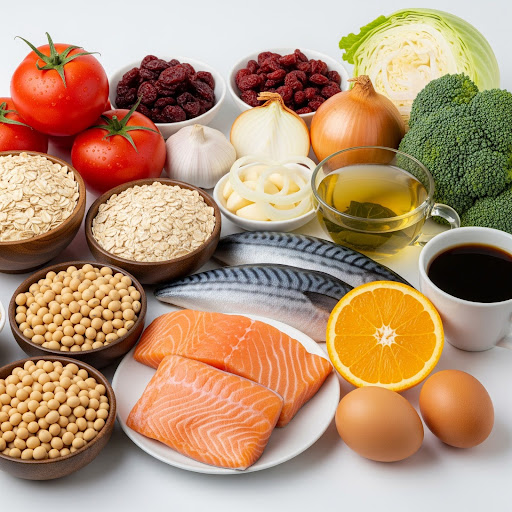
Tomatoes, dried fruits, cabbage, onion, soy, and oats arranged on brown bowls, tea and coffee cups, eggs, half an orange, and salmon on a white surface
Fatty fish
Salmon, tuna, and sardines—fatty or oily fish—are foods good for the prostate because they’re rich in omega-3.
These fatty acids have anti-inflammatory effects and may help with prostatitis and benign prostatic hyperplasia.
Soy
Soy and soy-based foods (tofu, soy milk) are linked in some studies to a lower risk of prostate cancer, though evidence is not definitive.
The bean is rich in phytosterols—plant compounds that can modulate hormones (including sexual hormones).
Soy also contains isoflavones (genistein, daidzein) with antioxidant and anti-inflammatory action.
It can replace less healthy animal proteins, contributing to a more balanced diet.
Orange
Oranges are rich in vitamin C, flavonoids, and carotenoids.
These antioxidants fight free radicals and inflammation, which is why some studies associate this fruit with prostate health.
Green tea
Green tea is known for its anti-inflammatory effects. It’s one of the foods good for an enlarged prostate and for overall prostate health.
Its consumption may be associated with a reduced risk of prostate cancer because it’s antioxidant.
The highlight is its catechins, antioxidants that may inhibit cancer cell growth.
Coffee
Thanks to bioactive compounds (antioxidants and phytochemicals), coffee may also support prostate health.
Some studies observe links between moderate coffee intake and a lower risk of benign prostatic hyperplasia or aggressive prostate cancer.
Moderation is key. In excess, it can irritate the prostate.
Eggs
Eggs provide zinc and selenium—minerals involved in regulating cellular growth in the prostate. They also contribute antioxidant support for cellular protection.
Which foods irritate the prostate?
A poor diet harms overall health. Below are foods that can inflame or irritate the prostate.
-
- Saturated-fat foods (fatty meats, full-fat dairy, fried foods);
- Processed and ultra-processed foods (white bread, fast food, bacon);
- Sugary foods (cookies, chocolate, sodas);
- Alcoholic beverages;
- Excess caffeine (coffee, black tea, energy drinks);
- Spicy foods (condiments and chili peppers).
How to keep men’s health on track
Beyond choosing foods good for the prostate, maintaining men’s health also relies on everyday habits.
Regular exercise builds endurance, improves cardiovascular health, helps maintain ideal weight, and reduces stress. Combine this with healthy habits—avoiding alcohol, smoking, and drugs—for overall benefits.
Practice self-care and seek emotional support. Watch for signs of stress, anxiety, or depression and ask for help if needed.
Keep up with urology checkups to detect conditions early, including prostate cancer, benign prostatic hyperplasia, prostatitis, Peyronie’s disease, erectile dysfunction, and others.
Frequently asked questions
To wrap up, here are two common questions about foods good for the prostate.
Which fruit helps “deflate” the prostate?
Some fruits—especially berries—are rich in antioxidants and anti-inflammatory compounds that may support prostate health.
What helps reduce an enlarged prostate?
Serenoa repens (saw palmetto) extract is often used to help reduce gland size.
However, this extract isn’t considered a food for an enlarged prostate.
In Brazil, it’s a herbal medicine.
Regarding effectiveness, this Cochrane review concludes it has little to no benefit.
More men’s health content on Dr. Paulo Egydio’s channel
Knowing the foods good for the prostate is a first step to caring for this gland.
Subscribe to Dr. Paulo Egydio’s YouTube channel for updated tips on men’s health from a specialist.
Learn more:
- Penis types: differences, myths, curiosities
- Male masturbation: benefits and myths
- Male hormones that influence your health
- 10 tips to improve sexual performance
- What is ejaculation? Key answers
- Main penile surgeries: are they effective?
- Penis anatomy: structure, erection, ejaculation
- Top penile diseases: how to identify and treat
- Penile pain: 12 causes, symptoms, and treatments