

Curved Penis and Enlarged Prostate are common in older men, but the conditions are not associated. Learn more about them!
Just hearing about curved penis and enlarged prostate can make men tense. However, with early medical care, there’s no need to despair.
Both health conditions involve the intimate region, which is related to virility and full of taboos. That’s why men are so concerned about issues that can affect their sexual life.
Although both conditions can impact intimate moments, knowing the symptoms, preventing, and seeking help are actions that will help alleviate concerns. Learn more below!
What is an enlarged prostate?
An enlarged prostate, or benign prostatic hyperplasia (BPH), is characterized by an increase in prostate size. It is a common condition in older men.
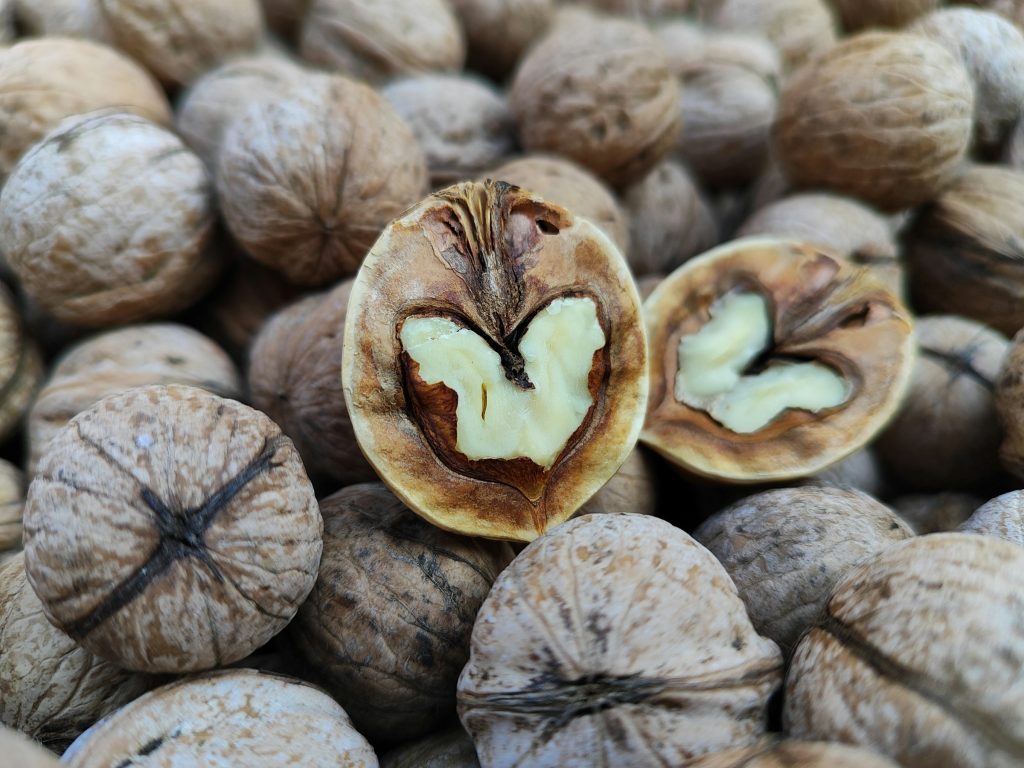
The prostate is a gland, about the size of a walnut, and is part of the male reproductive system. It is located just below the bladder, and the urethra runs through it.
In BPH cases, the enlargement is slow and gradual.
In some cases, over time, there can be an obstruction of urine flow, which can cause symptoms such as difficulty urinating, frequent urination (including at night), weak flow, and feeling that the bladder is not completely empty.
Depending on the degree of obstruction, the bladder becomes highly pressured. This can lead to failure in the organ’s musculature, which generates a tendency towards urinary infections.
However, there are cases where prostate enlargement does not interfere with urine flow.
What is a curved penis?
A curved penis is a condition, and there are two possible cases: congenital curved penis and curved penis due to fibrosis acquired throughout life.
Congenital curvature or young man’s curved penis is genetic. The individual is born with one side of the limb having more elastic tissue than the other. Thus, when erect, the penis is curved – which is usually noticed during puberty.
In acquired curvature – called Peyronie’s Disease -, the man develops fibrosis in an internal membrane.
The fibrosis can be compared to a patch on an inner tube: the area that is patched will no longer stretch as before. As a result, the penis will be curved when erect, and it may also lead to a decrease in size and thinning of the member.
The curvature of the limb, in both cases, can be in any direction. However, in the case of congenital curvature, the downward deviation is more common, and in Peyronie’s, the upward or sideways deviations are more observed.
It’s worth noting that, even after knowing what a curved penis is, a healthy penis is not totally straight. It’s normal for the penis to be curved, with a slight curvature, as long as it does not hinder the man’s sexual life.
What are the consequences of a curved penis?
The main implication of a curved penis is the change in its characteristics.
Besides the curvature, which can reach 90° in some
cases, the tortuosity reduces the size of the member – and the more curved, the smaller the size.
Another issue is that the curved penis is more prone to thinning, which can occur at one or more points along the penile shaft.
Moreover, men with a curved penis can also develop erectile dysfunction.
Patients who present any degree of penile curvature may also face emotional and/or psychological difficulties, impacting their self-image, social life, and relationships.
What is the relationship between prostatic hyperplasia and curved penis?
There is not necessarily a relationship between these two health conditions.
What they have in common is that, with advancing age, there is a higher probability of developing both hyperplasia and Peyronie’s Disease.
However, there is no direct relationship between them.
Does an enlarged prostate always cause a curved penis?
The answer to this question is no. This is a myth.
Peyronie’s Disease is more common in older men, just like prostate enlargement. That is, the conditions may coincide.
Does having a curved penis lead to an enlarged prostate?
A curved penis does not lead to prostate problems – neither hyperplasia nor prostate cancer.
Will treating an enlarged prostate treat a curved penis?
As the two conditions are not related, treating one of them will not treat the other.
For this, the patient will need two treatments – depending on the medical evaluation, as, depending on the advancement of the hyperplasia, it may not be necessary to take action, just monitor the progression.
Do hyperplasia and curved penis affect sexual life?
Both conditions have the potential to impact a man’s sexual life.
Penile curvature can affect penetration and the maintenance of an erection. Meanwhile, an enlarged prostate can worsen erectile function, making sexual relations difficult.
Is a curved penis a serious problem?
Generally, penile curvature is not a serious health issue for men.
Most of the time, the curvature is a local problem in the penile tissues.
Depending on the location, quantity, and depth of the fibrosis in the penis, the case can be serious, but it is treatable and restricted to the intimate region.
When to seek medical help?
For both cases of enlarged prostate and penile curvature, early diagnosis of the condition is very beneficial.
The sooner treatment is started, the more chances there are to control the situation clinically, whether with medications, physiotherapy, injections, among other options. Besides preventing the case from progressing, it is possible to avoid surgical treatment.
For questions about penile curvature, its treatments, and interaction with other health conditions such as prostatic hyperplasia, click the button below and get in touch. Seek help as soon as possible.
Read also
- Benefits of the Egydio TEP Strategy
- Free and Total Testosterone: Learn How to Interpret Results
- Is My Penis Thin? Find Out Now!
- Boosting Erectile Function: 3 Practical Tips & Effective Treatments
- Meet the Urologist: Specialties, Tests, and When to Seek Help
- Male Masturbation: Benefits and Myths Uncovered
- What is Prostatitis? Learn About Symptoms, Causes, and Recommended Treatments
- How to Measure Your Penis Correctly at Home
- Erection Duration: Understanding Normality & Seeking Help
- What to Do When a Man Loses Desire for His Wife? Discover Possible Causes and Treatments