

Discover what really causes penile curvature, its diagnosis, and treatment.
There are many myths about the causes of penile curvature. One of them is that home exercises solve the problem.
The treatment must be individualized and may involve different approaches, such as medical or surgical therapies, depending on the severity and characteristics of each case.
Because it is a condition that may affect penile function, we prepared this guide on myths and truths about Peyronie’s Disease.
What is Peyronie’s Disease?
Peyronie’s Disease is an abnormal penile curvature, whose causes include trauma resulting from sexual intercourse and accidents.
Myths and truths about Peyronie’s Disease
Myth 1: “Peyronie’s disease only happens in older men”
Incorrect. Peyronie’s disease can occur in adult men of various ages.
Myth 2: “Penile curvature is always Peyronie’s disease”
Incorrect. There are differences between acquired and congenital curvature. The first develops over the course of life due to trauma, while the second, the man is born with it.
Myth 3: “The disease appears due to lack of sex”
Incorrect. The causes of penile curvature are injuries during sexual intercourse, conditions that affect circulation, collagen alterations, and even genetic predisposition.
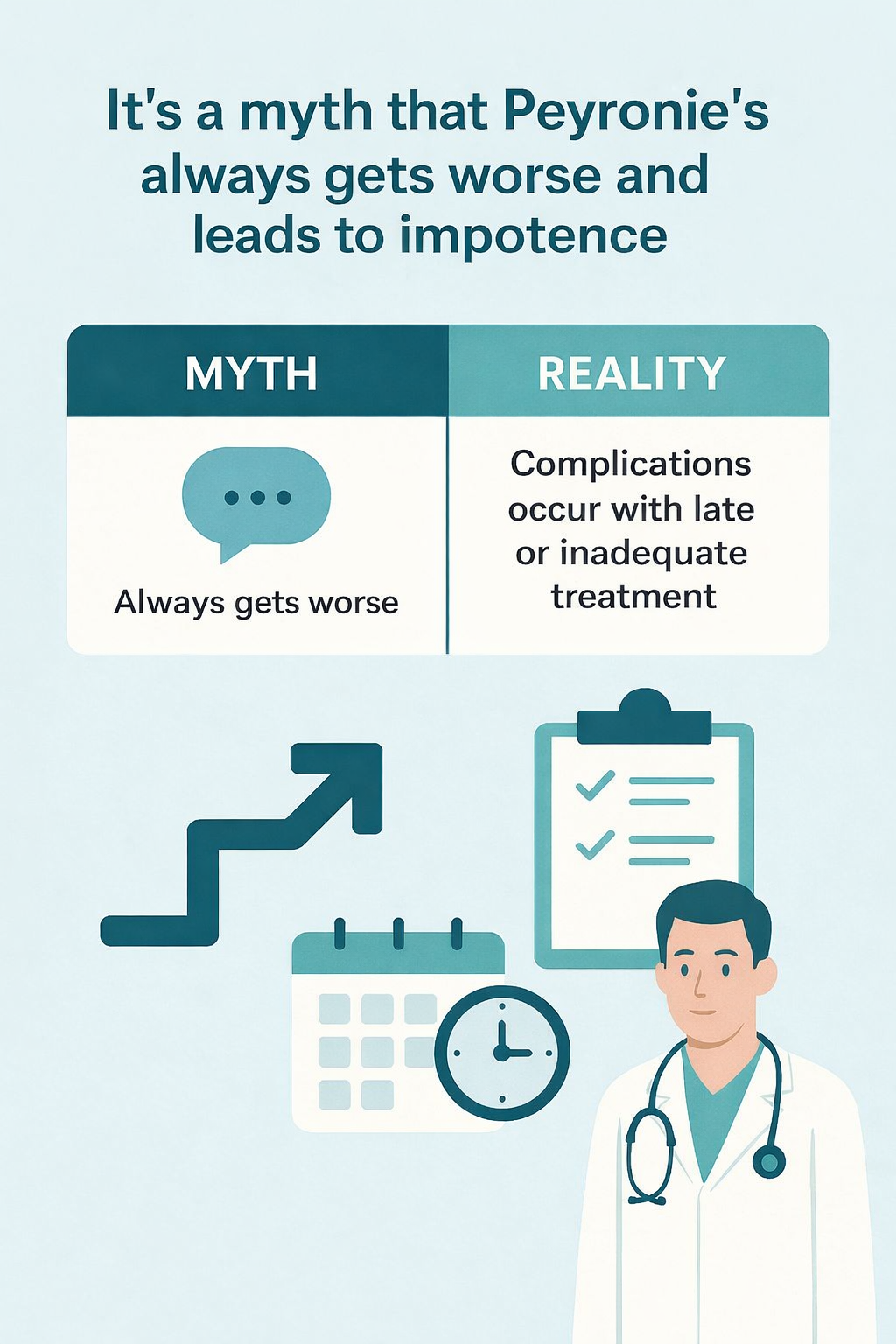
Myth 4: “Peyronie’s disease always worsens and leads to impotence”
Incorrect. Peyronie’s complications (such as “L-shaped” curvature and impotence) occur when treatment is started late or performed improperly.
Myth 5: “Stretching devices and home exercises correct curvature”
Incorrect. Stretching devices and exercises are usually indicated in the acute phase of Peyronie’s Disease, but they act as complementary therapy and do not correct the curvature.
Myth 6: “If it does not hurt, it is not dangerous”
Incorrect. Even without pain, fibrosis may compromise the elasticity of internal penile tissues, making erection and penetration difficult.
Myth 7: “Peyronie’s disease is psychological or caused by stress”

Myth 8: “Every case requires surgery”
Incorrect: surgery for Peyronie’s disease is indicated when there is functional impairment, and non-surgical treatment, such as collagenase injections, is prescribed in the initial phase.
Myth 9: “Peyronie’s Disease is transmissible”
Incorrect. Peyronie’s Disease is not contagious. It is a “connective tissue disease”, in which the problem lies in the supporting tissue of the affected organ.
Why do so many myths arise about Peyronie’s Disease?
The myths arise due to lack of information, embarrassment in seeking help, and fear of talking about sexual health.
Reading content without scientific basis also contributes to the adoption of home treatments, such as teas and devices that worsen the situation.
This scenario causes many men to receive a late diagnosis of penile curvature, prolonging discomfort and symptoms.
When should you seek a specialist?
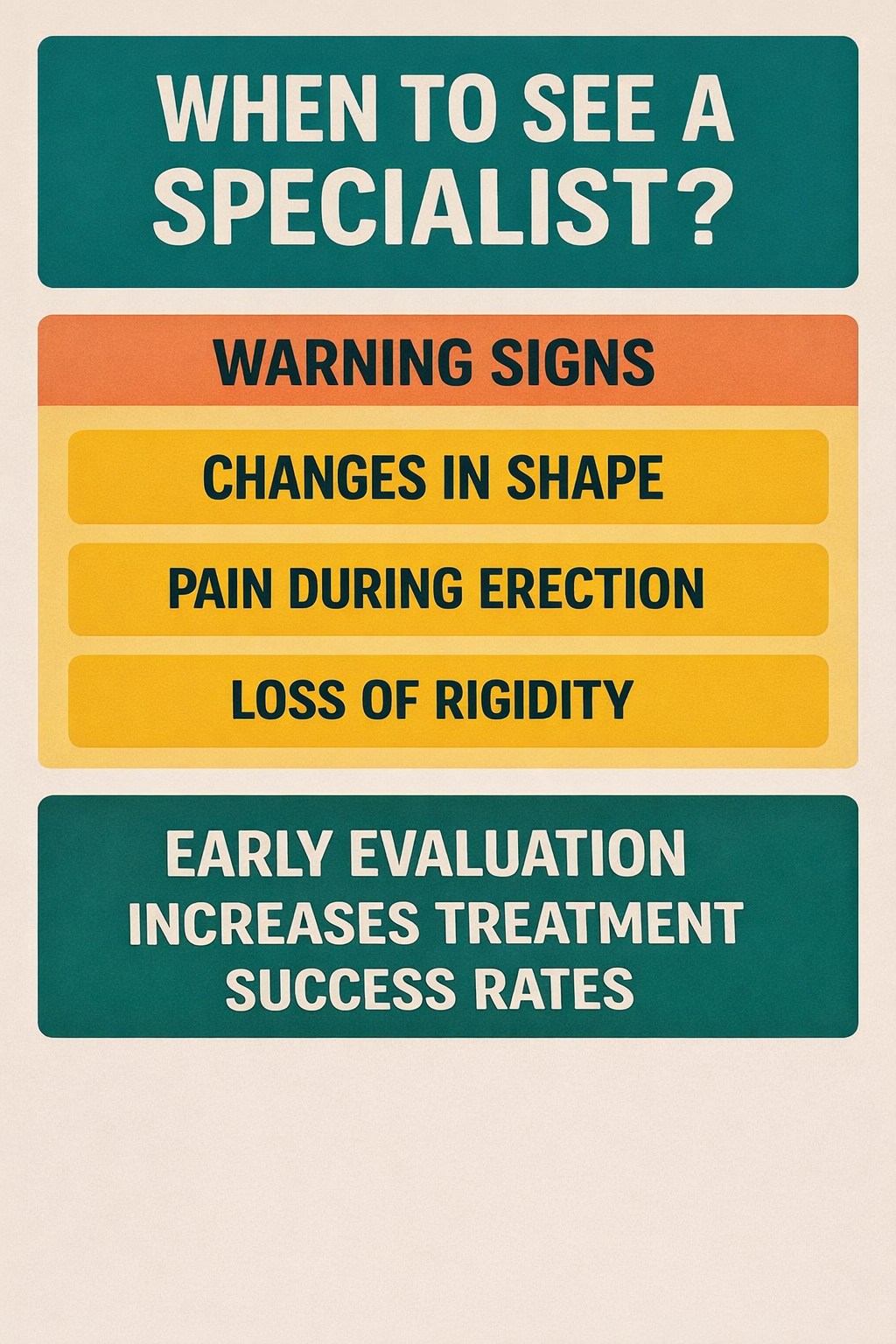
Correct information is the first step in treating Peyronie’s Disease
Correct information helps recognize symptoms, understand the risks involved, and seek appropriate medical guidance.
Reliable sources reduce anxiety, encourage early diagnosis, and increase the success of Peyronie’s disease treatment.
Questions about Peyronie’s Disease? Follow along
Peyronie’s Disease has no cure. Treatment may contribute to symptom control and improvement of well-being, according to the characteristics of each patient.
If you have significant penile curvature, fill out the pre-analysis form to clarify questions.
For more information, follow the doctor on TikTok, Instagram and YouTube to watch shorts and reels about myths and truths in men’s health.