Urinary incontinence can cause embarrassment, but it is a condition for which there are clinical and surgical treatment options that may help with urinary control, according to individual evaluation.
Urinary incontinence is the involuntary loss of urine through the urethra, a discomfort that affects the physical and emotional well-being of those who experience this condition.
In Brazil, according to data from the Brazilian Society of Urology (SBU), 10 million people – the equivalent of 5% of the population – have urinary incontinence, and 15% of this total are men over 40 years of age.
In many cases, there may be improvement of symptoms with appropriate and individualized follow-up. Currently, there are diagnostic methods and different therapeutic approaches that may help with urinary control and quality of life, according to the needs of each patient.
Below, understand the causes, symptoms, types, and treatments of urinary incontinence, and learn about the importance of seeking help to obtain an accurate diagnosis and define the best treatment option.
What causes male urinary incontinence?
The main cause of urinary incontinence is the weakening of the urethral sphincter, the muscular structure responsible for holding urine.
The condition usually occurs after changes or treatments involving the prostate. For this reason, urinary incontinence after radical prostatectomy (removal of the prostate) is common.
In addition, it may be caused by trauma, neurological disease, or involuntary bladder contractions. Urinary incontinence may be mild, moderate, or severe, and may be a temporary or permanent condition.
Symptoms of urinary incontinence in men
The most common symptoms of urinary incontinence in men are:
- Presence of urine in the underwear after urination;
- Involuntary and frequent urine leakage at rest;
- Involuntary loss of urine during moments of effort (laughing, coughing, or sneezing);
- Uncontrollable urge to urinate.
Types of urinary incontinence
There are some types of urinary incontinence in men. However, it is common for the patient to present more than one type.
| Type | Characteristics in men |
|---|---|
| Urgency Incontinence | Sudden and intense urge to urinate, with leakage before reaching the bathroom |
| Stress Incontinence | Leakage when coughing, laughing, or making an effort; common after prostate surgery |
| Overflow Incontinence | The bladder does not empty completely and urine leaks little by little |
| Functional Incontinence | Physical or cognitive difficulty to get to the bathroom in time, even with bladder control |
| Reflex Incontinence | Involuntary loss due to neurological reflexes; common in spinal cord injuries or neurological diseases |
How the diagnosis is made and the exams requested
Defining the cause is essential to guide the most appropriate therapeutic plan.
 The most indicated exam for this is urodynamic study, which evaluates the function of the bladder, urethra, and sphincter. The result must be interpreted by a urologist.
Together with this exam, urine laboratory tests, urine culture, ultrasound, cystoscopy, and uroflowmetry are also necessary, as well as magnetic resonance imaging and a neurological evaluation in specific cases.
With the result of these tests, the exact cause of incontinence can be defined in order to discuss treatment options.
Treatment options for urinary incontinence
After all, how is male urinary incontinence treated? The treatment depends on the type and severity of urinary leakage.
If it is diagnosed as a short-term condition, it is possible to treat it with external devices to facilitate the outflow and storage of urine, as well as mechanical devices, such as penile clamps and compression rings, which interrupt the flow of urine when closed.
There are also treatments with medications to relax the bladder, called anticholinergics. Other options include behavioral therapy, pelvic rehabilitation, and electrical stimulation.
Surgery is indicated for men who did not present a good response to the previous options due to weakening of the urethral sphincter mechanism.
They are usually patients who have undergone prostate procedures. To complement treatments, exercises to strengthen the male pelvic floor may be indicated.
This strengthening helps muscle contraction support the increase in abdominal pressure that occurs when the patient makes an effort, such as coughing or sneezing.
Treatment for urinary incontinence after prostate cancer
In most cases, urinary incontinence resulting from surgery for prostate cancer or benign prostatic hyperplasia is temporary.
In this case, the first treatment option is the practice of Kegel exercises, which contract and relax certain muscles around the base of the bladder and urethra to strengthen the pelvis and relieve symptoms.
Biofeedback devices may be used to intensify the exercises.
When urinary incontinence persists for more than 12 months, it is necessary to resort to a surgical procedure.
Surgical treatment for urinary incontinence
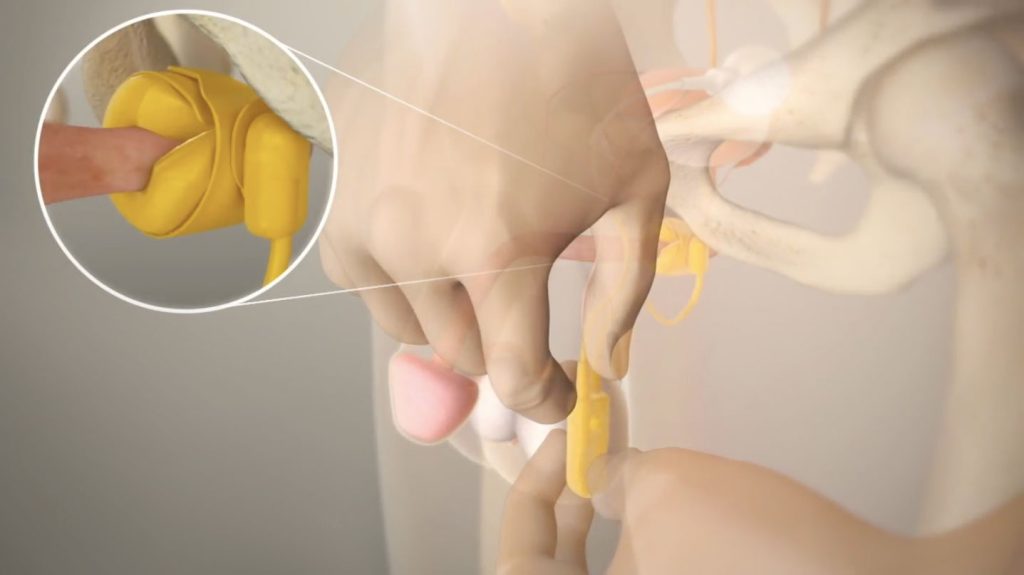
There are three types of surgery for male urinary incontinence, indicated when clinical alternatives are not satisfactory. When urinary incontinence is moderate or severe, the most indicated procedure is the implantation of an artificial urinary sphincter after prostatectomy.
In a simple surgery, the doctor implants a device with a cuff, reservoir, and pump. When the man wishes to urinate, the pump is pressed and the cuff opens for about 2 to 3 minutes, then closes again.
Another possible surgery is the implantation of suburethral slings in patients with mild or moderate incontinence, without prior radiotherapy and with significant urine loss during stress tests.
The treatment consists of a synthetic mesh that lifts and compresses the urethra, preventing or minimizing urinary leakage. There is also periurethral bulking, which may be indicated in mild cases.
The procedure consists of applying a thick substance — called a bulking agent — to the walls of the urethra, with the aim of narrowing the urinary channel.
The effect may be temporary, and some studies report an average duration close to one year, which may vary according to the case.
Reapplication of the substance may be necessary after this period; still, it is an alternative to avoid more invasive surgeries, especially in patients with fragile overall health.
What is the relationship between urinary incontinence and penile prosthesis?
Sometimes, male urinary incontinence may be associated with erectile dysfunction.
In some cases, it may be possible to consider performing both procedures at the same time, according to medical indication.
Before surgery, it is essential to diagnose whether there has been loss of length or thinning of the penis, which are very common with advancing age, and to perform penile reconstruction, seeking to optimize functional and anatomical aspects within individual limits.
More content on male health on Dr. Paulo Egydio’s channel
Urinary incontinence and many other conditions that affect male health have treatment, such as penile curvature and erectile dysfunction.
Dr. Paulo Egydio addresses these and other topics on his YouTube channel without taboos, based on his experience of more than 25 years in the urological field.
Visit Dr. Paulo Egydio’s YouTube channel and have access to reliable information for your health. Follow, activate notifications, and share the new content to help ensure a fuller life.
Learn more:
- What are the most common prostate diseases and their symptoms?
- Types of penises: what they are, differences, myths, and curiosities
- Male masturbation: benefits and myths debunked
- Male hormones that influence your health
- 10 tips to improve sexual performance at the right moment
- What is ejaculation? Answers to your main questions
- What is andropause? Signs, symptoms, and treatments
- Discover the 4 main penile surgeries: are they effective?
- Penis anatomy: structure, erection, and ejaculation
- The 10 main penile diseases: what they are, how to identify, and how to treat them
- Penile pain: 12 causes, symptoms, and treatments
- Male sexual health: 7 habits that affect your performance and how to improve it