
What could it be when a man doesn’t ejaculate quickly? Delayed ejaculation is a relatively common condition that can affect men of any age.
Below, learn about the main causes of difficulty ejaculating and the paths to diagnosis and treatment.
What is delayed ejaculation
Delayed ejaculation is characterized by difficulty or excessive delay in achieving ejaculation, even when there is adequate stimulation.
Causes are multifactorial and may involve:
- psychological factors;
- use of certain medications, such as antidepressants;
- and medical conditions, such as hormonal disorders.
Types of ejaculatory dysfunctions

Retrograde ejaculation and delayed ejaculation are ejaculatory dysfunctions.
Each has specific characteristics and causes. Learn more below.
Retrograde ejaculation
Retrograde ejaculation is an ejaculatory difficulty in which semen can be redirected to the bladder instead of being expelled through the urethra.
In this condition, a man may release little or no semen, and it may appear in the urine, which looks milky.
Causes may include damage to nerves or muscles that control the bladder neck after surgery.
Other health problems, such as diabetes, can also affect this musculature.
Although retrograde ejaculation is not harmful, it may cause infertility. Treatment options can be considered according to the identified cause.
Anejaculation
Anejaculation can be described as the inability to ejaculate, even with adequate and pleasurable sexual stimulation.
In this case, a man may reach orgasm, but semen is not released.
Main causes include:
- neurological problems,
- nerve damage due to surgeries or trauma,
- use of certain medications,
- psychological conditions, such as anxiety or depression.
Is difficulty ejaculating common among men?
Difficulty ejaculating is not as common as erectile dysfunction (although it may be associated with it) or premature ejaculation.
It may be linked not only to low libido but also to other underlying health conditions.
Although difficulty ejaculating can be challenging, there are therapeutic approaches that may help improve sexual function depending on each clinical situation.
Common causes of difficulty ejaculating
Causes may relate to chronic medical conditions, psychological factors, or even side effects of some medications.
1. Prostate surgery
Radical prostatectomy is the surgery to remove the prostate, performed to treat cancer or benign prostatic hyperplasia.
During the procedure, nerves and muscles involved in ejaculation may be affected.
When there is nerve or muscle damage, sequelae can include anejaculation or retrograde ejaculation.
2. Erectile dysfunction
Erectile dysfunction can make ejaculation difficult, since the stimulation and arousal needed to ejaculate may not occur.
When problems coexist, in some cases adequate management of erectile dysfunction may be associated with improved ejaculatory function.
3. Psychological conditions
Psychological conditions, such as depression and anxiety, can affect sexual function.
Anxiety may make ejaculation difficult; depression can reduce sexual desire and arousal.
4. Diabetes
Diabetes can directly affect male sexual function by damaging nerves and blood vessels.
A common complication is diabetic neuropathy, which interferes with the nerve signals responsible for ejaculation.
Elevated blood glucose levels also impair circulation, which can hinder both ejaculation and erection.
In these cases, proper diabetes control is important to minimize possible impacts on sexual function.
5. Antidepressant medications
Some antidepressant medications, such as selective serotonin reuptake inhibitors (SSRIs), can cause difficulty ejaculating.
They modify neurotransmitter levels in the brain, which may interfere with sexual function.
A study on the effects of antidepressants on ejaculation explains that these drugs increase serotonin levels, which in excess delays the ejaculatory reflex.
In such cases, physician-guided medication adjustments may help reduce impact on sexual life.
Does excessive masturbation cause difficulty ejaculating?
Compulsive masturbation may delay orgasm and, consequently, make ejaculation more difficult, as it reduces receptor sensitivity.
Over time, the body may get used to excessive sexual stimuli, making it harder to reach orgasm with a partner, as discussed in Translational Andrology and Urology.
How is the diagnosis made?

Performed by a urologist, diagnosis involves reviewing clinical history and specific tests to identify physical, hormonal, or psychological causes.
- Blood tests: assess testosterone, prolactin, and other hormones to identify possible imbalances; also include glucose and HbA1c to detect diabetes and monitor control.
- Urine tests: may include post-ejaculatory urine analysis to check for sperm—suggesting retrograde ejaculation—and uroflowmetry to assess urinary flow and identify urethral or bladder issues.
- Neurological tests: nerve conduction studies and assessment of perineal reflexes when neuropathy is suspected.
- Ultrasonography: transrectal prostate ultrasound to evaluate structure and identify abnormalities that may affect ejaculation; abdominal ultrasound to check for obstructions or anatomical changes in the pelvic region.
- Psychological assessment: tests and interviews with specialized therapists when emotional or behavioral factors are suspected.
Treatments for delayed ejaculation
Management is individualized, based on medical history and underlying causes.
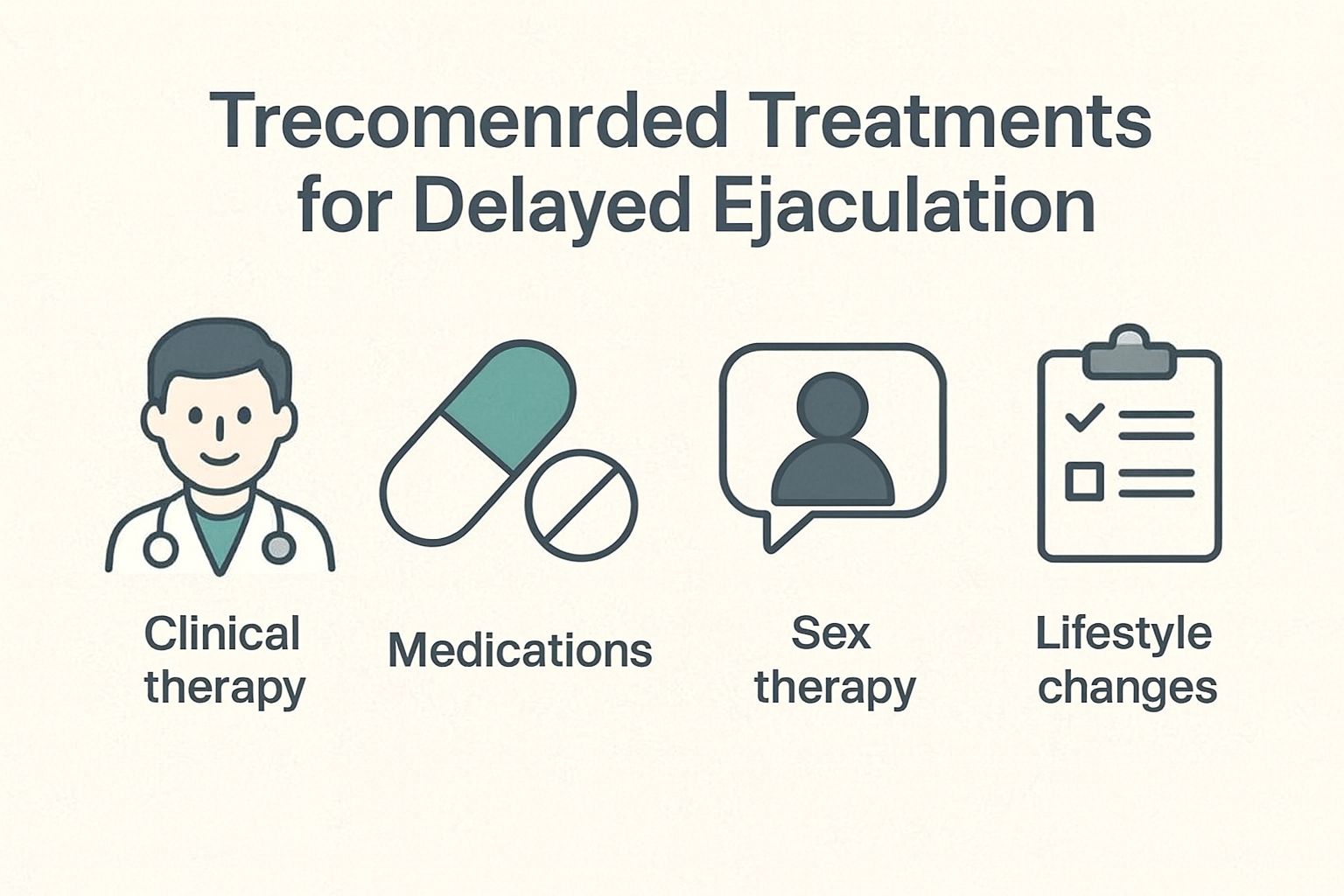
Often, combining medical approaches, psychological therapy, and lifestyle changes can be beneficial, depending on individual evaluation.
Main options include:
- Adjusting doses of medications that may cause difficulty ejaculating (such as some antidepressants);
- Specific drugs, such as pseudoephedrine for retrograde ejaculation, and PDE5 inhibitors like sildenafil (Viagra) or tadalafil (Cialis) when erectile dysfunction is present and if indicated by a physician;
- Testosterone replacement if hormonal deficiency is diagnosed;
- Psychological therapy and follow-up;
- Sex therapy;
- Lifestyle changes: regular exercise and balanced diet;
- Relaxation techniques (meditation or yoga) to reduce anxiety and stress;
- Avoiding alcohol and recreational drugs;
- Surgical procedures to correct anatomical problems or nerve damage when indicated.
Are these dysfunctions temporary?
Anejaculation, delayed ejaculation, and retrograde ejaculation can be temporary or permanent, depending on underlying causes and available options.
In many cases, ejaculatory difficulties can be managed with lifestyle changes, medication adjustments, or psychological support.
Permanent causes are usually related to physical damage or chronic medical conditions.
Consulting a urologist is essential to obtain an accurate diagnosis and define an appropriate plan.
Read more:
-
- What are the most common prostate diseases and their symptoms?
- Types of penis: differences, myths, and curiosities
- Male masturbation: benefits and myths
- Male hormones that influence your health
- 10 tips to improve sexual performance
- What is ejaculation? Your top questions answered
- What is andropause? Signs, symptoms, and treatments
- Get to know the 4 main penile surgeries
- Penis anatomy: structure, erection, and ejaculation
- Main penile diseases: how to identify and manage
- Penile pain: 12 causes, symptoms, and treatments